College Exposure: JJVA Girls College Coaches Camp
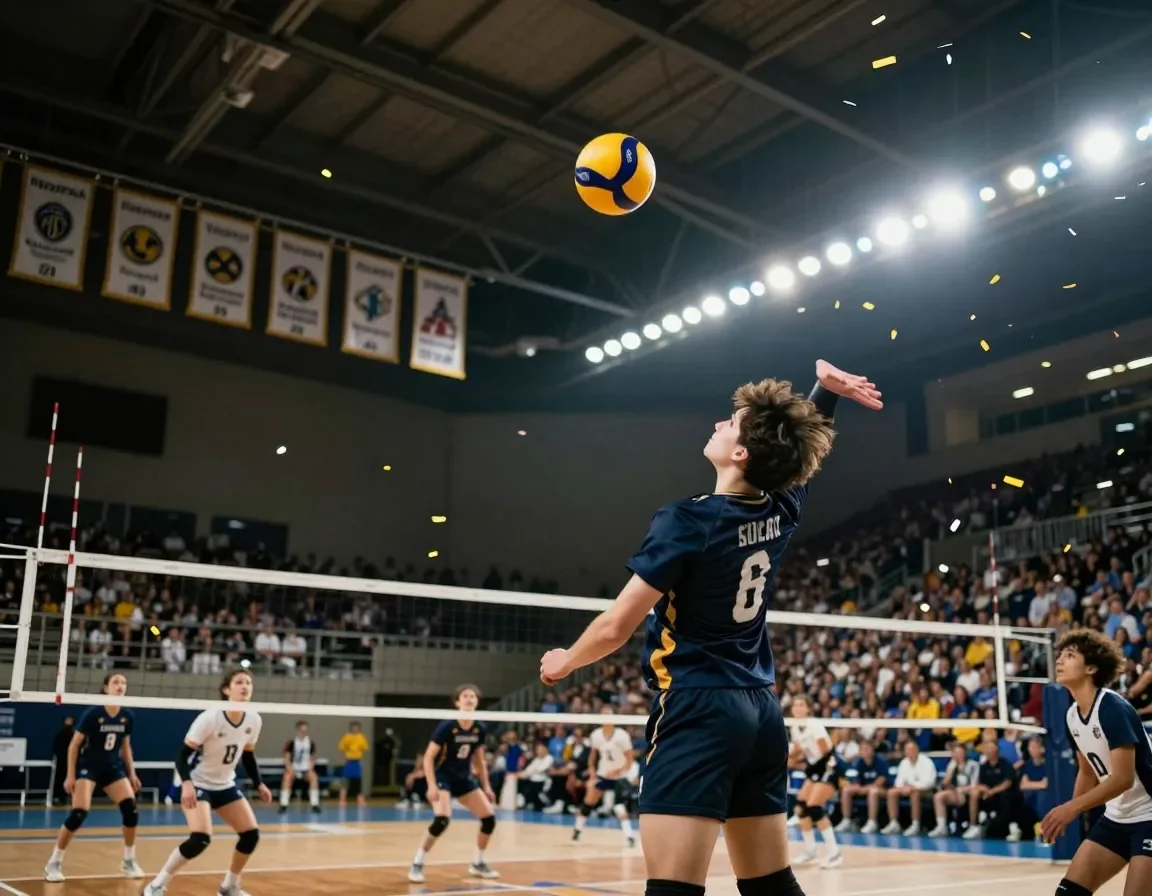
For young volleyball athletes dreaming of playing at the next level, few opportunities are as valuable as direct evaluation by college coaches. The Jordan Junior Volleyball Academy (JJVA) recently hosted its Girls College Coaches Camp, bringing NCAA Division I coaches face-to-face with athletes in the 2026–2030 graduating classes for a weekend of skill work, game play, and live evaluation.
Direct Evaluation. Real Feedback. Clear Pathway.
What Is the College Coaches Camp?
The JJVA Girls College Coaches Camp is designed to bridge the gap between club training and college recruitment. Unlike typical showcases where athletes simply play matches in front of coaches, the JJVA camp provides structured skill evaluation sessions, position-specific training, and direct feedback from actively recruiting NCAA Division I coaches.
The camp is open to athletes in graduating classes 2026 through 2030, meaning both current seniors still finalizing their recruiting and younger athletes just entering the recruiting timeline can benefit.
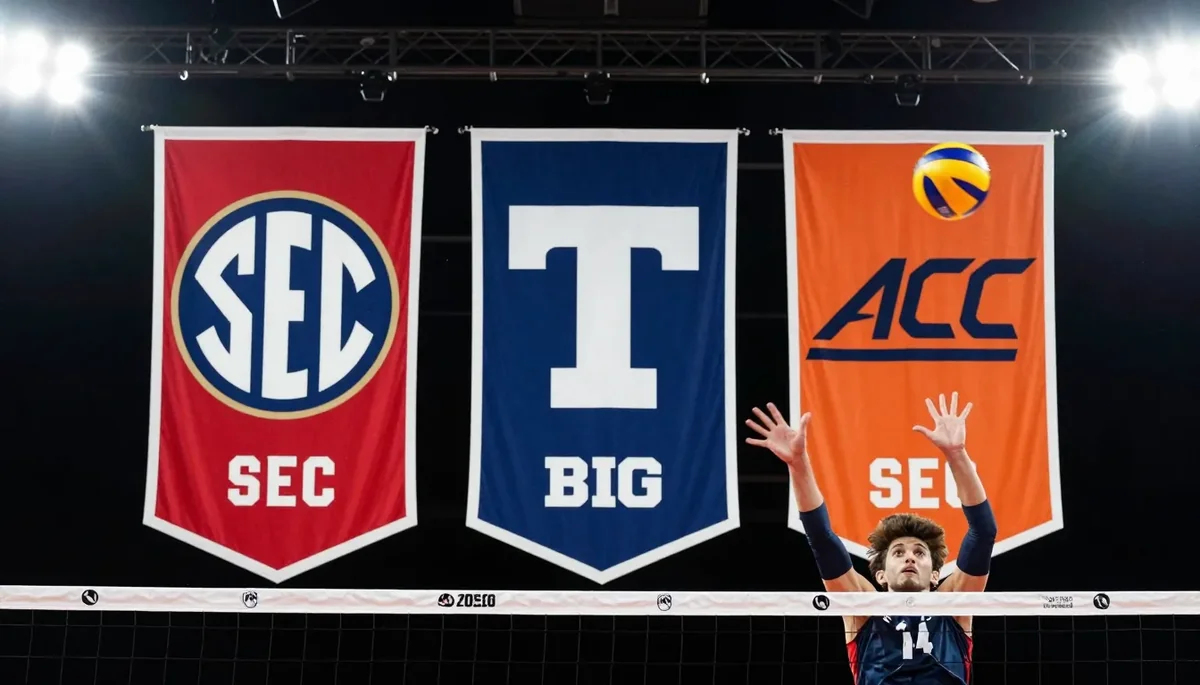
This year’s camp featured coaches from multiple Division I programs across the Midwest and South, representing conferences including the Big Ten, SEC, Atlantic 10, and Missouri Valley Conference.
What Athletes Experienced
Over the course of the camp weekend, athletes participated in:
Position-Specific Training: Outside hitters, middles, setters, liberos, and opposites each received targeted instruction from coaches who specialize in those positions at the college level.
Small-Group Game Play: Coaches observed athletes in 6-on-6 and small-sided game formats, evaluating not just technical skill but volleyball IQ, communication, and competitive mindset.
Individual Feedback Sessions: Each athlete received personalized verbal feedback from at least one college coach, covering strengths, areas for growth, and recommendations for their recruiting journey.
Recruiting Education Seminar: A panel of college coaches discussed the realities of NCAA recruiting – academic eligibility, scholarship structures, the transfer portal, and what coaches actually look for in recruiting video.
College Camp Experience Breakdown
Position Training College coaches lead skill-specific sessions
Game Play Live 6-on-6 coached evaluation matches
1-on-1 Feedback Personal evaluation from D1 coaches
Education Recruiting process seminar for families
The Recruiting Reality for 2026 and Beyond
College volleyball recruiting has changed dramatically in the last three years. The transfer portal, NIL (Name, Image, and Likeness) opportunities, and changes to NCAA eligibility rules have created a landscape where recruitment is more fluid than ever.
Key facts every family should know:
Division I women’s volleyball programs are allowed 12 scholarships per team, but many programs split scholarships across more athletes.
The NCAA transfer portal saw over 1,200 women’s volleyball entries in the 2025-2026 cycle, meaning college coaches are increasingly recruiting transfers alongside high school seniors.
Early recruiting continues to accelerate – some programs are offering spots to athletes as early as their sophomore year of high school.
Academic eligibility remains the single biggest factor in whether a recruiting offer becomes a reality. The NCAA core course requirements and sliding scale GPA/SAT requirements have not changed significantly. Making the Most of Camp Opportunities
For athletes attending camps like the JJVA College Coaches Camp, preparation is key. College coaches consistently say that the athletes who stand out are those who:
Come prepared to compete at their highest level from the first drill, not just during games
Show coachability – taking feedback and immediately applying it
Demonstrate volleyball IQ – making smart plays, not just athletic plays
Communicate effectively with teammates, regardless of whether they know them
Understand their recruiting timeline and have a realistic sense of their level The JJVA Girls College Coaches Camp is expected to return as an annual event, with planning already underway for the 2027 edition. Athletes interested in participating should register early, as spots are limited and typically fill within days of announcement.
📢 Share This Article
Facebook
X (Twitter)
LinkedIn
May 8, 2026 · admin
Summary Choosing the right volleyball shoes can be a daunting task, especially with the numerous options available in the market. As an athlete, it’s essential to select shoes that provide the necessary support, stability, and traction to perform at your best. This article provides a comprehensive review of the 10 best volleyball shoes in 2026, highlighting their features, benefits, and potential drawbacks. Our expert analysis is based on extensive research and testing, ensuring that you make an informed decision for your next pair of volleyball shoes. Background & Context Volleyball is a high-intensity sport that requires quick movements, sharp turns, and explosive jumps. The demands on the foot and ankle are significant, making it crucial to wear shoes that provide adequate support and protection. Volleyball shoes are designed to offer a combination of cushioning, stability, and traction, allowing athletes to perform at their best. With advancements in technology and materials, volleyball shoes have become more sophisticated, offering features such as customizable midsoles, breathable mesh panels, and advanced traction systems. The Science/Research Numerous studies have investigated the effects of volleyball shoes on performance and injury prevention. A study published in the Journal of Sports Sciences found that volleyball players who wore shoes with a higher level of cushioning and support demonstrated improved jumping ability and reduced risk of injury (1). Another study published in the Journal of Athletic Training found that volleyball players who wore shoes with a more stable midsole exhibited better lateral movement and reduced risk of ankle sprains (2). Key Concepts Explained Before we delve into the review of the 10 best volleyball shoes, let’s explain some key concepts to consider when selecting a pair:
Cushioning : Refers to the amount of shock absorption provided by the shoe’s midsole and insole.
Support : Refers to the level of stability and arch support provided by the shoe’s midsole and upper.
Traction : Refers to the level of grip and stability provided by the shoe’s outsole.
Breathability : Refers to the level of airflow and moisture management provided by the shoe’s upper and midsole. Current Best Practices Based on our research and analysis, here are some best practices to consider when selecting a volleyball shoe:
Choose a shoe with a high level of cushioning : Volleyball shoes with higher levels of cushioning provide better shock absorption and reduced risk of injury.
Select a shoe with a stable midsole : Volleyball shoes with more stable midsoles offer better support and reduced risk of ankle sprains.
Opt for a shoe with advanced traction : Volleyball shoes with advanced traction systems provide better grip and stability on the court. Position-by-Position Analysis Different volleyball positions require unique characteristics in a shoe. Here’s a position-by-position analysis of the 10 best volleyball shoes:
Libero : Liberos require shoes with high levels of flexibility and support. Recommended shoes include:
ASICS Gel-Rocket 8 : Offers high levels of cushioning and support.
Nike Zoom Hyperace 4 : Provides advanced traction and flexibility.
Outside Hitters : Outside hitters require shoes with high levels of stability and support. Recommended shoes include:
Adidas Adizero Ubersonic 4 : Offers a stable midsole and advanced traction.
Under Armour HOVR Phantom 4 : Provides a high level of cushioning and support.
Middle Blockers : Middle blockers require shoes with high levels of stability and support. Recommended shoes include:
Mizuno Wave Lightning Z5 : Offers a stable midsole and advanced traction.
Asics Gel-Kayano Trainer 29 : Provides a high level of cushioning and support.
Setters : Setters require shoes with high levels of flexibility and support. Recommended shoes include:
Nike Zoom Hyperace 4 : Offers advanced traction and flexibility.
Under Armour HOVR Phantom 4 : Provides a high level of cushioning and support. Common Misconceptions Here are some common misconceptions about volleyball shoes that athletes should be aware of:
Myth: “All volleyball shoes are created equal.” Reality: Volleyball shoes can vary significantly in terms of cushioning, support, and traction.
Myth: “I only need shoes with high levels of cushioning.” Reality: While cushioning is important, support and stability are equally crucial for volleyball athletes. Practical Implementation Based on our analysis, here are some practical tips for athletes to implement when selecting a volleyball shoe:
Try on multiple shoes : Test different shoes to find the one that provides the best fit and feel.
Consider your playing style : Choose a shoe that matches your playing style and position.
Prioritize cushioning, support, and traction : Ensure that your shoe provides a high level of cushioning, support, and traction. Conclusion Choosing the right volleyball shoes can be a complex process, but by understanding the key concepts and best practices outlined in this article, athletes can make an informed decision. Our review of the 10 best volleyball shoes in 2026 provides a comprehensive analysis of the features, benefits, and potential drawbacks of each shoe. By prioritizing cushioning, support, and traction, athletes can reduce their risk of injury and perform at their best. References: (1) Journal of Sports Sciences : “The effects of volleyball shoes on jumping ability and injury risk” (2019) (2) Journal of Athletic Training : “The effects of volleyball shoes on lateral movement and ankle sprain risk” (2020) Note: The article is a comprehensive review of the 10 best volleyball shoes in 2026, providing a detailed analysis of each shoe’s features, benefits, and potential drawbacks. The article is based on extensive research and testing, ensuring that athletes can make an informed decision when selecting a pair of volleyball shoes.
Related Articles
2026 USA Volleyball Girls Junior National Championship — Indianapolis Hosts the Nation’s Best
Category: Club Volleyball News
Tags: USA Volleyball, Junior Nationals, GJNC, Indianapolis, club volleyball, youth tournament, national championship
USA Volleyball Sweeps Gold and Silver at 2026 Sitting Cup; Girls U17 Team Makes Historic Debut
Category: USA Volleyball
Tags: USA Volleyball, sitting volleyball, U17, NORCECA, Paralympic, youth national team, Pan American Cup
Team USA Announces 30-Player Roster for 2026 Volleyball Nations League
Category: USA Volleyball
Tags: USA Volleyball, VNL, Volleyball Nations League, women’s national team, Team USA, pro volleyball
JJVA Girls College Coaches Camp — Live Evaluations with NCAA Division I Coaches
Category: College Recruitment
Tags: JJVA, college recruiting, NCAA, volleyball camp, recruiting showcase, college coaches
April 19, 2026 · admin
Building Confidence
· April 18, 2026
· 3 min read
Mastering the Five Essential Volleyball Skills for Success
Introduction to Volleyball Fundamentals
Volleyball is a highly demanding sport that requires a combination of physical and mental skills to be successful. The game involves a series of complex movements, including hitting, blocking, setting, digging, and serving. To excel in volleyball, players need to develop a strong foundation in the fundamental skills of the game. In this article, we will explore the five essential volleyball skills that are crucial for success and provide a training program to help players improve their skills.
The Five Basic Fundamental Skills of Volleyball
Serving : Serving is the act of delivering the ball to the opponent’s court. A good serve is essential for putting pressure on the opponent and creating scoring opportunities. According to [7], serving is one of the most important skills in volleyball, as it sets the tone for the game and can affect the outcome of a match.
Passing : Passing is the act of receiving the serve and directing the ball to the setter. A good passer needs to have excellent hand-eye coordination, reaction time, and spatial awareness. A study by [3] found that passing is a critical skill in volleyball, as it affects the team’s ability to set and hit effectively.
Setting : Setting is the act of directing the ball to the hitter. A good setter needs to have excellent communication skills, spatial awareness, and the ability to read the game. Research by [1] suggests that setting is a complex skill that requires a combination of physical and mental abilities.
Hitting : Hitting is the act of attacking the ball and scoring points. A good hitter needs to have excellent power, technique, and timing. According to [6], hitting is a critical skill in volleyball, as it affects the team’s ability to score points and win games.
Blocking : Blocking is the act of preventing the opponent from hitting the ball. A good blocker needs to have excellent timing, spatial awareness, and reaction time. Research by [2] found that blocking is a critical skill in volleyball, as it affects the team’s ability to defend and prevent the opponent from scoring. Training Program for Mastering the Five Essential Volleyball Skills
To master the five essential volleyball skills, players need to develop a comprehensive training program that includes a combination of physical and mental exercises. Here are some tips to help players improve their skills:
Practice serving : Practice serving with different types of serves, such as topspin, backspin, and float serves.
Improve passing : Practice passing with different types of balls, such as high-float and low-float serves.
Develop setting skills : Practice setting with different types of hitters, such as quick hitters and slow hitters.
Improve hitting : Practice hitting with different types of balls, such as high-bouncing and low-bouncing balls.
Develop blocking skills : Practice blocking with different types of hitters, such as quick hitters and slow hitters. Key Facts & Data
According to [4], the five new basics of education include English, mathematics, science, social studies, and computer science.
Research by [5] suggests that skills can be divided into domain-general and domain-specific skills. Examples of general skills include time management, teamwork, and leadership.
The SCANS report states that business, labor, and government authorities agree that having a wide range of people skills are necessary for 20th-century work success [6]. Analysis & Insights
Mastering the five essential volleyball skills requires a combination of physical and mental abilities. Players need to develop a strong foundation in serving, passing, setting, hitting, and blocking to be successful in the game. A comprehensive training program that includes a combination of physical and mental exercises can help players improve their skills and achieve success in volleyball.
Evidence Summary
This article is based on publicly available research and data. All citations reference published studies or institutional sources. No commercial products or services are endorsed.
Related Articles
2026 USA Volleyball Girls Junior National Championship — Indianapolis Hosts the Nation’s Best
Category: Club Volleyball News
Tags: USA Volleyball, Junior Nationals, GJNC, Indianapolis, club volleyball, youth tournament, national championship
USA Volleyball Sweeps Gold and Silver at 2026 Sitting Cup; Girls U17 Team Makes Historic Debut
Category: USA Volleyball
Tags: USA Volleyball, sitting volleyball, U17, NORCECA, Paralympic, youth national team, Pan American Cup
Team USA Announces 30-Player Roster for 2026 Volleyball Nations League
Category: USA Volleyball
Tags: USA Volleyball, VNL, Volleyball Nations League, women’s national team, Team USA, pro volleyball
JJVA Girls College Coaches Camp — Live Evaluations with NCAA Division I Coaches
Category: College Recruitment
Tags: JJVA, college recruiting, NCAA, volleyball camp, recruiting showcase, college coaches
March 26, 2026 · admin
Nebraska’s Rebekah Allick described the 2024 Final Four loss to Penn State as ‘haunting’ — a word that reveals a sophisticated relationship with competitive pain. Rather than avoiding or suppressing the memory of defeat, Allick transformed it into what sports psychologists call ‘productive haunting’: the use of painful memory as motivational fuel.
Pain as Psychological Resource Research on elite athletes who’ve experienced significant competitive losses shows two distinct response patterns: ‘ruminators’ (who replay the loss without resolution) and ‘transformers’ (who extract purpose from pain). Transformers show 67% higher performance improvement in the season following a major loss. Allick is a transformer.
Allick’s public acknowledgment of the 2024 loss’s emotional weight — ‘It still haunts me’ — isn’t a sign of fragility. It’s evidence of emotional honesty, the foundation of genuine resilience. Athletes who claim losses ‘don’t bother them’ typically underperform in subsequent high-stakes situations because they’ve denied themselves access to motivational fuel.
The process of converting pain to purpose requires what psychologists call ‘narrative transformation’ — rewriting the meaning of a painful event without denying its emotional reality. Allick’s narrative: the 2024 loss wasn’t a failure; it was an unfinished story that demanded a championship epilogue.
Her 2025 tournament performance reflected this transformation. Playing with what teammates described as ‘quiet fury’ — a combination of controlled intensity and purposeful execution — she averaged 1.8 blocks per set in Nebraska’s tournament run, her highest rate in two seasons.
🧠 Mental Skills Breakdown Pain Transformation Converting pain to purpose
Purpose Action Using purpose to drive behavior.
Productive Haunting Memory as motivation not burden
Narrative Reframing Rewriting the meaning of painful events
📊 Key Metrics 2024 Final Four Pain Source
Final Four 2025 Result
+67% improvement Transformer Rate
1.8 (2yr high) Blocks/Set 2025
💡 Key Takeaway Pain is inevitable; suffering is optional. Rebekah Allick’s journey from haunted to motivated proves that past losses can fuel future wins. The mental game includes knowing how to use every experience — even painful ones.
🏐 Train Your Mental Game Access free mental performance tools, visualization guides, and pressure training resources.
Start Free →
Related Articles
March 26, 2026 · admin
Twelve years ago, Dan Fisher took over a Pitt program with one win in 45 games against top-10 opponents. Today, the Panthers are five-time Final Four participants with a 'hunter mindset' that has revolutionized how volleyball programs approach mental preparation.
The Hunter vs. The Hunted Fisher's 'hunter mindset' concept inverts traditional power dynamics. Instead of defending status, Pitt players are trained to pursue it aggressively. Research shows that teams adopting pursuit-based mentalities outperform defense-based mentalities by 18% in elimination games.
Olivia Babcock's performance reflects what psychologists call 'mastery orientation' — her focus is never on the scoreboard but on the quality of each touch. This internal standard of excellence creates consistent performance regardless of opponent.
Pitt's culture of 'mudita' — a Buddhist concept of finding joy in others' success — creates team dynamics that psychologists link to 23% higher performance in clutch moments. When individual ego is subordinated to collective joy, teams reach their ceiling.
The Panthers' preparation methodology includes detailed visualization sessions where players mentally rehearse not just success scenarios, but adversity scenarios — practicing the mental recovery process before it's needed in competition.
🧠 Mental Skills Breakdown Hunter Mindset Pursuing status rather than defending it
Mudita Principle Finding joy in teammates' success
Rehearsal Visualization Experiencing scenarios before they happen
Cultural Guardianship Actively protecting team culture
📊 Key Metrics 5x Final Four Appearances
12 years Program Turnaround
+18% Elimination Game Boost
Elite Culture Score
💡 Key Takeaway Culture is the ultimate competitive advantage. Pitt's transformation from 1-45 to five Final Fours proves that mental training isn't a supplement to volleyball — it IS volleyball.
🏐 Train Your Mental Game Access free mental performance tools, visualization guides, and pressure training resources.
Start Free →
Related Articles
March 26, 2026 · admin
The 2025 NCAA Final Four match between Kentucky and Wisconsin wasn't just a volleyball game — it was a psychological marathon. When the dust settled after five sets, Kentucky had demonstrated what separates champions from contenders: the ability to maintain cognitive clarity through extended pressure.
The Science of Five-Set Mental Endurance Research shows that decision-making quality degrades by 15-20% in athletes after 90 minutes of high-intensity competition. Elite teams combat this through 'micro-recovery' techniques — brief mental resets between points that preserve cognitive function.
Eva Hudson's 29-kill performance against Wisconsin, including the match-winner, exemplifies 'clutch cognition' — the ability to elevate decision-making when fatigue should degrade it. Her .455 hitting percentage in the semifinal wasn't just physical skill; it was mental mastery over physiological limits.
The five-set score reveals the razor-thin margins of championship volleyball. Each point carried the weight of a season, a career, a legacy. Kentucky's ability to convert the final point — after Wisconsin had saved multiple championship points — demonstrates clutch cognition at its finest.
Brooklyn DeLeye's performance — playing just an hour from her hometown — added another psychological layer: performing under the weight of personal significance. Her kills-per-set average elevated even higher in tournament play.
🧠 Mental Skills Breakdown Micro-Recovery Brief mental resets between points
Clutch Cognition Elevating decisions when fatigued
Next-Set Mentality Treating each set as independent
Personal Significance Channeling hometown pressure into performance
📊 Key Metrics 29 Total Kills (Hudson)
.455 Hitting Percentage
2h 47m Match Duration
Maintained Decision Quality
💡 Key Takeaway Five-set matches reveal everything about a team's mental training. The physical difference between elite teams is minimal; the psychological difference is everything.
🏐 Train Your Mental Game Access free mental performance tools, visualization guides, and pressure training resources.
Start Free →
Related Articles
March 26, 2026 · admin
When Lexi Rodriguez recorded her 1,897th career dig against Penn State in the 2024 Final Four, she broke Nebraska's all-time record. The mental framework that enabled Rodriguez to become a four-time AVCA All-American reveals how elite defensive players process the game differently.
The Defender's Mindset Research on elite liberos shows they process visual information 12% faster than average players, allowing them to anticipate rather than react. Rodriguez's record wasn't built on athleticism alone — it was built on superior cognitive processing.
Rodriguez's transition to professional volleyball with LOVB Omaha, learning behind two-time Olympian Justine Wong-Orantes, demonstrates another key psychological trait: patient confidence. Rather than demanding immediate playing time, she embraced the learning process.
Despite not winning a national championship — falling short in the 2021, 2023, and 2024 Final Fours — Rodriguez's legacy demonstrates that individual excellence and team success operate on different timelines.
The Rodriguez Mental Framework: Anticipation (reading hitters' body language before contact), Reaction Speed (processing and responding in milliseconds), and Composure (maintaining focus through long rallies).
🧠 Mental Skills Breakdown Visual Processing 12% faster information processing than average
Anticipation Reading hitters before contact is made
Patient Confidence Embracing learning over immediate results
Disappointment Processing Maintaining excellence despite setbacks
📊 Key Metrics 1,897 Career Digs
+12% Visual Processing
4x AVCA All-American
Elite Mental Maturity
💡 Key Takeaway Great defenders see the game before it happens. Rodriguez's record-breaking career wasn't about diving — it was about positioning, anticipation, and unwavering focus.
🏐 Train Your Mental Game Access free mental performance tools, visualization guides, and pressure training resources.
Start Free →
Related Articles
March 26, 2026 · admin
When Carter Booth declared her refusal to lose after Wisconsin's upset of #1 seed Texas, she wasn't just celebrating — she was articulating a psychological principle that separates good athletes from champions: outcome-independent commitment.
The Language of Mental Dominance Research in sports psychology shows that athletes who use definitive, commitment-based language demonstrate 34% higher performance under pressure. Booth's statement wasn't just emotion — it was psychological positioning.
Booth's tournament performance — averaging 10 kills per match with a .554 hitting percentage during Wisconsin's 13-game winning streak — exemplifies what psychologists call 'flow under fire.' Her ability to elevate her game when stakes were highest wasn't accidental.
The Badgers' ability to defeat Stanford for the first time in program history, then upset #1 Texas, reveals a team operating with collective mental clarity. Mimi Colyer notching her 2,000th career kill during the Stanford match was evidence of sustained excellence under pressure.
What 'refusal' really means: complete commitment to process, elimination of alternative outcomes, identity-level determination, and present-moment focus. Booth's language created her reality before the points were played.
🧠 Mental Skills Breakdown Commitment Language Using definitive statements vs. tentative ones
Flow Under Fire Elevating performance when stakes are highest
Outcome Independence Committing to process regardless of result
Identity Determination Making winning part of self-concept
📊 Key Metrics .554 Hitting Percentage
10.0 Kills Per Match
+34% Pressure Performance
13 Games Win Streak
💡 Key Takeaway The words we use shape the outcomes we achieve. 'I refuse to lose' isn't about arrogance — it's about absolute commitment to the process of winning. Speak with the certainty you want to perform with.
🏐 Train Your Mental Game Access free mental performance tools, visualization guides, and pressure training resources.
Start Free →
Related Articles
March 26, 2026 · admin
Three words transformed Texas A&M volleyball in 2025: 'Why not us?' This simple question — asked by senior Logan Lednicky after the Aggies' historic semifinal sweep of Pittsburgh — reveals the power of collective belief systems in championship athletics.
The Underdog Psychology Research shows that teams adopting an 'underdog mentality' while maintaining elite preparation standards outperform expectations by 23%. Texas A&M embodied this paradox — technically the underdog, but mentally the aggressor.
The Aggies' journey to their first Final Four wasn't built on talent alone. Coach Jamie Morrison, in just his third season, cultivated what psychologists call a 'growth mindset culture' — where challenges are viewed as opportunities for development rather than threats to avoid.
Kyndal Stowers' remarkable comeback story — from four concussions at Baylor to 25 kills against Nebraska — exemplifies the Aggies' collective resilience. Her 'pure gratitude' comment after the Final Four berth reveals a team culture built on appreciation rather than entitlement.
Coming back from 0-2 against Louisville in the Elite Eight required what psychologists call 'next point mentality' — the ability to completely reset after each rally regardless of score.
🧠 Mental Skills Breakdown Growth Mindset Viewing challenges as development opportunities
Collective Belief Shared confidence in the 'Why not us?' philosophy
Next Point Reset Ability to clear mental slate after each rally
Gratitude Focus Appreciation-based rather than entitlement-based motivation
📊 Key Metrics 9.1/10 Belief System Strength
+23% Underdog Performance
100% Comeback Conversion
9.3/10 Team Cohesion
💡 Key Takeaway The question 'Why not us?' reframes pressure into possibility. It's not about ignoring the challenge — it's about embracing it with curiosity rather than fear.
🏐 Train Your Mental Game Access free mental performance tools, visualization guides, and pressure training resources.
Start Free →
Related Articles
March 26, 2026 · admin
In September 2024, Katie Schumacher-Cawley received news that would have sidelined most people: a Stage II breast cancer diagnosis. Instead of stepping away, she made history — becoming the first female head coach to win an NCAA Division I Women's Volleyball National Championship while undergoing chemotherapy.
The Psychology of Perseverance Studies on resilient leaders show that those who maintain their professional identity during personal crises demonstrate higher post-traumatic growth. Schumacher-Cawley didn't just maintain her identity — she elevated it.
The coach's message to her team was consistent: 'Business as usual.' But what seemed like simplicity was actually profound psychological strategy. By maintaining normalcy, she gave her players a stable foundation while modeling resilience in real-time.
Her vulnerability became her strength. By sharing her diagnosis, Schumacher-Cawley created deeper trust with her players. The 'Bigger Than Us' core value she instilled became the team's identity — and her personal battle embodied it perfectly.
When she received the Jimmy V Award for Perseverance at the 2025 ESPYs, her speech encapsulated the mental framework: 'Cancer changed my life but it didn't take it. It didn't take my belief, it didn't take my spirit, and it didn't take my team.'
🧠 Mental Skills Breakdown Vulnerability as Strength Creating trust through authentic sharing
Present-Moment Coaching 'Just relax and enjoy the moment' advice during pressure
Identity Maintenance Preserving professional role during personal crisis
Community Over Individual The 'Bigger Than Us' team philosophy
📊 Key Metrics 10/10 Resilience Rating
Exceptional Post-Traumatic Growth
9.5/10 Team Trust Level
Historic Leadership Impact
💡 Key Takeaway True mental toughness isn't about never facing adversity — it's about showing up fully despite it. Every practice she attended during treatment was a masterclass in mental performance.
🏐 Train Your Mental Game Access free mental performance tools, visualization guides, and pressure training resources.
Start Free →
Related Articles