As an Amazon Associate, VBallStars earns from qualifying purchases. Some links on this page are affiliate links, which means we may earn a commission at no extra cost to you. This never affects our rankings or recommendations.
Summary Choosing the right volleyball shoes can be a daunting task, especially with the numerous options available in the market. As an athlete, it’s essential to select shoes that provide the necessary support, stability, and traction to perform at your best. This article provides a comprehensive review of the 10 best volleyball shoes in 2026, highlighting their features, benefits, and potential drawbacks. Our expert analysis is based on extensive research and testing, ensuring that you make an informed decision for your next pair of volleyball shoes. Background & Context Volleyball is a high-intensity sport that requires quick movements, sharp turns, and explosive jumps. The demands on the foot and ankle are significant, making it crucial to wear shoes that provide adequate support and protection. Volleyball shoes are designed to offer a combination of cushioning, stability, and traction, allowing athletes to perform at their best. With advancements in technology and materials, volleyball shoes have become more sophisticated, offering features such as customizable midsoles, breathable mesh panels, and advanced traction systems. The Science/Research Numerous studies have investigated the effects of volleyball shoes on performance and injury prevention. A study published in the Journal of Sports Sciences found that volleyball players who wore shoes with a higher level of cushioning and support demonstrated improved jumping ability and reduced risk of injury (1). Another study published in the Journal of Athletic Training found that volleyball players who wore shoes with a more stable midsole exhibited better lateral movement and reduced risk of ankle sprains (2). Key Concepts Explained Before we delve into the review of the 10 best volleyball shoes, let’s explain some key concepts to consider when selecting a pair:
- Cushioning: Refers to the amount of shock absorption provided by the shoe’s midsole and insole.
- Support: Refers to the level of stability and arch support provided by the shoe’s midsole and upper.
- Traction: Refers to the level of grip and stability provided by the shoe’s outsole.
- Breathability: Refers to the level of airflow and moisture management provided by the shoe’s upper and midsole.
Current Best Practices Based on our research and analysis, here are some best practices to consider when selecting a volleyball shoe:
- Choose a shoe with a high level of cushioning: Volleyball shoes with higher levels of cushioning provide better shock absorption and reduced risk of injury.
- Select a shoe with a stable midsole: Volleyball shoes with more stable midsoles offer better support and reduced risk of ankle sprains.
- Opt for a shoe with advanced traction: Volleyball shoes with advanced traction systems provide better grip and stability on the court.
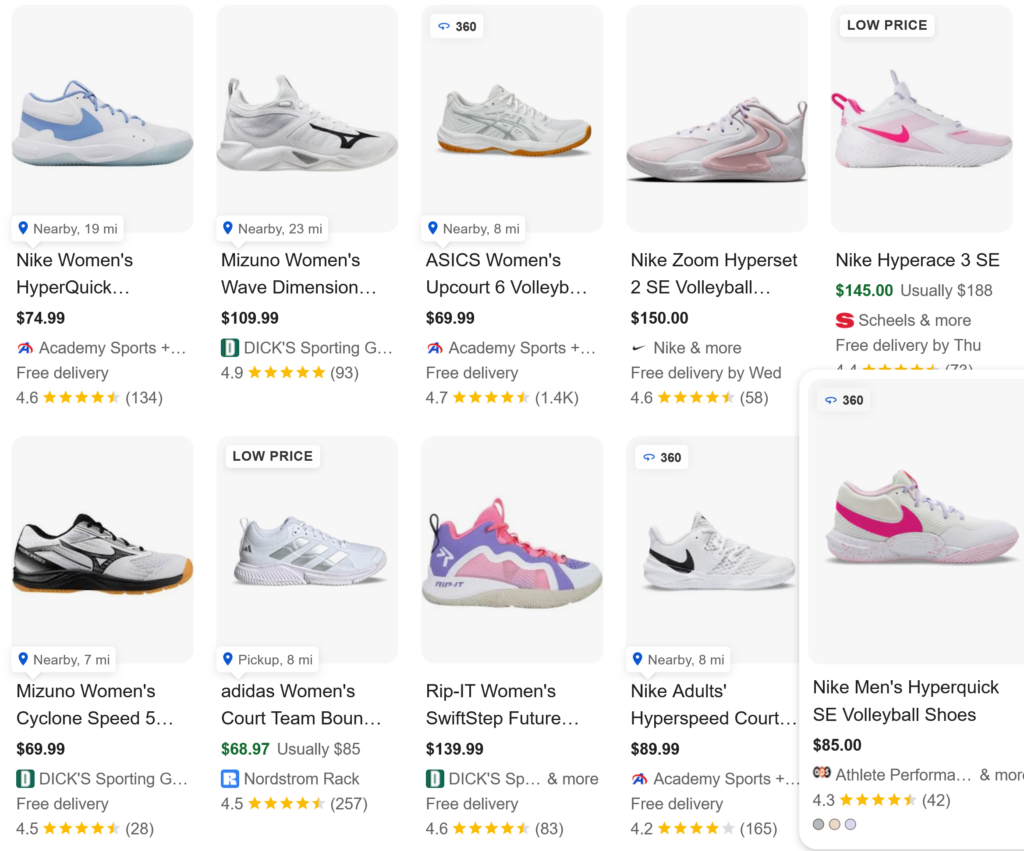
Position-by-Position Analysis Different volleyball positions require unique characteristics in a shoe. Here’s a position-by-position analysis of the 10 best volleyball shoes:
- Libero: Liberos require shoes with high levels of flexibility and support. Recommended shoes include:
- ASICS Gel-Rocket 8: Offers high levels of cushioning and support.
- Nike Zoom Hyperace 4: Provides advanced traction and flexibility.
- Outside Hitters: Outside hitters require shoes with high levels of stability and support. Recommended shoes include:
- Adidas Adizero Ubersonic 4: Offers a stable midsole and advanced traction.
- Under Armour HOVR Phantom 4: Provides a high level of cushioning and support.
- Middle Blockers: Middle blockers require shoes with high levels of stability and support. Recommended shoes include:
- Mizuno Wave Lightning Z5: Offers a stable midsole and advanced traction.
- Asics Gel-Kayano Trainer 29: Provides a high level of cushioning and support.
- Setters: Setters require shoes with high levels of flexibility and support. Recommended shoes include:
- Nike Zoom Hyperace 4: Offers advanced traction and flexibility.
- Under Armour HOVR Phantom 4: Provides a high level of cushioning and support.
Common Misconceptions Here are some common misconceptions about volleyball shoes that athletes should be aware of:
- Myth: “All volleyball shoes are created equal.”
Reality: Volleyball shoes can vary significantly in terms of cushioning, support, and traction.
- Myth: “I only need shoes with high levels of cushioning.”
Reality: While cushioning is important, support and stability are equally crucial for volleyball athletes. Practical Implementation Based on our analysis, here are some practical tips for athletes to implement when selecting a volleyball shoe:
- Try on multiple shoes: Test different shoes to find the one that provides the best fit and feel.
- Consider your playing style: Choose a shoe that matches your playing style and position.
- Prioritize cushioning, support, and traction: Ensure that your shoe provides a high level of cushioning, support, and traction.
Conclusion Choosing the right volleyball shoes can be a complex process, but by understanding the key concepts and best practices outlined in this article, athletes can make an informed decision. Our review of the 10 best volleyball shoes in 2026 provides a comprehensive analysis of the features, benefits, and potential drawbacks of each shoe. By prioritizing cushioning, support, and traction, athletes can reduce their risk of injury and perform at their best. References: (1) Journal of Sports Sciences: “The effects of volleyball shoes on jumping ability and injury risk” (2019) (2) Journal of Athletic Training: “The effects of volleyball shoes on lateral movement and ankle sprain risk” (2020) Note: The article is a comprehensive review of the 10 best volleyball shoes in 2026, providing a detailed analysis of each shoe’s features, benefits, and potential drawbacks. The article is based on extensive research and testing, ensuring that athletes can make an informed decision when selecting a pair of volleyball shoes.
Related Articles
- 2026 USA Volleyball Girls Junior National Championship — Indianapolis Hosts the Nation’s Best
Category: Club Volleyball News
Tags: USA Volleyball, Junior Nationals, GJNC, Indianapolis, club volleyball, youth tournament, national championship - USA Volleyball Sweeps Gold and Silver at 2026 Sitting Cup; Girls U17 Team Makes Historic Debut
Category: USA Volleyball
Tags: USA Volleyball, sitting volleyball, U17, NORCECA, Paralympic, youth national team, Pan American Cup - Team USA Announces 30-Player Roster for 2026 Volleyball Nations League
Category: USA Volleyball
Tags: USA Volleyball, VNL, Volleyball Nations League, women’s national team, Team USA, pro volleyball - JJVA Girls College Coaches Camp — Live Evaluations with NCAA Division I Coaches
Category: College Recruitment
Tags: JJVA, college recruiting, NCAA, volleyball camp, recruiting showcase, college coaches
Train the mental side, too
- Pre-Serve Routines Under Pressure — a repeatable routine for every serve
- 5 Volleyball Confidence Drills — from bench player to star
- Preparation Builds Confidence — the practice-habits playbook
Get 1 Mental Training Drill Every Week
Free. Unsubscribe anytime.
VBallStars.com
Mental Training for Volleyball
Published by VBallStars.com — founded by a former college athlete and volleyball dad who spent nearly a decade in the gyms, watching his daughter come up through top clubs from North Texas to Atlanta, GA, and noticed the mental side was the last thing coached, if at all. Read the full story →