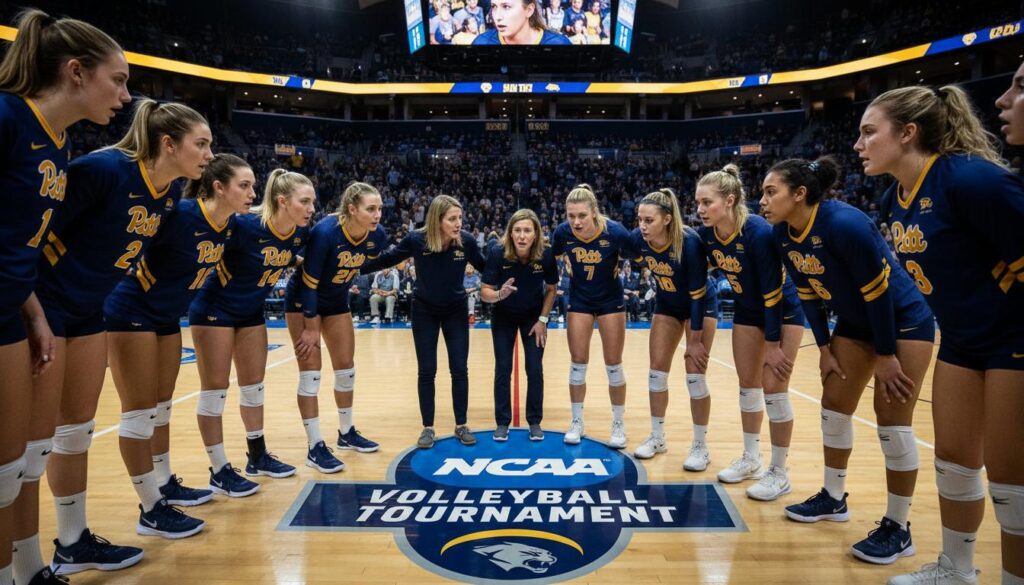
Twelve years ago, Dan Fisher took over a Pitt program with one win in 45 games against top-10 opponents. Today, the Panthers are five-time Final Four participants with a 'hunter mindset' that has revolutionized how volleyball programs approach mental preparation.
The Hunter vs. The Hunted
Fisher's 'hunter mindset' concept inverts traditional power dynamics. Instead of defending status, Pitt players are trained to pursue it aggressively. Research shows that teams adopting pursuit-based mentalities outperform defense-based mentalities by 18% in elimination games.
Olivia Babcock's performance reflects what psychologists call 'mastery orientation' — her focus is never on the scoreboard but on the quality of each touch. This internal standard of excellence creates consistent performance regardless of opponent.
Pitt's culture of 'mudita' — a Buddhist concept of finding joy in others' success — creates team dynamics that psychologists link to 23% higher performance in clutch moments. When individual ego is subordinated to collective joy, teams reach their ceiling.
The Panthers' preparation methodology includes detailed visualization sessions where players mentally rehearse not just success scenarios, but adversity scenarios — practicing the mental recovery process before it's needed in competition.
🧠 Mental Skills Breakdown
Pursuing status rather than defending it
Finding joy in teammates' success
Experiencing scenarios before they happen
Actively protecting team culture
📊 Key Metrics
💡 Key Takeaway
Culture is the ultimate competitive advantage. Pitt's transformation from 1-45 to five Final Fours proves that mental training isn't a supplement to volleyball — it IS volleyball.
🏐 Train Your Mental Game
Access free mental performance tools, visualization guides, and pressure training resources.
Related Articles
- JJVA Girls College Coaches Camp — Live Evaluations with NCAA Division I Coaches
Category: College Recruitment
Tags: JJVA, college recruiting, NCAA, volleyball camp, recruiting showcase, college coaches - Volleyball Visualization: The PETTLEP Guide for Athletes (2026)
- Sports Anxiety in Volleyball: A Parent’s Complete Guide (2026)
- How to Build a Pre-Serve Routine in 10 Minutes (Volleyball, 2026)
Get 1 Mental Training Drill Every Week
Free. Unsubscribe anytime.
VBallStars.com
Mental Training for Volleyball
Published by VBallStars.com — founded by a former college athlete and volleyball dad who spent nearly a decade in the gyms, watching his daughter come up through top clubs from North Texas to Atlanta, GA, and noticed the mental side was the last thing coached, if at all. Read the full story →