Best Sand Socks for Beach Volleyball 2026 — Heat Protection & Grip Guide
- Casual/recreational (1-2x per month): BPS Second Skin V2. Affordable, comfortable, gets the job done.
- Competitive/training (3-5x per week): CAPAS 2mm Neoprene. Best balance of sand protection, ground feel, and durability.
- Tournament player (multi-match days): ShocSox Kevlar. The no-holes guarantee and reinforced sole handle sustained heavy use.
- Cold weather or coarse sand: Vincere Dark Matter Elite. The 3-4mm neoprene provides the most insulation and abrasion protection.
FIVB and AVP Rules on Footwear
Beach volleyball is traditionally played barefoot, and both the FIVB and AVP enforce barefoot play during official competition. Sand socks are generally permitted during warm-ups and practice sessions, but check specific tournament rules before wearing them in competition. Some local and recreational leagues do allow sand socks during matches — particularly in regions with extreme sand temperatures. The FIVB’s Heat Stress Monitoring Protocol, established in 2003, tracks Wet Bulb Globe Temperature (WBGT) at events and has documented conditions where black-flag heat warnings apply during summer tournaments.
Where to Buy
Looking for the products mentioned in this guide? These Amazon links support VBallStars at no extra cost to you:
- CAPAS 2mm Neoprene Sand Socks — Check Price on Amazon →
- ShocSox Kevlar Sand Socks — Check Price on Amazon →
- Vincere Sand Socks — Check Price on Amazon →
- BPS Second Skin Beach Socks — Check Price on Amazon →
- Sand intrusion. Fine beach sand works its way between toes and underfoot, causing friction blisters and distracting discomfort during long matches. Quality sand socks create a seal that keeps sand out.
- Abrasion protection. Shells, rocks, and coarse sand particles create micro-abrasions on bare feet. Over a multi-day tournament, these small cuts accumulate into painful problems.
- Traction on loose surfaces. Grip patterns on sand sock soles provide better traction on shifting sand than bare feet, which is especially valuable for quick lateral movements and defensive transitions.
- Casual/recreational (1-2x per month): BPS Second Skin V2. Affordable, comfortable, gets the job done.
- Competitive/training (3-5x per week): CAPAS 2mm Neoprene. Best balance of sand protection, ground feel, and durability.
- Tournament player (multi-match days): ShocSox Kevlar. The no-holes guarantee and reinforced sole handle sustained heavy use.
- Cold weather or coarse sand: Vincere Dark Matter Elite. The 3-4mm neoprene provides the most insulation and abrasion protection.
- Free Mental Training Tools — 15 interactive tools, no account needed
- Take a Baseline Assessment — Measure 14 mental dimensions in 10 minutes
- Team & Club Plans — Coach dashboard, team metrics, progress tracking
As an Amazon Associate, VBallStars earns from qualifying purchases. This comes at no additional cost to you and helps keep our content free.
FAQ — Sand Socks for Beach Volleyball
Can I wear sand socks during a beach volleyball match?
It depends on the league. Official FIVB and AVP competitions require barefoot play during matches, but sand socks are typically allowed during warm-ups. Many local recreational leagues and tournament circuits permit sand socks during play, especially in extreme heat conditions. Always check the specific tournament rules before your match.
How hot can beach sand get?
Beach sand surface temperatures can reach 130°F (54°C) or higher during peak summer months, according to NOAA beach forecast data. At these temperatures, bare skin contact causes discomfort within seconds. Sand socks with neoprene or reinforced soles provide thermal insulation that lets you stay on the sand comfortably.
Do sand socks affect my ability to jump and move?
High-quality sand socks are designed to preserve ground feel while providing protection. The 2mm CAPAS socks maintain enough proprioceptive feedback for quick directional changes and approach jumps. Thicker options (3-4mm) reduce ground feel slightly but provide more insulation. Most competitive players report that the tradeoff is worth it in extreme heat or cold conditions.
How long do sand socks last?
Lifespan depends on sand coarseness, usage frequency, and sole material. Kevlar-soled ShocSox last the longest (often 2+ seasons of regular play). Neoprene options like CAPAS typically last one full season with 3-5x weekly use. Budget Lycra options like BPS may need replacement every few months with heavy use.
Protect Your Feet, Improve Your Game
Hot sand, cold sand, sharp shells, and abrasive grit — none of that helps your volleyball performance. Sand socks remove those environmental distractions so you can focus on what matters: reading the hitter, timing your block, and making the play. Whether you choose the all-around excellence of the CAPAS, the tournament-proof durability of the ShocSox, or the budget-friendly BPS, protecting your feet is one of the simplest upgrades you can make to your beach volleyball game.
Ready to take your beach game to the next level? Take the free VBallStars mental performance assessment — built for volleyball athletes who want to strengthen every dimension of their competitive edge.
Prices accurate as of July 2026. Sand sock brands mentioned are independent companies — VBallStars is not affiliated with CAPAS, ShocSox, Vincere, BPS, or STAR Beachwear. This article contains general product information for player reference.
Playing beach volleyball barefoot is tradition — but tradition does not protect your feet when the sand hits 130°F at midday. If you have ever spent a tournament afternoon doing the hot-sand dance between points, you already know the problem. Sand socks solve it. These engineered foot covers keep sand out, protect against extreme heat and cold, and provide grip that lets you move with confidence on loose, shifting surfaces.
This guide breaks down the best sand socks for beach volleyball in 2026, comparing materials, sole construction, fit systems, and price points. Whether you are a competitive AVP qualifier or a recreational player who wants to survive summer tournaments without blisters, there is a sand sock on this list that fits your game and your budget.

Why Beach Volleyball Players Need Sand Socks
Beach sand surface temperatures can exceed 130°F (54°C) during summer months, according to NOAA beach forecast data. At those temperatures, bare skin contact causes discomfort within seconds and increases the risk of burns during extended play. The CDC’s Heat & Health Tracker documents over 1,300 heat-related deaths annually in the United States, and while sand socks alone do not prevent heat illness, they address one specific but often-overlooked exposure point: your feet.
Beyond heat protection, sand socks solve three practical problems that affect every beach volleyball player:
Best Sand Socks for Beach Volleyball Compared
| Sand Sock | Material | Sole | Price | Best For |
|---|---|---|---|---|
| CAPAS 2mm Neoprene | Yamamoto #38 neoprene + Lycra | SUV tire grip pattern | $29.95-$32.95 | All-around best for serious players |
| ShocSox Kevlar | Lycra + ArmorTex/Kevlar sole | Reinforced Kevlar | $29.99-$34.99 | Maximum durability, tournament players |
| Vincere Dark Matter Elite | Spandex + 3-4mm neoprene | Action Flex neoprene | $37.99 | Competitive athletes, premium fit |
| BPS Second Skin V2 | Lycra elastane | Rubberized grip | $11.99-$19.99 | Budget pick, casual players |
| STAR Beachvolley | Breathable Lycra | Reinforced stitching | ~€25 ($27) | European market, year-round use |
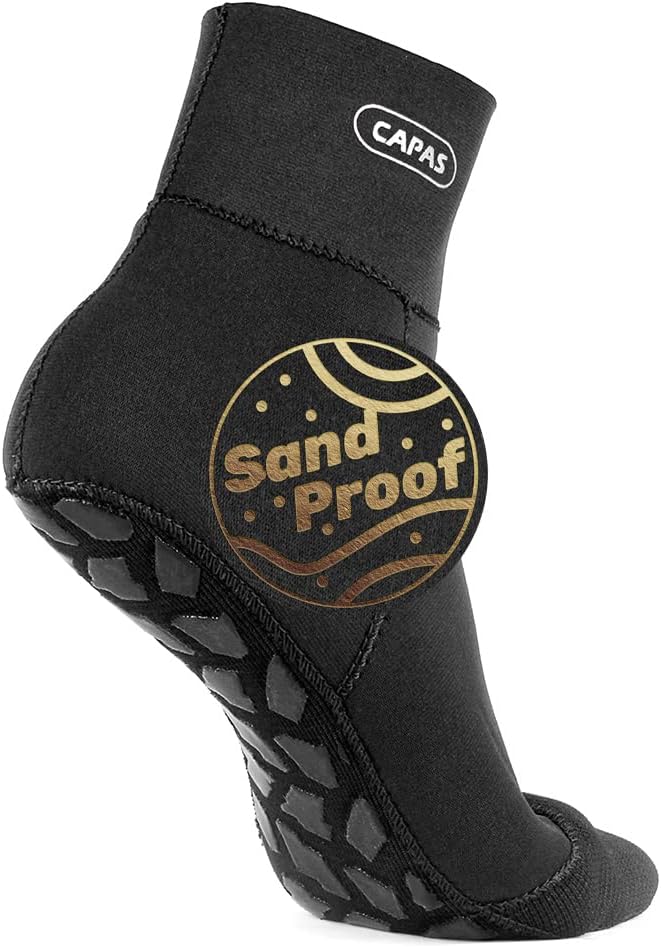
CAPAS 2mm Neoprene — Best Overall Sand Socks
Price: $29.95 (S) / $32.95 (M-XL) | Material: Japanese Yamamoto #38 smooth skin neoprene | Sole: SUV tire pattern | Available: S through XL
The CAPAS sand socks earned the top spot because they solve the two biggest problems beach volleyball players face: keeping sand out and maintaining ground feel. The Yamamoto #38 neoprene creates a blind-stitched seal that prevents even fine sand particles from entering — a claim that most competitors cannot match. The 2mm thickness strikes the right balance between protection and the proprioceptive feedback that serious players need for quick directional changes.
What makes them different: The Japanese Yamamoto material is the same grade used in high-end wetsuits. It provides thermal insulation for cold-sand morning sessions and evening games, while the breathable upper panel prevents overheating during midday play. The SUV tire pattern sole grips loose sand without feeling rigid, which matters when you are planting for a dive or loading your legs for an approach jump.
Practical note: These run slightly snug. If you are between sizes or plan to wear them over thin socks, consider sizing up. The S fits US men’s 7-8, M fits 8.5-9.5, L fits 10-11, XL fits 11.5-13.
ShocSox Kevlar — Maximum Durability for Tournament Players

Price: $29.99 (Reinforced) / $34.99 (Kevlar) | Material: Lycra + ArmorTex/Kevlar sole | Made in: USA | Warranty: No-holes guarantee on soles
ShocSox built their reputation on durability — and the no-holes guarantee backs it up. The Kevlar-reinforced sole outlasts every competitor we tested, making these the best choice for players who log serious hours on abrasive sand. The fastener strap system keeps the sock locked in place during jumps, dives, and rapid direction changes without the slipping that plagues cheaper alternatives.
Why competitive players choose ShocSox: Tournament days mean 6-8 hours of continuous play across multiple matches. Standard sand socks start breaking down by the third set. ShocSox maintain their grip, fit, and integrity through the entire day. The reinforced sole also protects against diabetic foot sensitivity, neuropathy, and other conditions that make barefoot sand play uncomfortable or dangerous.
Vincere Dark Matter Elite — Premium Performance Fit

Price: $37.99 | Material: Spandex + 3-4mm neoprene Action Flex sole | Made in: USA | Features: Neoprene side panels, elastic Duratex coating
Vincere invented sand socks in 1994, and the Dark Matter Elite is their most refined product. The 3-4mm neoprene Action Flex sole provides the thickest protection in this comparison — ideal for players who train on coarse, shell-heavy sand or compete in cold-weather beach tournaments. The neoprene side panels add arch protection that other sand socks skip, and the low-cut design stays cool while the elastic cuff keeps sand out.
The tradeoff: At $37.99, these are the most expensive option. The thicker sole also reduces ground feel slightly compared to the 2mm CAPAS. For competitive players who prioritize protection and durability over maximum proprioception, the Dark Matter Elite delivers. Made in the USA with reinforced flat-lock stitching.
BPS Second Skin V2 — Best Budget Option

Price: $11.99 (S) / $15.99 (M) / $17.99 (L-XL) | Material: Lycra elastane | Sole: Rubberized grip pattern | Features: Adjustable ankle straps, pull tabs
At under $18, the BPS Second Skin delivers surprising quality for recreational and intermediate players. The Lycra construction provides that natural “second foot” feeling, and the adjustable ankle straps prevent the sock from sliding down during play — a common complaint with budget sand socks. Rubberized grip patterns on the sole handle wet surfaces and loose sand adequately.
Where they fall short: The Lycra sole is thinner and less durable than neoprene or Kevlar options. Players who train on coarse sand or play 4+ hours regularly will wear through these faster. Available in multiple colorways including Black, Navy, Blue Floral, and Grey Camo.
How to Choose Sand Socks for Beach Volleyball
The right sand sock depends on how you play, where you play, and how often. Use this decision framework:
FIVB and AVP Rules on Footwear
Beach volleyball is traditionally played barefoot, and both the FIVB and AVP enforce barefoot play during official competition. Sand socks are generally permitted during warm-ups and practice sessions, but check specific tournament rules before wearing them in competition. Some local and recreational leagues do allow sand socks during matches — particularly in regions with extreme sand temperatures. The FIVB’s Heat Stress Monitoring Protocol, established in 2003, tracks Wet Bulb Globe Temperature (WBGT) at events and has documented conditions where black-flag heat warnings apply during summer tournaments.
FAQ — Sand Socks for Beach Volleyball
Can I wear sand socks during a beach volleyball match?
It depends on the league. Official FIVB and AVP competitions require barefoot play during matches, but sand socks are typically allowed during warm-ups. Many local recreational leagues and tournament circuits permit sand socks during play, especially in extreme heat conditions. Always check the specific tournament rules before your match.
How hot can beach sand get?
Beach sand surface temperatures can reach 130°F (54°C) or higher during peak summer months, according to NOAA beach forecast data. At these temperatures, bare skin contact causes discomfort within seconds. Sand socks with neoprene or reinforced soles provide thermal insulation that lets you stay on the sand comfortably.
Do sand socks affect my ability to jump and move?
High-quality sand socks are designed to preserve ground feel while providing protection. The 2mm CAPAS socks maintain enough proprioceptive feedback for quick directional changes and approach jumps. Thicker options (3-4mm) reduce ground feel slightly but provide more insulation. Most competitive players report that the tradeoff is worth it in extreme heat or cold conditions.
How long do sand socks last?
Lifespan depends on sand coarseness, usage frequency, and sole material. Kevlar-soled ShocSox last the longest (often 2+ seasons of regular play). Neoprene options like CAPAS typically last one full season with 3-5x weekly use. Budget Lycra options like BPS may need replacement every few months with heavy use.
Protect Your Feet, Improve Your Game
Hot sand, cold sand, sharp shells, and abrasive grit — none of that helps your volleyball performance. Sand socks remove those environmental distractions so you can focus on what matters: reading the hitter, timing your block, and making the play. Whether you choose the all-around excellence of the CAPAS, the tournament-proof durability of the ShocSox, or the budget-friendly BPS, protecting your feet is one of the simplest upgrades you can make to your beach volleyball game.
Ready to take your beach game to the next level? Take the free VBallStars mental performance assessment — built for volleyball athletes who want to strengthen every dimension of their competitive edge.
Prices accurate as of July 2026. Sand sock brands mentioned are independent companies — VBallStars is not affiliated with CAPAS, ShocSox, Vincere, BPS, or STAR Beachwear. This article contains general product information for player reference.
Get 1 Mental Training Drill Every Week
Free. Unsubscribe anytime.
Strengthen Your Mental Game
Free Mental Performance Toolkit
Get 5 science-backed exercises used by Olympic athletes. Delivered to your inbox.
No spam. Unsubscribe anytime.