It is the third match of a tournament Saturday. The gym is hot, you have been at the facility for six hours, and your serves start missing long. Your legs feel a step slow, and a headache is creeping in behind your eyes.
That is dehydration doing quiet damage to your game. Reviews of team-sport athletes show that hypohydration, even at modest levels, impairs physical, technical, and cognitive performance . The fix is not exotic: it is drinking enough across a long day of competition. And the single piece of equipment that decides whether hydration actually happens is your water bottle. Here is how to pick one that keeps up with a full tournament day and protects your focus when it matters most.
Why Does Hydration Matter So Much in Volleyball?
Volleyball tournament days stack multiple matches, warm-ups, and long bench stretches in gyms that can run hot and dry. A systematic review found that even mild hypohydration measurably affects athletes’ cognitive performance, which in volleyball shows up as slow reads, missed assignments, and shaky serving .
Research on team sports tells the same story from the performance side: fluid deficits degrade the skills that decide close sets . Reviews of hydration strategy for high-intensity intermittent sports, the exact profile of volleyball, recommend starting matches hydrated and replacing fluids across the day rather than playing catch-up at the final whistle .
Does the Bottle Itself Matter?
Honestly: no bottle hydrates you. Your habits do. But the right bottle removes every excuse between you and those habits.
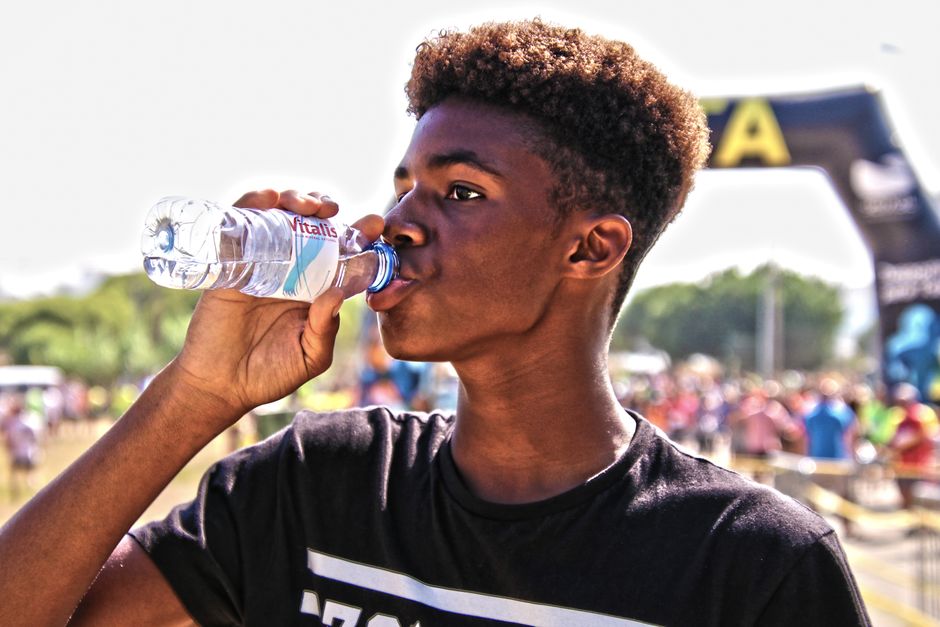
A study of outdoor team-sport athletes found fluid intake was a strong predictor of training performance across a preseason . The athletes who drank enough performed better. The bottle’s real job is making “enough” automatic: big enough capacity for a match block, easy enough to drink from on a 15-second sideline break, and boring enough to maintain that you actually clean it.
Which Type of Water Bottle Is Right for You?
| Type | Strength | Weakness | Best for | Price tier |
|---|---|---|---|---|
| Insulated stainless (Hydro Flask, Yeti style) | Ice water all tournament day | Heavy when full, dent-prone | Long tournament days, hot gyms | Premium |
| Squeeze sports bottle (bike/sport style) | One-handed, fast sideline drinking | Warm fast, plastic taste if cheap | Game bench, team benches | Budget |
| Jug with time markers | Built-in pacing reminder | Bulky in a bag, heavy for youth | Players who forget to drink | Mid |
| Collapsible flask | Packs tiny when empty | Floppy to drink from, small capacity | Multi-sport bags, travel | Budget to mid |
| Refillable team case (case of squeeze bottles) | Team-scale hydration | Storage, washing in bulk | Clubs and teams | Mid |
Most tournament players end up with two: an insulated bottle for the day and a squeeze bottle for the bench.
What Should You Look For in a Volleyball Water Bottle?
- Capacity for the real schedule. A single bottle should cover a match plus warm-up, with refills available between matches. Small “cute” bottles fail by match two.
- One-handed operation. You drink in short bursts on the sideline. A lid you can open with a flick of the thumb while you stay locked on the match beats a screw-top every time.
- Cleaning access. A wide mouth or fully removable lid lets you actually scrub. Narrow-neck bottles grow mold in the straw and lid channels, and gym bag heat makes it worse.
- Insulation for hot venues. Ice at 8 AM should still be ice at the 2 PM match. Insulated stainless is the standard for a reason.
- A visible reminder. Clear bottles or time markers do the mental work for you. If you can see the level, you drink more without thinking about it.
Which Water Bottle Models Do Volleyball Players Use Most?
We cannot test products in a lab, so treat this as the shortlist you see most in club gyms, then check current prices and reviews before buying.
- Hydro Flask standard mouth. The insulated default. Ice retention through a full tournament day and a lid that survives a gear bag.
- Yeti Rambler. The premium tank option. Heavier, nearly indestructible, popular with players who kill a bottle a season.
- CamelBak Chute. The high-flow lid champion for sideline drinking. Easier chugging than any straw design.
- Nalgene wide mouth. The budget durable pick. Loses ice faster than insulated bottles but survives anything and cleans easily.
- Gatorade-style squeeze bottles. The team-bench standard. Cheap, fast, replaceable, and the one-handed option for in-match drinking.
How Much Should a Volleyball Player Drink?
There is no single number that fits every athlete. Sweat rates vary by player, effort, and gym temperature, and sports-medicine reviews recommend individualizing intake rather than chasing generic targets .
Three habits cover the ground:
- Start hydrated. Sip steadily on the drive and through warm-up rather than arriving dry .
- Watch the signals. Pale urine by mid-morning, and a body weight that drops more than a little across a match block, means you are behind .
- Pace across the day, do not chug at the end. Fluids spread between matches absorb better than a desperate liter at the trophy ceremony .
FAQ: Volleyball Water Bottles
Do insulated bottles actually help performance? Indirectly, yes. Cold water encourages players to drink more across a hot tournament day, and better hydration supports physical and cognitive performance in team sports .
How much water should a volleyball player drink at a tournament? It varies by sweat rate and gym conditions. Start hydrated, sip steadily between matches, and monitor urine color and body weight rather than chasing a fixed number .
Are time-marker bottles worth it? For players who forget to drink, yes. Built-in pacing turns hydration into a visible checklist instead of a guess.
Squeeze bottle or screw-top for matches? Squeeze or flip-top lids win on the bench. One-handed drinking in a 15-second break keeps you engaged with the match instead of fighting a cap.
How do you keep a water bottle from getting moldy? Air dry it fully between sessions, scrub the lid channels weekly, and replace any bottle where slime keeps returning after cleaning. Straws and bite valves are the usual hiding spots.
Hydrate the Body. Train the Mind.
The bottle keeps your body steady across a six-tournament Saturday. Composure does the same thing for your mind, match after match. Take the free mental performance assessment and build both sides of your game.
—
Sources
- Nuccio RP, et al. “Fluid Balance in Team Sport Athletes and the Effect of Hypohydration on Cognitive, Technical, and Physical Performance.” Sports Med, 2017. PMID 28508338. https://pubmed.ncbi.nlm.nih.gov/28508338/
- Dube A, et al. “Effects of hypohydration and fluid balance in athletes’ cognitive performance: a systematic review.” Afr Health Sci, 2022. PMID 36032481. https://pubmed.ncbi.nlm.nih.gov/36032481/
- Maughan RJ, et al. “Development of hydration strategies to optimize performance for athletes in high-intensity sports and in sports with repeated intense efforts.” Scand J Med Sci Sports, 2010. PMID 20840563. https://pubmed.ncbi.nlm.nih.gov/20840563/
- Badham L, et al. “Fluid intake is a strong predictor of outdoor team sport pre-season training performance.” J Sports Sci, 2023. PMID 37002685. https://pubmed.ncbi.nlm.nih.gov/37002685/
- Oppliger RA, et al. “Hydration testing of athletes.” Am J Sports Med, 2002. PMID 12457417. https://pubmed.ncbi.nlm.nih.gov/12457417/
Get 1 Mental Training Drill Every Week
Free. Unsubscribe anytime.
VBallStars.com
Mental Training for Volleyball
Published by VBallStars.com — founded by a former college athlete and volleyball dad who spent nearly a decade in the gyms, watching his daughter come up through top clubs from North Texas to Atlanta, GA, and noticed the mental side was the last thing coached, if at all. Read the full story →