Best Volleyball Sunglasses & Court Eyewear 2026 — Protection Guide
The sun reflects off beach sand with up to 25% of incoming UV radiation — that is not just glare, that is a direct assault on your eyes during every rally. And when a volleyball traveling at 50+ mph heads toward your face, you want more than fashion on your eyes. You want impact-resistant lenses, frames that grip when you sweat, and protection that meets real safety standards. This guide covers the best volleyball sunglasses and court eyewear for 2026, from affordable beach-volleyball shades to ASTM-rated protective goggles for indoor play.
Whether you play outdoor beach volleyball under blazing sun or indoor sixes under gym lights, your eyes face risks that most players never think about until something goes wrong. Nearly 30,000 sports-related eye injuries are treated in U.S. emergency rooms each year, according to the American Academy of Ophthalmology. Basketball leads the list, but volleyball — with its close-quarters net play, flying balls, and swinging elbows — accounts for a measurable share of those injuries. The right eyewear is not optional. It is essential.

Beach Volleyball Sunglasses vs. Indoor Court Eyewear
Beach and indoor volleyball demand completely different eyewear — and understanding why prevents costly mistakes.
Beach volleyball sunglasses prioritize UV protection, glare reduction, and secure fit during explosive movement. Sand reflects intense UV radiation from below, creating a double-exposure scenario that indoor players never face. Polarized lenses are essential for beach play — not optional. Sweat-activated grip materials (like Oakley’s Unobtainium) lock frames onto your face during the constant jumping and head movement of a rally.
Indoor court eyewear prioritizes impact resistance and ball protection. Gymnasium lighting creates different challenges — overhead glare, fluorescent flicker, and fast-moving balls at close range. ASTM F803-rated protective goggles with polycarbonate lenses are the standard for indoor volleyball. Regular glasses or fashion sunglasses have no place on an indoor court — they shatter on impact and create more danger than they prevent.
Best Beach Volleyball Sunglasses Compared
| Sunglasses | Lens Tech | Frame | Price | Best For |
|---|---|---|---|---|
| Oakley Flak 2.0 XL | Prizm Polarized | O-Matter, Unobtainium grip | $214-$267 | Best overall performance |
| Oakley Radar EV Path | Prizm, HDO | O-Matter, extended coverage | $211 | Maximum peripheral protection |
| Smith Arena Elite | ChromaPop Polarized | Nylon, adjustable nose | $190-$220 | Beach volleyball, glare reduction |
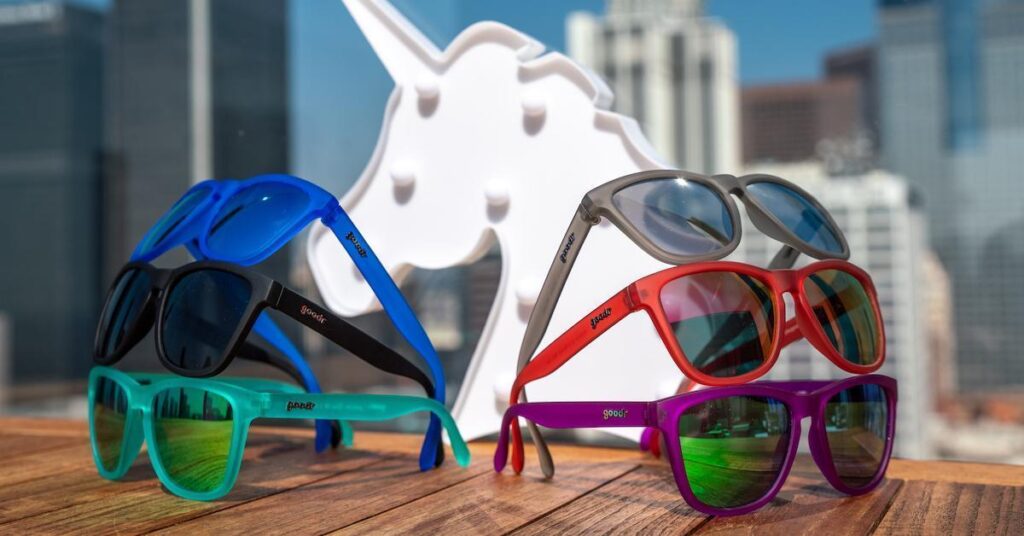
| goodr OG | Polarized UV400 | Lightweight plastic | $30 | Best budget pick |
| Oakley Sutro Lite | Prizm | Carbon, shield lens | $172-$214 | Shield-style coverage |
Oakley Flak 2.0 XL — Best Overall Volleyball Sunglasses
Price: $214 (non-polarized) / $267 (polarized) | Lens: Prizm or Prizm Polarized | Frame: O-Matter | Grip: Unobtainium nose pads and ear socks | Impact rating: Meets ANSI Z87.1
The Oakley Flak 2.0 XL is the most popular sport sunglasses among competitive volleyball players for three reasons. First, the Prizm lens technology enhances color contrast and depth perception — you track the ball better against sand, sky, or gym backgrounds. Second, the Unobtainium grip material gets tackier when you sweat, which means the frames stay locked in place during the explosive head movement of an approach jump or block transition. Third, the O-Matter frame flexes on impact instead of snapping, which matters when a ball catches your face at the net.
Why volleyball players choose the Flak 2.0 XL: The 8.75-base lens curvature wraps around your face for maximum peripheral coverage without restricting upward field of view — critical when you are tracking a ball overhead. Plutonite lenses block 100% of UVA, UVB, UVC, and harmful blue light. The three-point fit system eliminates pressure points during extended wear. Available in standard and polarized versions; polarized is recommended for beach play, non-polarized for indoor or low-light conditions.
Smith Arena Elite — Best Polarized for Beach Play

Price: $190-$220 | Lens: ChromaPop Polarized | Frame: Impact-resistant nylon | Fit: Adjustable nose pads | Weight: ~30g
Smith’s ChromaPop lens technology boosts color clarity while cutting glare — and on a beach court where sand, water, and sky create overlapping reflective surfaces, that color differentiation matters. The single visor lens with FreeFloat technology protects your lenses when frames flex, which extends lens life during the rough handling that tournament play demands.
Why it stands out for beach volleyball: The polarized ChromaPop lenses reduce sand glare more effectively than standard polarized lenses, which typically flatten colors and reduce contrast. Smith’s approach enhances contrast while cutting glare — you see the ball more clearly against bright backgrounds without the “flat” visual effect that cheap polarized lenses create. The flexible nylon construction resists impacts and the adjustable nose pads let you customize the fit for your face shape.
goodr OG — Best Budget Volleyball Sunglasses
Price: $30 | Lens: Polarized UV400 | Frame: Lightweight plastic | Grip: No-slip coating | Weight: ~30g
At $30, goodr proves that beach volleyball sunglasses do not have to cost $200+. The OG delivers polarized UV400 protection, a lightweight frame that stays put during play, and a no-slip grip coating that works in sweat. The brand started in 2015 with a simple premise: active sunglasses should be affordable, functional, and not take themselves too seriously. Ten years later, the OG remains their bestseller.
Where they fit: For recreational beach volleyball players who want real polarized protection without the Oakley price tag, goodr is the clear choice. They will not match the optical clarity or frame durability of premium options, but for $30 you get legitimate UV protection and glare reduction that makes a real difference on the sand. Starting in 2026, goodr raised their base price from $25 to $30 — still the most affordable quality option in this category.
Indoor Court Eyewear: ASTM F803-Rated Protective Goggles
Indoor volleyball is a different beast. The ball travels faster at closer range, elbows fly at the net, and gymnasium lighting creates glare that sunglasses cannot address. The standard for indoor volleyball eye protection is ASTM F803 — the American Society for Testing and Materials specification for eye protectors in selected sports.
What ASTM F803 means: Eyewear meeting this standard has been tested to withstand high-velocity ball impacts and penetration from racket-sport projectiles, soccer balls, and basketballs. For volleyball, polycarbonate lenses in a properly fitted frame or goggle provide the shatterproof barrier that prevents serious eye injuries from errant balls and contact at the net.
Rec Specs Liberty Sport All Pro
Price: $60-$90 | Impact rating: ASTM F803 | Lens: Polycarbonate, shatterproof | Fit: Wraparound, saddle bridge | Prescription: Available
Rec Specs by Liberty Sport is the gold standard for prescription sports eyewear. The All Pro features wraparound prescription-ready frames with rounded full rims and a snug saddle bridge that stays in place during dives and jumps. The shatterproof polycarbonate lenses meet ASTM F803 impact standards — the same standard recommended by Prevent Blindness and the American Academy of Ophthalmology for competitive court sports.
Why indoor volleyball players need these: Regular glasses have no place on a volleyball court. They break on impact, creating sharp edges near your eyes. Fashion sunglasses provide zero ball-impact protection. ASTM F803-rated eyewear from Rec Specs gives you the optical clarity to track the ball while providing the impact barrier that prevents serious injury. Prescription options are available for players who need vision correction.
Stoggles — Modern Safety Glasses with Style
Price: $45-$65 | Impact rating: ANSI Z87.1+ (high-velocity) | Lens: Polycarbonate, anti-fog | Style: Modern goggle design | Prescription: Available
Stoggles brought modern design to safety eyewear. Their ANSI Z87.1+ rated glasses look like regular eyewear but provide high-velocity impact protection with anti-fog polycarbonate lenses. For indoor volleyball players who want protection without the “goggle look,” Stoggles bridges the gap between safety and style. Anti-fog coating is especially valuable in humid gymnasium environments where lens fogging disrupts play.
Eye Injury Statistics Every Volleyball Player Should Know
The numbers are clear: eye injuries in volleyball are more common than most players realize. According to the American Academy of Ophthalmology, nearly 30,000 sports-related eye injuries are treated in U.S. emergency rooms each year. A study published in the Journal of Athletic Training found that volleyball accounts for approximately 0.12% of NCAA eye injuries in men and 0.99% in women — lower incidence than basketball, but the injuries that do occur can be career-ending.
The NCAA Injury Surveillance System data shows that the most common volleyball eye injuries result from ball contact, finger contact during blocking, and collision with other players. ASTM F803-rated eyewear reduces the risk of serious eye injury by providing a polycarbonate barrier that absorbs and distributes impact force. The American Academy of Ophthalmology recommends protective sports glasses with shatterproof polycarbonate lenses for all competitive volleyball players.
How to Choose the Right Eyewear for Your Game
- Outdoor beach volleyball: Polarized sunglasses with wraparound coverage and sweat-activated grip. Top pick: Oakley Flak 2.0 XL Prizm Polarized. Budget pick: goodr OG.
- Indoor competitive volleyball: ASTM F803-rated protective eyewear with polycarbonate lenses. Top pick: Rec Specs Liberty Sport All Pro. Style pick: Stoggles.
- Indoor + outdoor player: Get two pairs. Beach sunglasses for outdoor play, ASTM-rated goggles for indoor. Do not try to use one pair for both — the optical requirements are different.
- Prescription players: Rec Specs All Pro accepts prescription lenses. Most sport sunglasses also accept prescription inserts. Do not play in regular prescription glasses — they shatter on impact.
Where to Buy
Looking for the products mentioned in this guide? These Amazon links support VBallStars at no extra cost to you:
- Oakley Flak 2.0 XL Sunglasses — Check Price on Amazon →
- goodr OG Polarized Sunglasses — Check Price on Amazon →
- Smith Arena Elite Sunglasses — Check Price on Amazon →
- Rec Specs Liberty Sport All Pro — Check Price on Amazon →
- Stoggles Safety Glasses — Check Price on Amazon →
- Free Mental Training Tools — 15 interactive tools, no account needed
- Take a Baseline Assessment — Measure 14 mental dimensions in 10 minutes
- Team & Club Plans — Coach dashboard, team metrics, progress tracking
As an Amazon Associate, VBallStars earns from qualifying purchases. This comes at no additional cost to you and helps keep our content free.
FAQ — Volleyball Sunglasses and Court Eyewear
Do I need polarized sunglasses for beach volleyball?
Yes. Sand reflects up to 25% of UV radiation, creating intense glare that impairs ball tracking and causes eye fatigue. Polarized lenses eliminate this glare while maintaining color clarity. Non-polarized sunglasses reduce brightness but do not address the reflective glare that specifically affects beach volleyball vision.
Can I wear regular sunglasses for volleyball?
Regular fashion sunglasses are not designed for sport use. They lack impact resistance, UV protection ratings, and the secure fit needed for explosive movement. On an indoor court, regular glasses create a serious injury risk from ball impact. Use sport-specific sunglasses for beach play and ASTM-rated eyewear for indoor play.
What is ASTM F803 and why does it matter?
ASTM F803 is the American Society for Testing and Materials standard for eye protectors in selected sports, including basketball, soccer, and racquet sports. Eyewear meeting this standard has been tested to withstand high-velocity ball impacts and contact from hands and elbows. For indoor volleyball, ASTM F803-rated eyewear provides the impact protection that prevents serious eye injuries.
How much do volleyball sunglasses cost?
Budget options like goodr start at $30 with polarized UV400 protection. Mid-range options like Oakley Sutro ($172) and Smith Arena Elite ($190) offer advanced lens technology. Premium options like Oakley Flak 2.0 XL ($214-$267) provide the best optics and frame durability. Indoor ASTM-rated eyewear like Rec Specs All Pro runs $60-$90.
Protect Your Vision, Elevate Your Game
Your eyes are the most important tool in volleyball. Every read, every timing decision, every defensive reaction starts with what you see. The right eyewear — whether polarized beach sunglasses or ASTM-rated court goggles — protects your vision while enhancing your performance. Do not wait for an injury to take eye protection seriously.
Want to understand every dimension of your volleyball performance? Take the free VBallStars mental performance assessment — built for athletes who want to strengthen the mental game alongside the physical.
Prices accurate as of July 2026. Oakley, Smith, goodr, Rec Specs, Liberty Sport, and Stoggles are registered trademarks of their respective manufacturers. ASTM F803 is a standard of the American Society for Testing and Materials. This article is for informational purposes — VBallStars is not affiliated with any eyewear manufacturer.
Get 1 Mental Training Drill Every Week
Free. Unsubscribe anytime.
Strengthen Your Mental Game
Free Mental Performance Toolkit
Get 5 science-backed exercises used by Olympic athletes. Delivered to your inbox.
No spam. Unsubscribe anytime.