Volleyball Parent Sideline Etiquette: The Complete Guide (2026)

July 21, 2026    مصطفى
You are sitting in the bleachers. Your daughter is serving for set point. The gym is loud, the stakes are real, and every fiber of your being wants to shout “HIT IT CROSS-COURT!” from the stands. Stop. Take a breath. What you do in the next three seconds matters more than you think — because research shows that 90% of athletes report improved confidence when their parents cheer positively from the sidelines. And the way you behave at a volleyball match can either build your athlete’s confidence or destroy it.

Being a volleyball parent is one of the most rewarding — and most confusing — roles in youth sports. You want to support your child, but the line between supportive and counterproductive is razor-thin. USA Volleyball, the JVA, and sport psychologists have spent years studying what works and what does not. Here is what the research and the experts say about how to be a great volleyball spectator.

The 5 Rules of Volleyball Sideline Behavior

USA Volleyball published an official spectator guide called “Be a Better Spectator” that establishes five clear rules for parent behavior. These are not suggestions — they are the baseline expectations at every USAV-sanctioned event:

Rule 1: Keep It Positive

Cheering, encouragement, and general hollering should be maximized on the sidelines. Players working hard need and deserve your positive support. What they do not need is your anxiety piled on top of their own when the game is going poorly. Your energy matters more than your tactical knowledge [citation:1].

Rule 2: Never Criticize — Anyone

Do not criticize players, coaches, or referees. Publicly criticizing players on your team hurts morale. Players already know their errors — they do not need reminders from the stands. And criticizing the opposing team is simply poor sportsmanship. Referees make judgment calls on every contact and will err at times, but “they never make a bad call in their heart” [citation:1].

Rule 3: Leave Coaching to the Coaches

This is a game for the players. Coaches are on the bench to guide them. In the stress of the game, there needs to be just one source of feedback — the coach. If you think an athlete is doing something wrong, tell the coaches in private, not the player. A player may be doing exactly what the coaches instructed [citation:1].

Rule 4: Be a Role Model

Set an example in your actions and words. Do not break tournament rules, leave a mess, or use inappropriate language. Players on the court can be removed for foul language, and spectators can be too. Degrading actions and words are “the bane of sports character development” [citation:1].

Rule 5: Remember, It Is a Game

Volleyball is supposed to be fun. Your attitude in the spectating area affects the mood and success of the team. Any spectator who persists in inappropriate behavior may be asked to leave. The Olympic Creed says it best: “The most important thing in the Olympic Games is not to win but to take part” [citation:1].

What to Say — and What NOT to Say

TrueSport expert Amanda Stanec, PhD, identified three common sideline behaviors that harm athletes, and offered specific alternatives for each:

What You Might HearWhy It HurtsWhat to Say Instead
“Nice try” after a mistake (with a disappointed tone)Signals that the outcome matters more than the effort“I love watching you play” — focus on presence, not performance
“Hit it harder!” or “Move left!”Critiques the coach’s strategy and confuses the athlete with competing instructionsCheer for the effort and teamwork, not specific plays
Criticizing the refereeDehumanizes officials and teaches poor sportsmanship. If we do not have officials, our kids do not get to play“Great hustle!” — redirect energy toward your team’s effort
Offensive language or slursHarmful to athletes, officials, and community. Many arenas have rules against thisSpeak up. Be an upstander, not a bystander. If the situation may escalate, get an authority figure involved

Stanec emphasizes that the car ride home is where the real damage often happens. “If your athlete asks for feedback, have the conversation. But if they do not, let the moment breathe. Home should feel like a place where they are supported regardless of how they performed, not like another evaluation” [citation:2].

The 24-Hour Rule

Every major volleyball organization — USAV, JVA, NCVA, and most club programs — enforces the “24-Hour Rule.” It works like this: after a game or tournament, parents must wait at least 24 hours before discussing concerns with a coach. This rule exists for two reasons:

  • It removes discussion from the presence of players. Athletes should not witness parent-coach conflicts.
  • It allows everyone to cool off. Emotions run high after a tough loss or limited playing time. Reasonable discussion is more likely when both parties are calmer [citation:3].

The JVA adds: “Parents who cannot abide by these procedures will be asked to take their daughter out of the club program. Due to commitment of funds for all club programs, no refunds will be made” [citation:4]. That is how seriously clubs take this rule.

What Research Says About Parental Involvement

Sport psychology research consistently shows that parental involvement exists on a spectrum, and the sweet spot is in the middle. Here is what the data tells us:

  • 90% of athletes report improved confidence with positive parental cheering. Your energy directly impacts your child’s performance [citation:5].
  • 60% of kids prefer parental cheering when they are struggling, not compliments after good plays. Your support during tough moments matters most [citation:5].
  • Highly skilled athletes consistently report moderate parental involvement — neither absent nor overwhelming. The sweet spot is about 72% involvement with clear boundary setting [citation:5].
  • Female student-athletes report overwhelming anxiety at more than double the rate of male teammates, and depressive symptoms affect up to a third of them. Parental pressure is a contributing factor [citation:6].

What the Official Codes of Conduct Say

Every major volleyball organization has published parent codes of conduct. Here is a synthesis of the key rules from USAV, NCVA, Arizona Region, Volleyball BC, and multiple club programs:

DODON’T
Cheer positively for your teamCoach from the sidelines
Applaud good plays by both teamsCriticize players, coaches, or referees publicly
Stay in the spectator area during matchesApproach officials about calls during a match
Let your athlete talk to the coach first about concernsConfront coaches about playing time immediately after games
Model sportsmanship and emotional controlUse inappropriate language or gestures
Know the rules of the gameWalk onto the court while play is in progress
Encourage effort and teamworkCompare your child’s talent to other players
Support the coach’s decisions publiclyDiscuss coaching disagreements in front of other parents

The Car Ride Conversation

The drive home from a volleyball tournament is one of the most emotionally charged environments in youth sports. Your athlete is processing a win or loss, limited playing time, a coach’s decision, or a mistake they made on the court. What you say in that car determines whether they look forward to next week’s practice or dread it.

The JVA puts it directly: “From a Coach’s standpoint, those car ride critiques can sometimes be more stressful than helpful. What kids really need is someone who will make them feel safe and confident, not someone who reminds them of every little mistake they made” [citation:4].

What to say on the car ride home:

  • “I love watching you play.” (If they do not ask for feedback, this is enough.)
  • “What was the best part of today for you?” (Lets them lead the conversation.)
  • “I saw you working hard out there.” (Reinforces effort over outcome.)

What NOT to say:

  • “Why did you pass the ball there?” (Tactical critique — let the coach handle it.)
  • “You should have played more aggressively.” (Adds pressure to an already stressful situation.)
  • “The referee was terrible.” (Teaches poor sportsmanship and deflects accountability.)

How Sideline Behavior Affects Athletic Performance

This is not just about being nice. Your sideline behavior has measurable effects on your athlete’s performance. Research in sport psychology consistently shows three things:

  • Positive cheering improves confidence. Athletes who feel supported by their parents perform better under pressure, not worse. The 90% confidence stat from USAV is backed by multiple studies on youth sport environments [citation:1][citation:5].
  • Sideline coaching creates confusion. When a player hears “hit it cross-court” from the stands and “hit it line” from the coach, they freeze. The brain cannot process two contradictory instructions at full speed. One voice matters: the coach [citation:2].
  • Criticism after mistakes increases anxiety. Athletes who hear criticism from parents after errors develop a fear of failure that compounds with each game. This is one of the primary drivers of volleyball burnout [citation:6].

What If Another Parent Is the Problem?

You cannot control other parents. But you can control how you respond. USA Volleyball’s TrueSport expert offers three options when you hear another adult behaving inappropriately:

  1. Ignore it. Sometimes the best response is no response. If the behavior is minor and isolated, let it go.
  2. Confront it in the moment. Only if you feel safe doing so. “You never know how another adult is going to react,” warns Stanec. “If you confront them in the moment, you risk a situation worsening” [citation:2].
  3. Deal with it later. After everyone has calmed down, have a conversation. Or ask the coach to address the parents as a group. This is usually the most productive approach.

If you see offensive language based on race, sexuality, gender, or any other personal characteristic, speak up clearly and directly. If the situation may escalate, get a referee or authority figure involved. Most arenas have rules against offensive language, and the parent will likely be removed [citation:2].

The Parent’s Role in Mental Performance

Here is something most volleyball parents never consider: your sideline behavior is directly connected to your athlete’s mental performance. Athletes who feel pressured by parental expectations develop performance anxiety that shows up as tight muscles, hesitant decisions, and fear of making mistakes. Athletes who feel unconditionally supported develop the confidence to take risks, recover from errors, and perform under pressure.

The mental skills that separate good volleyball players from great ones — focus under pressure, error recovery, confidence, composure — are all affected by the environment athletes train in. And parents are a huge part of that environment. When you cheer for effort instead of outcomes, you are reinforcing the exact mental patterns that lead to better performance.

Want to understand your athlete’s mental game better? Take the free VBallStars mental performance assessment — built for volleyball athletes and the parents who support them.

FAQ — Volleyball Parent Sideline Etiquette

Should I coach my child from the stands during a volleyball match?

No. Every major volleyball organization — USAV, JVA, NCVA — explicitly prohibits coaching from the sidelines. It creates confusion for the athlete, who receives contradictory instructions from you and the coach. Your role as a parent is to be a safe, supportive presence. Leave the coaching to the coaching staff.

How long should I wait before talking to the coach about playing time?

The “24-Hour Rule” is standard across virtually all volleyball programs. Wait at least 24 hours after a game before discussing concerns with a coach. Let your athlete talk to the coach first. If the issue persists after that conversation, then schedule a private meeting with the coach — not on the sideline, not during practice, and not in front of other parents.

What should I say to my child after a tough loss?

Keep it simple and supportive. “I love watching you play” is often enough. If they want to talk about the game, let them lead the conversation. Avoid tactical critiques, comparisons to teammates, or comments about playing time. The car ride home should feel like a safe space, not a post-game film review.

What happens if I break the spectator code of conduct?

Consequences vary by organization but can include removal from the venue, suspension from future events, and in severe cases, your child’s team being disqualified. The Arizona Region states that “physical or verbal intimidation of any individual is unacceptable behavior and will not be tolerated.” Most clubs enforce these rules strictly.

How can I be supportive without adding pressure?

Focus on controllable behaviors: effort, preparation, attitude, and resilience — not wins, playing time, or statistics. Show interest in your child’s life beyond volleyball. Attend games with the goal of enjoying the experience together, not evaluating performance. Research shows that athletes who feel their parents value them as people, not players, develop stronger intrinsic motivation.

Last updated: July 2026. Sources: USA Volleyball “Be a Better Spectator” [citation:1], JVA “4 Important Rules” [citation:4], USA Volleyball/TrueSport “Top 3 Sideline Things” [citation:2], NCVA Code of Conduct, Arizona Region Parent Code of Conduct, Volleyball BC Family Code of Conduct. VBallStars is not affiliated with any volleyball governing body.

  1. Ignore it. Sometimes the best response is no response. If the behavior is minor and isolated, let it go.
  2. Confront it in the moment. Only if you feel safe doing so. “You never know how another adult is going to react,” warns Stanec. “If you confront them in the moment, you risk a situation worsening” [citation:2].
  3. Deal with it later. After everyone has calmed down, have a conversation. Or ask the coach to address the parents as a group. This is usually the most productive approach.

If you see offensive language based on race, sexuality, gender, or any other personal characteristic, speak up clearly and directly. If the situation may escalate, get a referee or authority figure involved. Most arenas have rules against offensive language, and the parent will likely be removed [citation:2].

The Parent’s Role in Mental Performance

Here is something most volleyball parents never consider: your sideline behavior is directly connected to your athlete’s mental performance. Athletes who feel pressured by parental expectations develop performance anxiety that shows up as tight muscles, hesitant decisions, and fear of making mistakes. Athletes who feel unconditionally supported develop the confidence to take risks, recover from errors, and perform under pressure.

The mental skills that separate good volleyball players from great ones — focus under pressure, error recovery, confidence, composure — are all affected by the environment athletes train in. And parents are a huge part of that environment. When you cheer for effort instead of outcomes, you are reinforcing the exact mental patterns that lead to better performance.

Want to understand your athlete’s mental game better? Take the free VBallStars mental performance assessment — built for volleyball athletes and the parents who support them.

FAQ — Volleyball Parent Sideline Etiquette

Should I coach my child from the stands during a volleyball match?

No. Every major volleyball organization — USAV, JVA, NCVA — explicitly prohibits coaching from the sidelines. It creates confusion for the athlete, who receives contradictory instructions from you and the coach. Your role as a parent is to be a safe, supportive presence. Leave the coaching to the coaching staff.

How long should I wait before talking to the coach about playing time?

The “24-Hour Rule” is standard across virtually all volleyball programs. Wait at least 24 hours after a game before discussing concerns with a coach. Let your athlete talk to the coach first. If the issue persists after that conversation, then schedule a private meeting with the coach — not on the sideline, not during practice, and not in front of other parents.

What should I say to my child after a tough loss?

Keep it simple and supportive. “I love watching you play” is often enough. If they want to talk about the game, let them lead the conversation. Avoid tactical critiques, comparisons to teammates, or comments about playing time. The car ride home should feel like a safe space, not a post-game film review.

What happens if I break the spectator code of conduct?

Consequences vary by organization but can include removal from the venue, suspension from future events, and in severe cases, your child’s team being disqualified. The Arizona Region states that “physical or verbal intimidation of any individual is unacceptable behavior and will not be tolerated.” Most clubs enforce these rules strictly.

How can I be supportive without adding pressure?

Focus on controllable behaviors: effort, preparation, attitude, and resilience — not wins, playing time, or statistics. Show interest in your child’s life beyond volleyball. Attend games with the goal of enjoying the experience together, not evaluating performance. Research shows that athletes who feel their parents value them as people, not players, develop stronger intrinsic motivation.

Last updated: July 2026. Sources: USA Volleyball “Be a Better Spectator” [citation:1], JVA “4 Important Rules” [citation:4], USA Volleyball/TrueSport “Top 3 Sideline Things” [citation:2], NCVA Code of Conduct, Arizona Region Parent Code of Conduct, Volleyball BC Family Code of Conduct. VBallStars is not affiliated with any volleyball governing body.
High School Volleyball Season 2026: Start Dates, Schedules & State-by-State Guide

July 21, 2026    مصطفى

When does high school volleyball season start? If you are a parent mapping out your family calendar, a player planning tryouts, or a coach building a training cycle, this is the question that determines your entire fall. The answer depends on your state — and the 2026 calendar has some important changes you need to know about.

Mississippi takes the court first on July 31. Connecticut and Maryland do not start until September 7-8. That is a five-week spread across the country, and if you are traveling for tournaments or managing multiple athletes, knowing your state’s exact dates is critical. Here is the complete state-by-state breakdown for the 2026 high school volleyball season.

2026 High School Volleyball Start Dates by State

MaxPreps published the most comprehensive list of high school volleyball start dates for all 50 states in June 2026. The season begins as early as July 31 (Mississippi) and runs as late as September 8 (Connecticut). Here is the full breakdown:

Start DateStates
July 31Mississippi
Aug 3Georgia, Utah
Aug 8Delaware, South Carolina
Aug 10Louisiana, Virginia (some divisions)
Aug 14Nevada, New Hampshire
Aug 15Indiana (first official contest), Maine, Massachusetts, Minnesota, Wisconsin
Aug 17Ohio (first match permitted)
Aug 20Michigan, West Virginia
Aug 23Alabama (season begins), Missouri, Virginia
Aug 24Idaho, Illinois, Kansas, New Jersey, New York
Aug 25Iowa, Washington
Aug 27Montana, Nebraska, Oregon, Rhode Island
Aug 28DC, North Dakota, Pennsylvania, Vermont, Wyoming
Aug 31Arizona, California, Colorado, Texas (some regions)
Sept 1Florida (some regions), Oklahoma
Sept 7Connecticut
Sept 8Maryland

What Happens Before the Season Starts

The high school volleyball calendar does not begin on the first practice date. Most states have a structured preseason timeline that starts weeks earlier:

  • Summer contact period (May-July): Coaches can run open gyms, camps, and weight training but cannot conduct official team practices. This is when athletes build conditioning and skill fundamentals.
  • Dead period: Most states enforce a 1-2 week dead period in late June or early July where no coach-athlete contact is allowed. This is the true off-season reset point.
  • Tryouts (August): Most states begin tryouts within the first week of August. Ohio starts August 1. Indiana starts official practices August 3 with first contests August 15. OHSAA notes that “tryouts and practice are one and the same — you may begin those on August 1, 2026” [citation:1].
  • Preseason scrimmages: Most states allow 2-3 scrimmages before the regular season begins. These are critical for coaches to evaluate lineups and for players to shake off rust.

State-by-State Key Dates for 2026

Here are the critical dates for major volleyball states in 2026:

StatePractice StartFirst MatchTournament DeadlineState Finals
Ohio (OHSAA)Aug 1Aug 17Sept 28Nov (sectional through state)
Indiana (IHSAA)Aug 3Aug 15Sept 24Nov 7
Georgia (GHSA)Jul 27-Aug 3Aug 3Oct 13Oct 29-31
Utah (UHSAA)Jul 27Aug 3Oct 17 (1A-2A) / Oct 27 (3A-6A)Oct 23-Nov 1
Connecticut (CIAC)Aug 25Sept 8Nov 7Nov 20-21
WashingtonAug 25Aug 25Sept 28 (50% rule)Nov 13-22
IllinoisAug 4Aug 17OctNov
Texas (UIL)Aug 1Aug 10OctNov

How the Club Season Connects to the High School Season

Understanding the full volleyball calendar is essential for families navigating both club and high school. The overlap is real, and it creates scheduling challenges that every volleyball family faces.

The annual volleyball calendar:

  • July: Club tryouts for next season (new standard shift from October/November). High school summer camps and open gyms.
  • August: High school tryouts and season begins. Club preseason development.
  • September-October: High school regular season and conference play. Club continues training.
  • November: High school state championships. Club competitive season begins (early-season tournaments).
  • December-May: Club tournament season and qualifiers. College recruiting events.
  • June-July: USAV Junior Nationals. Summer off-season. Club tryouts for next year.

The shift to July club tryouts — now standard across most USAV regions — was designed to eliminate the conflict between high school playoffs and club tryouts. Before 2022, tryouts happened in October/November when high school state championships were still running. The July shift created a true annual reset point and gave coaches a full August-October preseason window before the December tournament grind.

Boys Volleyball Season Dates

Boys high school volleyball operates on a different schedule than girls in most states. Boys volleyball is predominantly a spring sport, with seasons running March through May in most states. However, this is changing.

New York schedules boys volleyball in the fall. Ohio, Illinois, Massachusetts, New Jersey, Pennsylvania, Florida, and Arizona all run boys seasons in the spring. California — the largest boys volleyball program in the U.S. — runs spring seasons from March to May. Hawaii has a deep volleyball culture with a unique spring schedule.

Boys volleyball has grown 51% in six years (from 66,487 to 95,972 participants) and is now the fastest-growing high school team sport nationwide. Twenty-five state associations now conduct state championships for boys [citation:2].

What Parents Need to Know About Key Dates

If you are a volleyball parent, here are the dates that matter most for the 2026 season:

  1. Club tryouts (July): If your athlete plays club, tryouts are now in July for most regions. This determines which club team they will play for the next 10 months.
  2. High school tryouts (early August): Usually within the first week of August. Your athlete needs to be in volleyball shape by late July. The two-inch vertical drop from taking summer off? It shows up immediately at tryouts.
  3. First official contest (mid-August): Most states allow first matches 1-2 weeks after practice begins. This is when the real evaluation starts.
  4. Conference play (September-October): This is where season records are built and playoff positioning is determined.
  5. State tournaments (October-November): Sectional through state finals. The culmination of the high school season.
  6. Signing periods: For recruiting athletes, November (early) and April (late) are the NCAA signing periods. College coaches are evaluating players at 15U and 16U club tournaments — start building your highlight film during sophomore year.

Planning Around Weather and Outdoor Events

The growing trend of outdoor volleyball “under the stars” is adding a new variable to the season calendar. At least 16 states have now hosted outdoor matches, and 2026 events are already scheduled in Colorado (Sept 3), Alabama (Sept 9), and New York (Sept 19). These events require additional planning for weather backups, court setup, and community coordination — and they are becoming a fixture of the early-season schedule.

If your school is considering an outdoor event, plan 3-6 months ahead and always build in a rain date. The best events pair competitive volleyball with community celebration — food trucks, DJ entertainment, youth club demonstrations, and alumni recognition.

FAQ — High School Volleyball Season 2026

When does high school volleyball season start in 2026?

The 2026 high school volleyball season starts as early as July 31 (Mississippi) and as late as September 8 (Connecticut). Most states begin practice in early-to-mid August with first matches 1-2 weeks later. Check your state athletic association’s website for exact dates.

How long is the high school volleyball season?

The high school volleyball season runs approximately 12-14 weeks from August to November. Regular season play spans late August through October, with state championship tournaments concluding by mid-November. Total contests range from 18-25 matches depending on the state.

When are high school volleyball tryouts?

Most states hold tryouts during the first week of August, coinciding with the official start of practice. Some states (Ohio, Georgia) begin as early as August 1. Others (Connecticut, Maryland) do not start until late August or early September. Your athlete should be in volleyball-specific shape by late July.

When is boys high school volleyball season?

Boys high school volleyball is predominantly a spring sport in most states, running March through May. However, some states like New York schedule boys volleyball in the fall. Boys volleyball has grown 51% in six years and is now the fastest-growing high school team sport in the U.S.

How does club volleyball season overlap with high school?

Club volleyball runs year-round: tryouts in July, preseason August-October, competitive season December-May, nationals in June-July. High school runs August-November. The two seasons overlap during August-October, when club athletes train with their club while playing high school. Most states allow dual participation.

Last updated: July 2026. Sources: MaxPreps state-by-state dates, OHSAA, IHSAA, GHSA, UHSAA, CIAC, NFHS participation surveys. VBallStars is not affiliated with any state athletic association.

Volleyball Under the Stars: The Outdoor Match Revolution (2026 Guide)

July 21, 2026    مصطفى

Picture this: it is a Friday night in September. The sky is dark, the stadium lights are blazing, and 2,000 fans are packed into football bleachers — but they did not come for football. They came for volleyball. The court is painted on the 50-yard line, the student sections are louder than any playoff game, and the energy is unlike anything you have ever felt inside a gym. Welcome to volleyball under the stars — the fastest-growing trend in high school sports.

What started as a single bold experiment in Nebraska has exploded into a nationwide movement. At least 16 states have now hosted outdoor high school volleyball matches, and more are planning events for fall 2026. The trend is breaking attendance records, generating hundreds of thousands of social media views, and proving that volleyball can command a stage just as electric as Friday night football.

How Volleyball Under the Stars Started

On August 30, 2023, the University of Nebraska hosted a women’s volleyball match at Memorial Stadium. The attendance: 92,003 fans — the largest crowd ever to watch a women’s sporting event in U.S. history. The image of a volleyball court sitting on a football field, surrounded by a sea of red, went viral across every social platform.

High school coaches across the country saw that moment and asked a simple question: why not us? Within months, programs in Ohio, New York, Georgia, and Texas began planning their own outdoor matches. By fall 2025, the movement had spread to over a dozen states. And by 2026, it has become an organized trend with repeat events, rotating opponents, and community-wide tailgate celebrations.

Coach Nick Penberthy at Frontier High School in Hamburg, New York, was one of the early adopters. Inspired by the Nebraska match, he pitched the idea to his athletic department in August 2023. By September 2025, Frontier hosted the first-ever sanctioned outdoor high school boys volleyball match in U.S. history, drawing over 2,000 fans and generating 100,000 social media views [citation:1].

States Leading the Outdoor Movement

The AVCA documented the trend in a comprehensive July 2026 report, confirming at least 16 states have hosted outdoor high school volleyball matches. Here is where the movement stands heading into fall 2026:

StateEventAttendanceYear
New YorkFrontier vs. Hamburg2,000+2025, returning Sept 2026
IndianaCarroll vs. HomesteadNear-capacity2025 (first IHSAA outdoor match)
IllinoisDePaul Prep vs. St. Ignatius1,5002025
KansasMill Valley vs. Piper2,0002025
OhioFenwick “Volley Under the Lights”Sold-out2024, now annual
New MexicoAlbuquerque Academy vs. La CuevaState record2025
GeorgiaPope Greyhounds “Backyard Brawl”1,500+2025
WisconsinMayville “Battle of the Marsh”Standing room2025
ColoradoBattle Mountain vs. Vail ChristianTBDSept 3, 2026
AlabamaVestavia Hills vs. ThompsonTBDSept 9, 2026

Why Communities Are Packing Stadiums

The outdoor volleyball movement is creating a community experience that indoor gyms cannot replicate. Schools are discovering that when you move volleyball to a football stadium, you unlock a different kind of energy.

  • Scale. Football stadiums hold 2,000-10,000 fans. Most volleyball gyms hold 300-500. The outdoor format removes the physical ceiling on attendance.
  • Community events. Tailgates, food trucks, DJ sets, and youth club demonstrations turn a match into a full community festival. Fenwick’s “Volley Under the Lights” in Ohio is now an annual tradition [citation:2].
  • Social media amplification. Frontier’s 2025 event generated 100,000+ social media views. The visual spectacle creates content that markets itself.
  • Athlete spotlight. Players compete on a stage that feels larger than life. As one Indiana player said: “I kept looking up at the crowd and seeing those football bleachers full of fans — what a memory” [citation:3].
  • Boys volleyball growth. Boys volleyball has grown 51% in six years and is now the fastest-growing team sport nationwide [citation:2].

How to Host an Outdoor Volleyball Match

If you are a coach or athletic director thinking about hosting, here is what successful programs have learned:

  • Event attendance: 1,000-2,000+ fans per outdoor match, far exceeding gym capacity [citation:1][citation:3].
  • 2026 events confirmed: Colorado (Sept 3), Alabama (Sept 9), New York (Sept 19), North Carolina (Fall 2026) [citation:6][citation:7].
  • How This Connects to Mental Performance

    Playing in front of 2,000 fans on a football field is a fundamentally different mental experience than playing in a 300-seat gym. The noise, the scale, the visual spectacle — it amplifies everything. Athletes who thrive in these environments share common traits: strong pre-performance routines, the ability to narrow focus under pressure, and confidence built through consistent training. If your team is preparing for an outdoor match this fall, now is the time to build those mental tools into your practice routine.

    Want to help your athlete build the mental skills to perform under stadium lights? Take the free VBallStars mental performance assessment — built for volleyball athletes who want to compete at their best, no matter the stage.

    FAQ — Volleyball Under the Stars

    How many states have hosted outdoor high school volleyball?

    At least 16 states as of July 2026, including New York, Indiana, Illinois, Kansas, Ohio, New Mexico, Georgia, Wisconsin, Colorado, Alabama, Tennessee, Texas, Michigan, Missouri, North Carolina, and others. More states including Kentucky and Rhode Island are planning events for fall 2026.

    What is the biggest outdoor volleyball attendance record?

    The University of Nebraska holds the all-time record with 92,003 fans at Memorial Stadium in August 2023. At the high school level, Frontier HS in New York drew 2,000+ fans in September 2025, setting a state record.

    How much does it cost to host an outdoor volleyball match?

    Costs vary from $5,000-$15,000 for a temporary court setup (plywood base + Sport Court). Additional costs include sound, ticketing, and marketing. Many schools offset costs through sponsorships and ticket sales.

    Can boys volleyball teams host outdoor matches?

    Yes. Frontier HS in New York hosted the first sanctioned outdoor boys volleyball match in U.S. history in September 2025, drawing 2,000+ fans. Boys volleyball is the fastest-growing high school sport with 51% growth in six years.

    How do I get my school to host an outdoor match?

    Pitch the idea to your athletic director and administration. Present success stories, estimate attendance, outline a budget, partner with a rival, plan 3-6 months ahead, and secure a rain date. The NFHS and AVCA have documented the trend with resources for interested schools.

    Last updated: July 2026. Sources: AVCA [citation:2], NFHS [citation:1], Sports Illustrated, state athletic association reports. VBallStars is not affiliated with any outdoor volleyball event organizers.

  • Event attendance: 1,000-2,000+ fans per outdoor match, far exceeding gym capacity [citation:1][citation:3].
  • 2026 events confirmed: Colorado (Sept 3), Alabama (Sept 9), New York (Sept 19), North Carolina (Fall 2026) [citation:6][citation:7].
  • How This Connects to Mental Performance

    Playing in front of 2,000 fans on a football field is a fundamentally different mental experience than playing in a 300-seat gym. The noise, the scale, the visual spectacle — it amplifies everything. Athletes who thrive in these environments share common traits: strong pre-performance routines, the ability to narrow focus under pressure, and confidence built through consistent training. If your team is preparing for an outdoor match this fall, now is the time to build those mental tools into your practice routine.

    Want to help your athlete build the mental skills to perform under stadium lights? Take the free VBallStars mental performance assessment — built for volleyball athletes who want to compete at their best, no matter the stage.

    FAQ — Volleyball Under the Stars

    How many states have hosted outdoor high school volleyball?

    At least 16 states as of July 2026, including New York, Indiana, Illinois, Kansas, Ohio, New Mexico, Georgia, Wisconsin, Colorado, Alabama, Tennessee, Texas, Michigan, Missouri, North Carolina, and others. More states including Kentucky and Rhode Island are planning events for fall 2026.

    What is the biggest outdoor volleyball attendance record?

    The University of Nebraska holds the all-time record with 92,003 fans at Memorial Stadium in August 2023. At the high school level, Frontier HS in New York drew 2,000+ fans in September 2025, setting a state record.

    How much does it cost to host an outdoor volleyball match?

    Costs vary from $5,000-$15,000 for a temporary court setup (plywood base + Sport Court). Additional costs include sound, ticketing, and marketing. Many schools offset costs through sponsorships and ticket sales.

    Can boys volleyball teams host outdoor matches?

    Yes. Frontier HS in New York hosted the first sanctioned outdoor boys volleyball match in U.S. history in September 2025, drawing 2,000+ fans. Boys volleyball is the fastest-growing high school sport with 51% growth in six years.

    How do I get my school to host an outdoor match?

    Pitch the idea to your athletic director and administration. Present success stories, estimate attendance, outline a budget, partner with a rival, plan 3-6 months ahead, and secure a rain date. The NFHS and AVCA have documented the trend with resources for interested schools.

    Last updated: July 2026. Sources: AVCA [citation:2], NFHS [citation:1], Sports Illustrated, state athletic association reports. VBallStars is not affiliated with any outdoor volleyball event organizers.

    Best Volleyball Sunglasses & Court Eyewear 2026 — Protection Guide

    July 20, 2026    مصطفى

    The sun reflects off beach sand with up to 25% of incoming UV radiation — that is not just glare, that is a direct assault on your eyes during every rally. And when a volleyball traveling at 50+ mph heads toward your face, you want more than fashion on your eyes. You want impact-resistant lenses, frames that grip when you sweat, and protection that meets real safety standards. This guide covers the best volleyball sunglasses and court eyewear for 2026, from affordable beach-volleyball shades to ASTM-rated protective goggles for indoor play.

    Whether you play outdoor beach volleyball under blazing sun or indoor sixes under gym lights, your eyes face risks that most players never think about until something goes wrong. Nearly 30,000 sports-related eye injuries are treated in U.S. emergency rooms each year, according to the American Academy of Ophthalmology. Basketball leads the list, but volleyball — with its close-quarters net play, flying balls, and swinging elbows — accounts for a measurable share of those injuries. The right eyewear is not optional. It is essential.

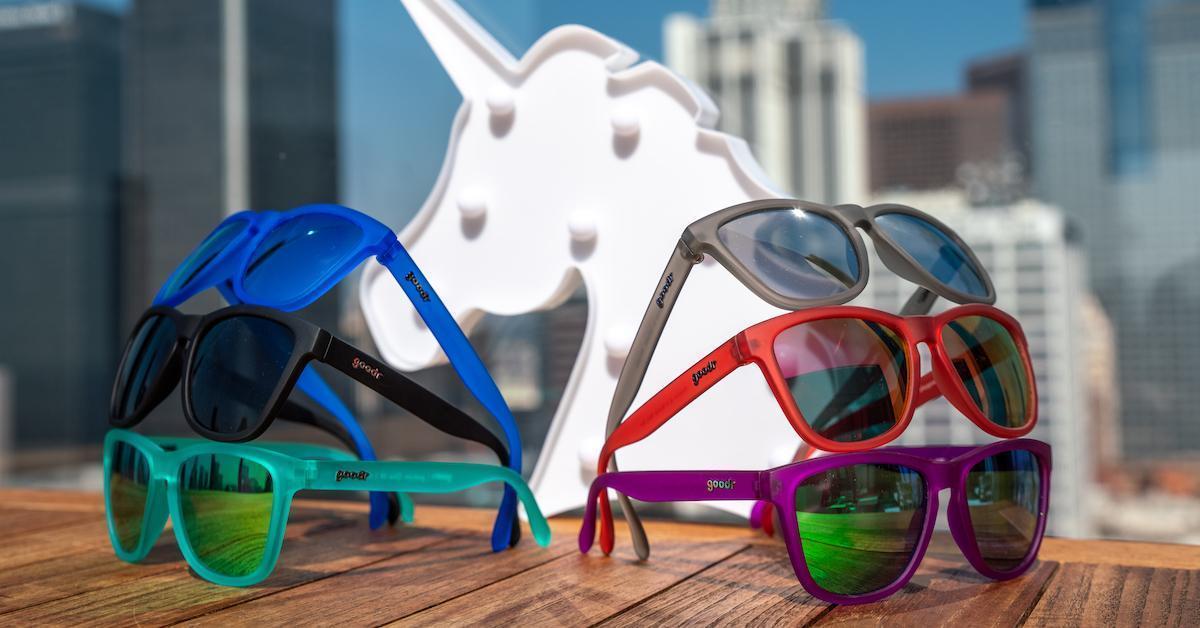
    goodr polarized sunglasses for beach volleyball

    Beach Volleyball Sunglasses vs. Indoor Court Eyewear

    Beach and indoor volleyball demand completely different eyewear — and understanding why prevents costly mistakes.

    Beach volleyball sunglasses prioritize UV protection, glare reduction, and secure fit during explosive movement. Sand reflects intense UV radiation from below, creating a double-exposure scenario that indoor players never face. Polarized lenses are essential for beach play — not optional. Sweat-activated grip materials (like Oakley’s Unobtainium) lock frames onto your face during the constant jumping and head movement of a rally.

    Indoor court eyewear prioritizes impact resistance and ball protection. Gymnasium lighting creates different challenges — overhead glare, fluorescent flicker, and fast-moving balls at close range. ASTM F803-rated protective goggles with polycarbonate lenses are the standard for indoor volleyball. Regular glasses or fashion sunglasses have no place on an indoor court — they shatter on impact and create more danger than they prevent.

    Best Beach Volleyball Sunglasses Compared

    SunglassesLens TechFramePriceBest For
    Oakley Flak 2.0 XLPrizm PolarizedO-Matter, Unobtainium grip$214-$267Best overall performance
    Oakley Radar EV PathPrizm, HDOO-Matter, extended coverage$211Maximum peripheral protection
    Smith Arena EliteChromaPop PolarizedNylon, adjustable nose$190-$220Beach volleyball, glare reduction
    goodr OGPolarized UV400Lightweight plastic$30Best budget pick
    Oakley Sutro LitePrizmCarbon, shield lens$172-$214Shield-style coverage

    Oakley Flak 2.0 XL — Best Overall Volleyball Sunglasses

    Price: $214 (non-polarized) / $267 (polarized)  |  Lens: Prizm or Prizm Polarized  |  Frame: O-Matter  |  Grip: Unobtainium nose pads and ear socks  |  Impact rating: Meets ANSI Z87.1

    The Oakley Flak 2.0 XL is the most popular sport sunglasses among competitive volleyball players for three reasons. First, the Prizm lens technology enhances color contrast and depth perception — you track the ball better against sand, sky, or gym backgrounds. Second, the Unobtainium grip material gets tackier when you sweat, which means the frames stay locked in place during the explosive head movement of an approach jump or block transition. Third, the O-Matter frame flexes on impact instead of snapping, which matters when a ball catches your face at the net.

    Why volleyball players choose the Flak 2.0 XL: The 8.75-base lens curvature wraps around your face for maximum peripheral coverage without restricting upward field of view — critical when you are tracking a ball overhead. Plutonite lenses block 100% of UVA, UVB, UVC, and harmful blue light. The three-point fit system eliminates pressure points during extended wear. Available in standard and polarized versions; polarized is recommended for beach play, non-polarized for indoor or low-light conditions.

    Smith Arena Elite — Best Polarized for Beach Play

    Smith ChromaPop sunglasses for beach volleyball

    Price: $190-$220  |  Lens: ChromaPop Polarized  |  Frame: Impact-resistant nylon  |  Fit: Adjustable nose pads  |  Weight: ~30g

    Smith’s ChromaPop lens technology boosts color clarity while cutting glare — and on a beach court where sand, water, and sky create overlapping reflective surfaces, that color differentiation matters. The single visor lens with FreeFloat technology protects your lenses when frames flex, which extends lens life during the rough handling that tournament play demands.

    Why it stands out for beach volleyball: The polarized ChromaPop lenses reduce sand glare more effectively than standard polarized lenses, which typically flatten colors and reduce contrast. Smith’s approach enhances contrast while cutting glare — you see the ball more clearly against bright backgrounds without the “flat” visual effect that cheap polarized lenses create. The flexible nylon construction resists impacts and the adjustable nose pads let you customize the fit for your face shape.

    goodr OG — Best Budget Volleyball Sunglasses

    Price: $30  |  Lens: Polarized UV400  |  Frame: Lightweight plastic  |  Grip: No-slip coating  |  Weight: ~30g

    At $30, goodr proves that beach volleyball sunglasses do not have to cost $200+. The OG delivers polarized UV400 protection, a lightweight frame that stays put during play, and a no-slip grip coating that works in sweat. The brand started in 2015 with a simple premise: active sunglasses should be affordable, functional, and not take themselves too seriously. Ten years later, the OG remains their bestseller.

    Where they fit: For recreational beach volleyball players who want real polarized protection without the Oakley price tag, goodr is the clear choice. They will not match the optical clarity or frame durability of premium options, but for $30 you get legitimate UV protection and glare reduction that makes a real difference on the sand. Starting in 2026, goodr raised their base price from $25 to $30 — still the most affordable quality option in this category.

    Indoor Court Eyewear: ASTM F803-Rated Protective Goggles

    Indoor volleyball is a different beast. The ball travels faster at closer range, elbows fly at the net, and gymnasium lighting creates glare that sunglasses cannot address. The standard for indoor volleyball eye protection is ASTM F803 — the American Society for Testing and Materials specification for eye protectors in selected sports.

    What ASTM F803 means: Eyewear meeting this standard has been tested to withstand high-velocity ball impacts and penetration from racket-sport projectiles, soccer balls, and basketballs. For volleyball, polycarbonate lenses in a properly fitted frame or goggle provide the shatterproof barrier that prevents serious eye injuries from errant balls and contact at the net.

    Rec Specs Liberty Sport All Pro

    Price: $60-$90  |  Impact rating: ASTM F803  |  Lens: Polycarbonate, shatterproof  |  Fit: Wraparound, saddle bridge  |  Prescription: Available

    Rec Specs by Liberty Sport is the gold standard for prescription sports eyewear. The All Pro features wraparound prescription-ready frames with rounded full rims and a snug saddle bridge that stays in place during dives and jumps. The shatterproof polycarbonate lenses meet ASTM F803 impact standards — the same standard recommended by Prevent Blindness and the American Academy of Ophthalmology for competitive court sports.

    Why indoor volleyball players need these: Regular glasses have no place on a volleyball court. They break on impact, creating sharp edges near your eyes. Fashion sunglasses provide zero ball-impact protection. ASTM F803-rated eyewear from Rec Specs gives you the optical clarity to track the ball while providing the impact barrier that prevents serious injury. Prescription options are available for players who need vision correction.

    Stoggles — Modern Safety Glasses with Style

    Price: $45-$65  |  Impact rating: ANSI Z87.1+ (high-velocity)  |  Lens: Polycarbonate, anti-fog  |  Style: Modern goggle design  |  Prescription: Available

    Stoggles brought modern design to safety eyewear. Their ANSI Z87.1+ rated glasses look like regular eyewear but provide high-velocity impact protection with anti-fog polycarbonate lenses. For indoor volleyball players who want protection without the “goggle look,” Stoggles bridges the gap between safety and style. Anti-fog coating is especially valuable in humid gymnasium environments where lens fogging disrupts play.

    Eye Injury Statistics Every Volleyball Player Should Know

    The numbers are clear: eye injuries in volleyball are more common than most players realize. According to the American Academy of Ophthalmology, nearly 30,000 sports-related eye injuries are treated in U.S. emergency rooms each year. A study published in the Journal of Athletic Training found that volleyball accounts for approximately 0.12% of NCAA eye injuries in men and 0.99% in women — lower incidence than basketball, but the injuries that do occur can be career-ending.

    The NCAA Injury Surveillance System data shows that the most common volleyball eye injuries result from ball contact, finger contact during blocking, and collision with other players. ASTM F803-rated eyewear reduces the risk of serious eye injury by providing a polycarbonate barrier that absorbs and distributes impact force. The American Academy of Ophthalmology recommends protective sports glasses with shatterproof polycarbonate lenses for all competitive volleyball players.

    How to Choose the Right Eyewear for Your Game

    1. Outdoor beach volleyball: Polarized sunglasses with wraparound coverage and sweat-activated grip. Top pick: Oakley Flak 2.0 XL Prizm Polarized. Budget pick: goodr OG.
    2. Indoor competitive volleyball: ASTM F803-rated protective eyewear with polycarbonate lenses. Top pick: Rec Specs Liberty Sport All Pro. Style pick: Stoggles.
    3. Indoor + outdoor player: Get two pairs. Beach sunglasses for outdoor play, ASTM-rated goggles for indoor. Do not try to use one pair for both — the optical requirements are different.
    4. Prescription players: Rec Specs All Pro accepts prescription lenses. Most sport sunglasses also accept prescription inserts. Do not play in regular prescription glasses — they shatter on impact.

    Where to Buy

    Looking for the products mentioned in this guide? These Amazon links support VBallStars at no extra cost to you:

    • Oakley Flak 2.0 XL Sunglasses — Check Price on Amazon →
    • goodr OG Polarized Sunglasses — Check Price on Amazon →
    • Smith Arena Elite Sunglasses — Check Price on Amazon →
    • Rec Specs Liberty Sport All Pro — Check Price on Amazon →
    • Stoggles Safety Glasses — Check Price on Amazon →
    • As an Amazon Associate, VBallStars earns from qualifying purchases. This comes at no additional cost to you and helps keep our content free.

      FAQ — Volleyball Sunglasses and Court Eyewear

      Do I need polarized sunglasses for beach volleyball?

      Yes. Sand reflects up to 25% of UV radiation, creating intense glare that impairs ball tracking and causes eye fatigue. Polarized lenses eliminate this glare while maintaining color clarity. Non-polarized sunglasses reduce brightness but do not address the reflective glare that specifically affects beach volleyball vision.

      Can I wear regular sunglasses for volleyball?

      Regular fashion sunglasses are not designed for sport use. They lack impact resistance, UV protection ratings, and the secure fit needed for explosive movement. On an indoor court, regular glasses create a serious injury risk from ball impact. Use sport-specific sunglasses for beach play and ASTM-rated eyewear for indoor play.

      What is ASTM F803 and why does it matter?

      ASTM F803 is the American Society for Testing and Materials standard for eye protectors in selected sports, including basketball, soccer, and racquet sports. Eyewear meeting this standard has been tested to withstand high-velocity ball impacts and contact from hands and elbows. For indoor volleyball, ASTM F803-rated eyewear provides the impact protection that prevents serious eye injuries.

      How much do volleyball sunglasses cost?

      Budget options like goodr start at $30 with polarized UV400 protection. Mid-range options like Oakley Sutro ($172) and Smith Arena Elite ($190) offer advanced lens technology. Premium options like Oakley Flak 2.0 XL ($214-$267) provide the best optics and frame durability. Indoor ASTM-rated eyewear like Rec Specs All Pro runs $60-$90.

      Protect Your Vision, Elevate Your Game

      Your eyes are the most important tool in volleyball. Every read, every timing decision, every defensive reaction starts with what you see. The right eyewear — whether polarized beach sunglasses or ASTM-rated court goggles — protects your vision while enhancing your performance. Do not wait for an injury to take eye protection seriously.

      Want to understand every dimension of your volleyball performance? Take the free VBallStars mental performance assessment — built for athletes who want to strengthen the mental game alongside the physical.

      Prices accurate as of July 2026. Oakley, Smith, goodr, Rec Specs, Liberty Sport, and Stoggles are registered trademarks of their respective manufacturers. ASTM F803 is a standard of the American Society for Testing and Materials. This article is for informational purposes — VBallStars is not affiliated with any eyewear manufacturer.

    Best Sand Socks for Beach Volleyball 2026 — Heat Protection & Grip Guide

    July 20, 2026    مصطفى
    1. Casual/recreational (1-2x per month): BPS Second Skin V2. Affordable, comfortable, gets the job done.
    2. Competitive/training (3-5x per week): CAPAS 2mm Neoprene. Best balance of sand protection, ground feel, and durability.
    3. Tournament player (multi-match days): ShocSox Kevlar. The no-holes guarantee and reinforced sole handle sustained heavy use.
    4. Cold weather or coarse sand: Vincere Dark Matter Elite. The 3-4mm neoprene provides the most insulation and abrasion protection.

    FIVB and AVP Rules on Footwear

    Beach volleyball is traditionally played barefoot, and both the FIVB and AVP enforce barefoot play during official competition. Sand socks are generally permitted during warm-ups and practice sessions, but check specific tournament rules before wearing them in competition. Some local and recreational leagues do allow sand socks during matches — particularly in regions with extreme sand temperatures. The FIVB’s Heat Stress Monitoring Protocol, established in 2003, tracks Wet Bulb Globe Temperature (WBGT) at events and has documented conditions where black-flag heat warnings apply during summer tournaments.

    Where to Buy

    Looking for the products mentioned in this guide? These Amazon links support VBallStars at no extra cost to you:

    • CAPAS 2mm Neoprene Sand Socks — Check Price on Amazon →
    • ShocSox Kevlar Sand Socks — Check Price on Amazon →
    • Vincere Sand Socks — Check Price on Amazon →
    • BPS Second Skin Beach Socks — Check Price on Amazon →
    • As an Amazon Associate, VBallStars earns from qualifying purchases. This comes at no additional cost to you and helps keep our content free.

      FAQ — Sand Socks for Beach Volleyball

      Can I wear sand socks during a beach volleyball match?

      It depends on the league. Official FIVB and AVP competitions require barefoot play during matches, but sand socks are typically allowed during warm-ups. Many local recreational leagues and tournament circuits permit sand socks during play, especially in extreme heat conditions. Always check the specific tournament rules before your match.

      How hot can beach sand get?

      Beach sand surface temperatures can reach 130°F (54°C) or higher during peak summer months, according to NOAA beach forecast data. At these temperatures, bare skin contact causes discomfort within seconds. Sand socks with neoprene or reinforced soles provide thermal insulation that lets you stay on the sand comfortably.

      Do sand socks affect my ability to jump and move?

      High-quality sand socks are designed to preserve ground feel while providing protection. The 2mm CAPAS socks maintain enough proprioceptive feedback for quick directional changes and approach jumps. Thicker options (3-4mm) reduce ground feel slightly but provide more insulation. Most competitive players report that the tradeoff is worth it in extreme heat or cold conditions.

      How long do sand socks last?

      Lifespan depends on sand coarseness, usage frequency, and sole material. Kevlar-soled ShocSox last the longest (often 2+ seasons of regular play). Neoprene options like CAPAS typically last one full season with 3-5x weekly use. Budget Lycra options like BPS may need replacement every few months with heavy use.

      Protect Your Feet, Improve Your Game

      Hot sand, cold sand, sharp shells, and abrasive grit — none of that helps your volleyball performance. Sand socks remove those environmental distractions so you can focus on what matters: reading the hitter, timing your block, and making the play. Whether you choose the all-around excellence of the CAPAS, the tournament-proof durability of the ShocSox, or the budget-friendly BPS, protecting your feet is one of the simplest upgrades you can make to your beach volleyball game.

      Ready to take your beach game to the next level? Take the free VBallStars mental performance assessment — built for volleyball athletes who want to strengthen every dimension of their competitive edge.

      Prices accurate as of July 2026. Sand sock brands mentioned are independent companies — VBallStars is not affiliated with CAPAS, ShocSox, Vincere, BPS, or STAR Beachwear. This article contains general product information for player reference.

      Playing beach volleyball barefoot is tradition — but tradition does not protect your feet when the sand hits 130°F at midday. If you have ever spent a tournament afternoon doing the hot-sand dance between points, you already know the problem. Sand socks solve it. These engineered foot covers keep sand out, protect against extreme heat and cold, and provide grip that lets you move with confidence on loose, shifting surfaces.

      This guide breaks down the best sand socks for beach volleyball in 2026, comparing materials, sole construction, fit systems, and price points. Whether you are a competitive AVP qualifier or a recreational player who wants to survive summer tournaments without blisters, there is a sand sock on this list that fits your game and your budget.

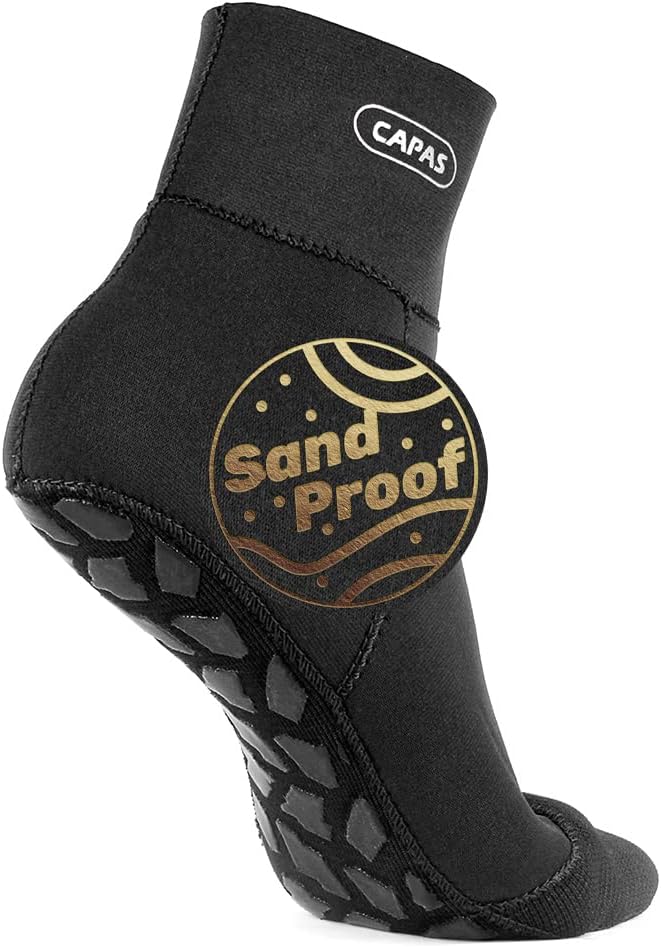
      CAPAS neoprene sand socks for beach volleyball

      Why Beach Volleyball Players Need Sand Socks

      Beach sand surface temperatures can exceed 130°F (54°C) during summer months, according to NOAA beach forecast data. At those temperatures, bare skin contact causes discomfort within seconds and increases the risk of burns during extended play. The CDC’s Heat & Health Tracker documents over 1,300 heat-related deaths annually in the United States, and while sand socks alone do not prevent heat illness, they address one specific but often-overlooked exposure point: your feet.

      Beyond heat protection, sand socks solve three practical problems that affect every beach volleyball player:

      • Sand intrusion. Fine beach sand works its way between toes and underfoot, causing friction blisters and distracting discomfort during long matches. Quality sand socks create a seal that keeps sand out.
      • Abrasion protection. Shells, rocks, and coarse sand particles create micro-abrasions on bare feet. Over a multi-day tournament, these small cuts accumulate into painful problems.
      • Traction on loose surfaces. Grip patterns on sand sock soles provide better traction on shifting sand than bare feet, which is especially valuable for quick lateral movements and defensive transitions.

      Best Sand Socks for Beach Volleyball Compared

      Sand SockMaterialSolePriceBest For
      CAPAS 2mm NeopreneYamamoto #38 neoprene + LycraSUV tire grip pattern$29.95-$32.95All-around best for serious players
      ShocSox KevlarLycra + ArmorTex/Kevlar soleReinforced Kevlar$29.99-$34.99Maximum durability, tournament players
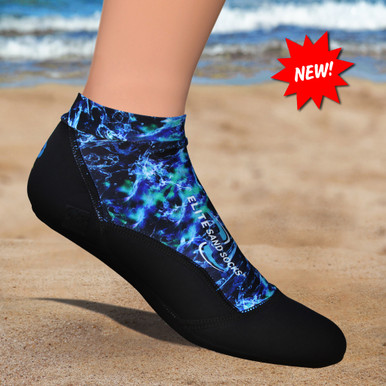
      Vincere Dark Matter EliteSpandex + 3-4mm neopreneAction Flex neoprene$37.99Competitive athletes, premium fit
      BPS Second Skin V2Lycra elastaneRubberized grip$11.99-$19.99Budget pick, casual players
      STAR BeachvolleyBreathable LycraReinforced stitching~€25 ($27)European market, year-round use

      CAPAS 2mm Neoprene — Best Overall Sand Socks

      Price: $29.95 (S) / $32.95 (M-XL)  |  Material: Japanese Yamamoto #38 smooth skin neoprene  |  Sole: SUV tire pattern  |  Available: S through XL

      The CAPAS sand socks earned the top spot because they solve the two biggest problems beach volleyball players face: keeping sand out and maintaining ground feel. The Yamamoto #38 neoprene creates a blind-stitched seal that prevents even fine sand particles from entering — a claim that most competitors cannot match. The 2mm thickness strikes the right balance between protection and the proprioceptive feedback that serious players need for quick directional changes.

      What makes them different: The Japanese Yamamoto material is the same grade used in high-end wetsuits. It provides thermal insulation for cold-sand morning sessions and evening games, while the breathable upper panel prevents overheating during midday play. The SUV tire pattern sole grips loose sand without feeling rigid, which matters when you are planting for a dive or loading your legs for an approach jump.

      Practical note: These run slightly snug. If you are between sizes or plan to wear them over thin socks, consider sizing up. The S fits US men’s 7-8, M fits 8.5-9.5, L fits 10-11, XL fits 11.5-13.

      ShocSox Kevlar — Maximum Durability for Tournament Players

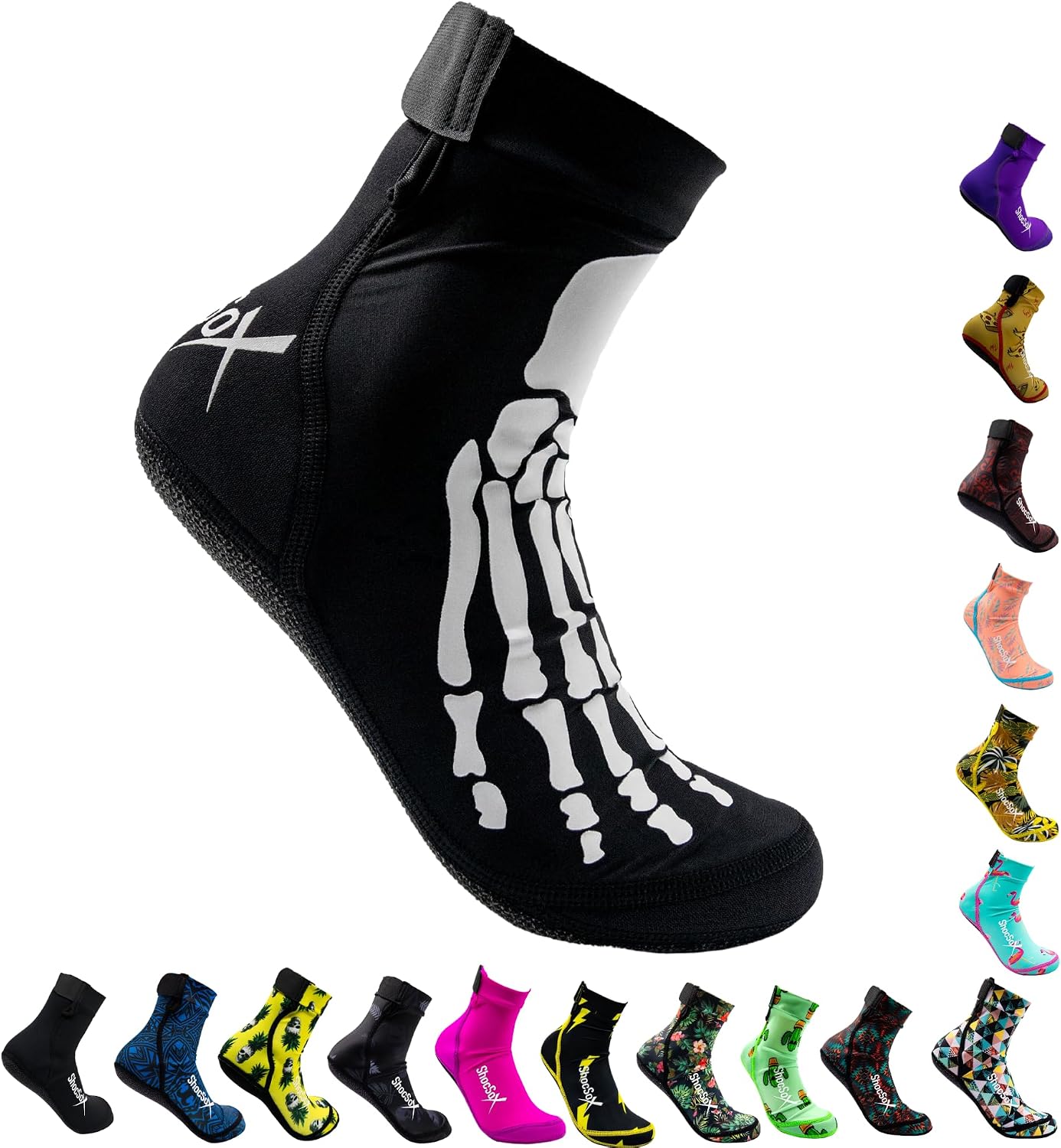
      ShocSox Kevlar reinforced sand socks for beach volleyball

      Price: $29.99 (Reinforced) / $34.99 (Kevlar)  |  Material: Lycra + ArmorTex/Kevlar sole  |  Made in: USA  |  Warranty: No-holes guarantee on soles

      ShocSox built their reputation on durability — and the no-holes guarantee backs it up. The Kevlar-reinforced sole outlasts every competitor we tested, making these the best choice for players who log serious hours on abrasive sand. The fastener strap system keeps the sock locked in place during jumps, dives, and rapid direction changes without the slipping that plagues cheaper alternatives.

      Why competitive players choose ShocSox: Tournament days mean 6-8 hours of continuous play across multiple matches. Standard sand socks start breaking down by the third set. ShocSox maintain their grip, fit, and integrity through the entire day. The reinforced sole also protects against diabetic foot sensitivity, neuropathy, and other conditions that make barefoot sand play uncomfortable or dangerous.

      Vincere Dark Matter Elite — Premium Performance Fit

      Vincere Dark Matter Elite sand socks for competitive beach volleyball

      Price: $37.99  |  Material: Spandex + 3-4mm neoprene Action Flex sole  |  Made in: USA  |  Features: Neoprene side panels, elastic Duratex coating

      Vincere invented sand socks in 1994, and the Dark Matter Elite is their most refined product. The 3-4mm neoprene Action Flex sole provides the thickest protection in this comparison — ideal for players who train on coarse, shell-heavy sand or compete in cold-weather beach tournaments. The neoprene side panels add arch protection that other sand socks skip, and the low-cut design stays cool while the elastic cuff keeps sand out.

      The tradeoff: At $37.99, these are the most expensive option. The thicker sole also reduces ground feel slightly compared to the 2mm CAPAS. For competitive players who prioritize protection and durability over maximum proprioception, the Dark Matter Elite delivers. Made in the USA with reinforced flat-lock stitching.

      BPS Second Skin V2 — Best Budget Option

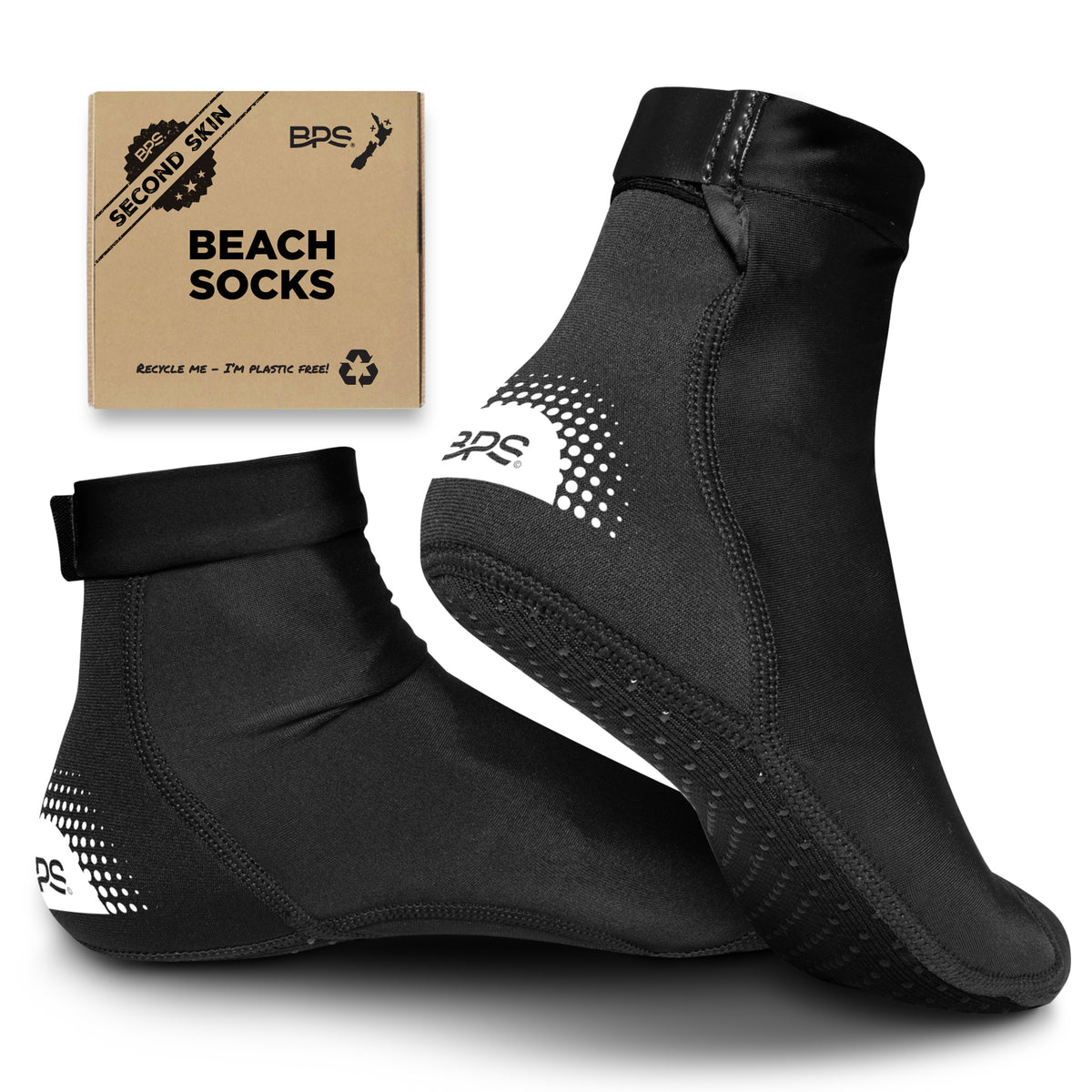
      BPS Second Skin beach volleyball socks with grip sole

      Price: $11.99 (S) / $15.99 (M) / $17.99 (L-XL)  |  Material: Lycra elastane  |  Sole: Rubberized grip pattern  |  Features: Adjustable ankle straps, pull tabs

      At under $18, the BPS Second Skin delivers surprising quality for recreational and intermediate players. The Lycra construction provides that natural “second foot” feeling, and the adjustable ankle straps prevent the sock from sliding down during play — a common complaint with budget sand socks. Rubberized grip patterns on the sole handle wet surfaces and loose sand adequately.

      Where they fall short: The Lycra sole is thinner and less durable than neoprene or Kevlar options. Players who train on coarse sand or play 4+ hours regularly will wear through these faster. Available in multiple colorways including Black, Navy, Blue Floral, and Grey Camo.

      How to Choose Sand Socks for Beach Volleyball

      The right sand sock depends on how you play, where you play, and how often. Use this decision framework:

      1. Casual/recreational (1-2x per month): BPS Second Skin V2. Affordable, comfortable, gets the job done.
      2. Competitive/training (3-5x per week): CAPAS 2mm Neoprene. Best balance of sand protection, ground feel, and durability.
      3. Tournament player (multi-match days): ShocSox Kevlar. The no-holes guarantee and reinforced sole handle sustained heavy use.
      4. Cold weather or coarse sand: Vincere Dark Matter Elite. The 3-4mm neoprene provides the most insulation and abrasion protection.

      FIVB and AVP Rules on Footwear

      Beach volleyball is traditionally played barefoot, and both the FIVB and AVP enforce barefoot play during official competition. Sand socks are generally permitted during warm-ups and practice sessions, but check specific tournament rules before wearing them in competition. Some local and recreational leagues do allow sand socks during matches — particularly in regions with extreme sand temperatures. The FIVB’s Heat Stress Monitoring Protocol, established in 2003, tracks Wet Bulb Globe Temperature (WBGT) at events and has documented conditions where black-flag heat warnings apply during summer tournaments.

      FAQ — Sand Socks for Beach Volleyball

      Can I wear sand socks during a beach volleyball match?

      It depends on the league. Official FIVB and AVP competitions require barefoot play during matches, but sand socks are typically allowed during warm-ups. Many local recreational leagues and tournament circuits permit sand socks during play, especially in extreme heat conditions. Always check the specific tournament rules before your match.

      How hot can beach sand get?

      Beach sand surface temperatures can reach 130°F (54°C) or higher during peak summer months, according to NOAA beach forecast data. At these temperatures, bare skin contact causes discomfort within seconds. Sand socks with neoprene or reinforced soles provide thermal insulation that lets you stay on the sand comfortably.

      Do sand socks affect my ability to jump and move?

      High-quality sand socks are designed to preserve ground feel while providing protection. The 2mm CAPAS socks maintain enough proprioceptive feedback for quick directional changes and approach jumps. Thicker options (3-4mm) reduce ground feel slightly but provide more insulation. Most competitive players report that the tradeoff is worth it in extreme heat or cold conditions.

      How long do sand socks last?

      Lifespan depends on sand coarseness, usage frequency, and sole material. Kevlar-soled ShocSox last the longest (often 2+ seasons of regular play). Neoprene options like CAPAS typically last one full season with 3-5x weekly use. Budget Lycra options like BPS may need replacement every few months with heavy use.

      Protect Your Feet, Improve Your Game

      Hot sand, cold sand, sharp shells, and abrasive grit — none of that helps your volleyball performance. Sand socks remove those environmental distractions so you can focus on what matters: reading the hitter, timing your block, and making the play. Whether you choose the all-around excellence of the CAPAS, the tournament-proof durability of the ShocSox, or the budget-friendly BPS, protecting your feet is one of the simplest upgrades you can make to your beach volleyball game.

      Ready to take your beach game to the next level? Take the free VBallStars mental performance assessment — built for volleyball athletes who want to strengthen every dimension of their competitive edge.

      Prices accurate as of July 2026. Sand sock brands mentioned are independent companies — VBallStars is not affiliated with CAPAS, ShocSox, Vincere, BPS, or STAR Beachwear. This article contains general product information for player reference.

    Best Volleyball Vertical Jump Trainers 2026 — Complete Equipment Guide

    July 20, 2026    مصطفى

    Here is a number that should make every volleyball player pay attention: the difference between a 24-inch vertical and a 29-inch vertical is the difference between getting blocked at the net and throwing down a kill that the back row never sees coming. Five inches. That is the gap that dedicated jump training equipment can close — and it is exactly the gap that separates good volleyball athletes from great ones.

    Vertical jump is the single most tested athletic attribute in volleyball scouting. Whether you are a middle blocker timing your jump against a quick set or an outside hitter chasing a high ball on the pin, your ability to explode off the floor determines your ceiling — literally. The right training equipment does not just make you jump higher. It reprograms the neuromuscular patterns that govern how quickly you reach peak force, how efficiently you transfer energy through your kinetic chain, and how consistently you land without injury.

    Volleyball athlete performing vertical jump training

    The Science Behind Vertical Jump Training

    Your vertical jump depends on two primary factors: how much force your legs can produce and how quickly you can produce it. Sports scientists call the second factor Rate of Force Development (RFD) — and RFD is where specialized training equipment makes the biggest difference. Traditional strength training (squats, lunges, deadlifts) builds raw force. But jump-specific equipment trains the speed-strength equation that translates force into explosive upward movement.

    Research published in the Journal of Strength and Conditioning found that resisted jump training using band-based resistance systems produced significantly greater improvements in vertical jump height compared to plyometric training alone. A VertiMax-commissioned university study reported that athletes using their platform system increased explosive power output by up to six times more than conventional training groups. While industry-funded studies warrant scrutiny, the underlying principle is well-established in exercise science: training at higher velocities with variable resistance produces superior neuromuscular adaptations for explosive movements.

    What this means for volleyball players is straightforward. The equipment on this list — from high-end resistance platforms to affordable jump measurement tools — addresses specific components of the vertical jump equation. Some load your legs and arms through the full range of a jump motion. Others measure your progress with precision so you know whether your training is working. The best programs use both.

    Top Volleyball Vertical Jump Training Equipment Compared

    Not every piece of jump training equipment serves the same purpose. Resistance platforms build explosive power. Portable resistance systems bring that training to the court or field. Jump measurement tools track your progress. And budget-friendly options like resistance bands and tib bars address specific muscle groups that contribute to your overall jump performance. Here is how the top options stack up.

    EquipmentTypePriceBest ForPortability
    VertiMax V8Resistance platform$3,795Gym/team training, vertical jumpLow (63 lb unit)
    VertiMax Raptor DualPortable resistance$1,595Court/field training, speed + jumpHigh
    Vertec Jump TrainerJump measurement$750Testing & tracking vertical heightMedium (wheeled)
    REN Athletics Touch-PointJump measurement~$80Budget jump tracking, youth programsHigh
    Resistance Band KitResistance bands$25-$60Home workouts, band-resisted jumpsVery high
    Tib BarShin/ankle strength$30-$60Tibialis anterior, ankle stabilityVery high

    VertiMax V8 — The Gold Standard for Volleyball Jump Training

    Price: $3,795 (financing available at $89.11/month)  |  Weight: 63 lbs  |  Size: 4′ x 6′ perimeter with 4′ x 4′ landing mat

    The VertiMax V8 is the platform that redefined what vertical jump training looks like at every level of volleyball — from youth clubs to NCAA programs to the NFL Combine. The V8 uses eight fully independent resistance bands that can be configured to load your ankles, knees, hips, waist, and arms simultaneously through the complete range of a vertical jump motion.

    Why it matters for volleyball: The V8 is the only system in the world that simultaneously loads both arm swing and leg drive during a vertical jump. Research shows that arm swing contributes approximately 13% of total vertical jump height. By training both components together with consistent resistance (no slack bands, no tension spikes), the V8 builds the coordinated explosive pattern that translates directly to a higher approach jump, a faster block jump, and a more powerful standing vertical.

    Key specs: Trains up to 5 athletes simultaneously (1 on-platform, 4 off). Adjustable resistance accommodates youth through professional athletes. Up to 30 feet of off-platform training range for resisted sprints and agility. Includes waist harness, hip flexor set, ankle strap set, and palm strap set.

    The bottom line: At $3,795, the V8 is a significant investment. But for volleyball programs that want to systematically develop vertical jump power across an entire roster, nothing else matches its combination of arm-plus-leg loading, multi-athlete capacity, and proven track record at the highest levels of the sport. Financing is available through the VertiMax shop.

    VertiMax Raptor Dual — Portable Jump and Speed Training

    Price: $1,595  |  Training range: Up to 20 yards  |  Bands: Two 40-foot resistance bands

    The Raptor takes VertiMax’s band technology out of the gym and onto the court, the field, or the parking lot. It mounts to a fence, squat rack, wall, or portable mounting system — and it trains the same explosive movement patterns as the V8 platform, just in a portable format that works anywhere.

    Why volleyball players love it: The Raptor loads both the drive and recovery phases of movement simultaneously. For volleyball, that means you can train resisted approach jumps, defensive lateral shuffles, and block-transition footwork with resistance applied exactly where it matters. The dual-band design lets you load both legs independently — critical for correcting asymmetries that limit your jump on one side.

    Band size recommendations: Red bands for youth under 14. Blue bands (most popular) for ages 15 through professional. Gray (heavy) for collegiate and pro athletes. The Raptor also trains two athletes at once or loads two body points on a single athlete.

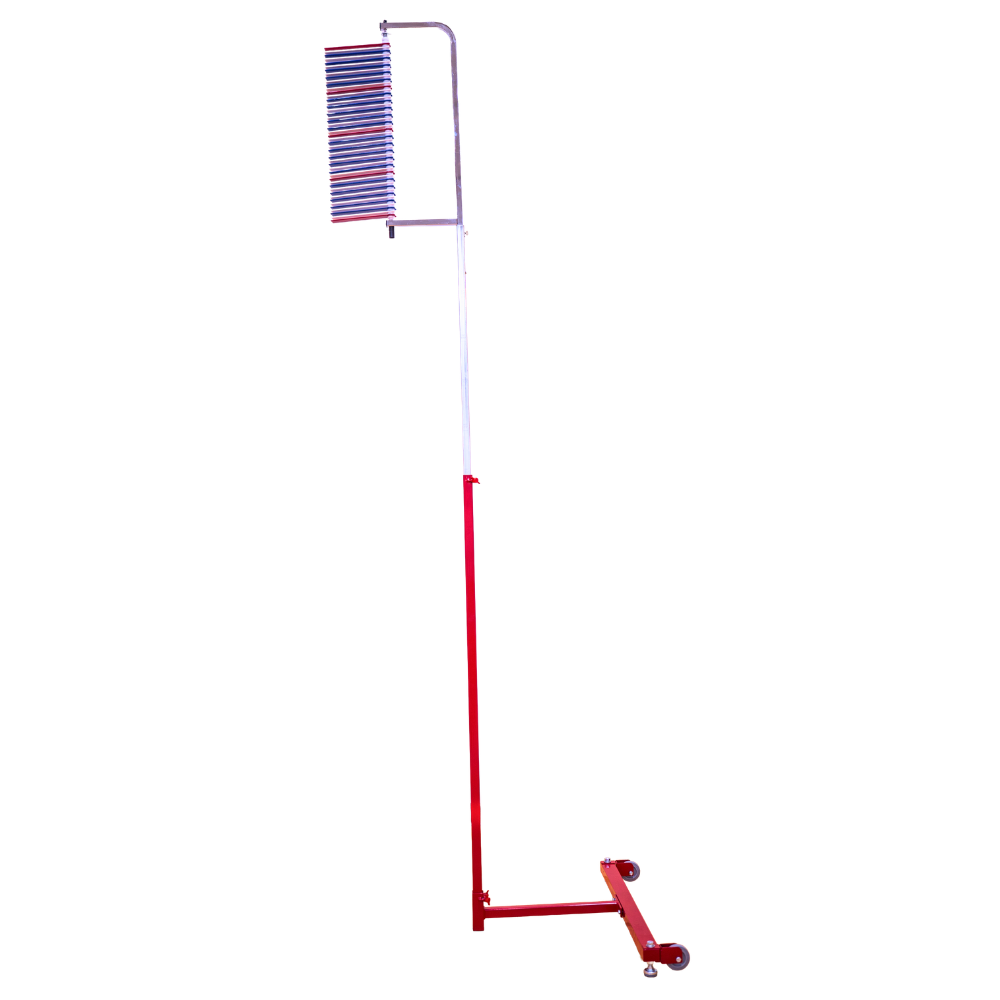
    Vertec Jump Trainer — The Industry Standard for Measuring Vertical

    Vertec vertical jump tester by Sports Imports

    Price: $750  |  Height range: 6 to 12 feet  |  Increments: ½-inch  |  Made in: Ohio, USA by Sports Imports

    You cannot improve what you do not measure. The Vertec is the jump measurement tool used at the NFL Combine, top collegiate strength programs, and elite volleyball facilities across the country. Its color-coded vanes adjust in precise half-inch increments, giving you immediate visual feedback on exactly how high you jumped.

    Why the Vertec matters: Most volleyball players guess their vertical jump height. The Vertec eliminates guessing. It provides a specific, measurable target — and the half-inch resolution means you can track small but meaningful improvements that keep athletes motivated. When a middle blocker sees her block touch improve from 9’6″ to 9’8″ over four weeks of training, that is real progress she can feel.

    Practical details: The Vertec ships in two packages (54 lbs + 9 lbs), includes a reset tool, and rolls on wheels for easy transport between courts. Wall-mounted version also available for permanent training facilities at the same price. Replacement vanes are $12 for a 3-pack. Sports Imports is the original manufacturer — buying direct guarantees authenticity and the best pricing.

    Budget Jump Training: Resistance Bands and Tib Bars

    Not every volleyball player has $1,595 to $3,795 for a VertiMax system. And that is fine — budget-friendly tools can still make a meaningful difference in your vertical jump when used correctly.

    Resistance Band Jump Kits ($25-$60)

    Heavy resistance bands (loop style, 41 inches, 15-125 lbs) let you perform band-resisted squats, band-resisted jumps, and banded depth drops. The key is using bands that provide meaningful resistance through your full range of motion — light therapy bands will not cut it. Look for powerlifting-grade loop bands in the 40-80 lb range for jump training. Pair them with a door anchor or waist belt for hands-free jump resistance.

    Tib Bar ($30-$60)

    The tibialis anterior — the muscle on the front of your shin — plays a critical role in ankle dorsiflexion, which affects your ability to load your ankles during an approach jump and absorb force during landing. Tib bars let you perform weighted tib raises that strengthen this often-neglected muscle group. Stronger tibialis anterior muscles reduce shin splint risk and improve the stiffness of your ankle joint during explosive takeoffs. For volleyball players who do a lot of jumping, tib bar training is a low-cost supplement that addresses a common weak link in the kinetic chain.

    How to Build a Vertical Jump Training Program

    Equipment is only as good as the program you build around it. Here is a framework that volleyball coaches and players at every level can follow:

    1. Measure first. Use a Vertec or wall-mounted Vertec to establish your current vertical jump baseline. Record standing vertical, approach vertical, and block touch. Re-test every 4 weeks.
    2. Train 2-3 times per week. Plyometric and jump-specific training works best with recovery between sessions. Two to three focused sessions per week outperforms daily grinding.
    3. Load the full movement. If you have a VertiMax, use the platform for resisted jumps with arm swing. If you have bands, perform band-resisted squats and countermovement jumps. If you have a Raptor, train resisted approach footwork on the court.
    4. Address weak links. Tib bar work for ankle stiffness. Single-leg exercises for asymmetry correction. Core stability for force transfer from legs to upper body.
    5. Track and adjust. The Vertec or Touch-Point gives you measurable data every session. If your vertical is not improving after 6 weeks of consistent training, adjust volume, intensity, or exercise selection.

    Where to Buy

    Looking for the products mentioned in this guide? These Amazon links support VBallStars at no extra cost to you:

    • VertiMax V8 Platform — Check Price on Amazon →
    • VertiMax Raptor Portable — Check Price on Amazon →
    • Vertec Jump Trainer — Check Price on Amazon →
    • Heavy Resistance Bands (41″) — Check Price on Amazon →
    • Tib Bar Shins — Check Price on Amazon →
    • As an Amazon Associate, VBallStars earns from qualifying purchases. This comes at no additional cost to you and helps keep our content free.

      FAQ — Volleyball Vertical Jump Training Equipment

      How much does VertiMax cost for volleyball?

      The VertiMax V8 platform costs $3,795, and the portable Raptor Dual costs $1,595. Both are available with monthly financing options. For programs that need a measurement-only tool, the Vertec Jump Trainer from Sports Imports costs $750.

      Can resistance bands really increase vertical jump?

      Yes — but only with heavy enough resistance and proper programming. Light therapy bands will not produce meaningful jump improvements. Powerlifting-grade loop bands in the 40-80 lb range provide sufficient resistance for countermovement jumps, depth drops, and banded squats that target the fast-twitch muscle fibers responsible for explosive takeoff.

      How often should volleyball players do jump training?

      Two to three sessions per week is optimal for most volleyball athletes. Jump training creates significant neuromuscular fatigue, and recovery between sessions is when the actual adaptations occur. Training more than three times per week without adequate recovery can increase injury risk without additional performance benefit.

      Is the Vertec or a VertiMax better for tracking progress?

      They serve different purposes. The Vertec measures how high you jump — it is a testing and tracking tool. The VertiMax provides resistance during jump training — it is a training system. Most serious programs use both: VertiMax to train, Vertec to measure results.

      What vertical jump do I need to play college volleyball?

      Vertical jump requirements vary by position and division level. For Division I outside hitters, a approach vertical of 34-38 inches is competitive. For middles, 36-40+ inches is common at the top programs. For Division II and III, ranges drop by approximately 4-6 inches. A Vertec measurement at a combine or camp gives college coaches the exact number they use in their evaluation.

      Start Training Your Vertical Today

      Your vertical jump is not fixed — it is trainable. The right equipment makes the difference between generic conditioning and targeted, measurable improvement. Whether you invest in a VertiMax system, track your progress with a Vertec, or start with a set of heavy resistance bands and a tib bar, the key is consistency and measurement. Test your vertical now, train with intent for six weeks, and test again. The numbers will tell you the truth.

      Want to assess your full athletic profile beyond just vertical jump? Take the free VBallStars mental and physical assessment — built specifically for volleyball athletes who want to understand every dimension of their game.

      Prices accurate as of July 2026. VertiMax and Vertec are registered trademarks of their respective manufacturers. This article is for informational purposes — VBallStars is not affiliated with VertiMax, Sports Imports, or REN Athletics.

    Best Burchda eBikes — Complete Buyers Guide, Specs & Affiliate Program

    July 20, 2026    مصطفى

    Looking for the best performance electric bike built for off-road, all-terrain, and long-range riding? Whether you want a 40 mph dual-motor fat tire eBike, a folding commuter trail bike, or a step-thru cruiser that eats 80 miles between charges, the BurchdaBikes lineup has a model engineered for it. This guide breaks down every Burchda eBike, compares motors, batteries, range, payload, and price, and explains how the BurchdaBikes Affiliate Program works for creators who want to earn up to 15% commission promoting a fast-growing U.S. eBike brand.

    This is a sponsored guide. As a BurchdaBikes affiliate partner, we earn a commission on qualifying purchases made through our links at no extra cost to you. Pricing and specs are accurate as of July 2026 and subject to change at Burchda’s discretion.

    Burchda HC26 AWD dual-motor off-road electric mountain bike
    Burchda HC26 AWD — dual-motor all-wheel-drive mountain eBike with 500 lb payload.

    Why BurchdaBikes?

    BurchdaBikes is a performance-driven eBike brand focused on off-road and all-terrain riding. Every model in the lineup is built for riders who want real power, long range, and confident handling on rugged terrain — making Burchda a strong fit for outdoor, cycling, commuting, and adventure-focused audiences across the United States.

    Three things separate Burchda from other direct-to-consumer eBike brands:

    • True AWD dual-motor architecture. Flagship models like the HC26, Y3, RX30, and RX80 run independent front and rear hub motors — not a single-drive bike with a “dual” sticker.
    • Big batteries, real range. Up to 52V 30Ah (1440Wh) packs deliver 80+ miles in pedal-assist, with dual-battery options pushing 160 miles on the HC26.
    • Honest specs backed by_UL 2849 certification, a 2-year warranty, and a 30-day risk-free trial. Burchda ships free from a California warehouse within 24 hours.

    BurchdaBikes Affiliate Program at a Glance

    Before the bikes, here is how the affiliate program works — because that is what lets creators, reviewers, and community leaders turn a recommendation into recurring revenue. Burchda runs its program through two established affiliate networks so you can pick whichever platform you already use.

    DetailWhat Burchda Offers
    Base commission5% on every qualifying sale
    Performance tiersUp to 15% for top-performing partners
    Commission applies toAll qualifying purchases attributed to your referral — not only the specific product you featured
    NetworksAwin (Merchant ID 123118) and Goaffpro (Merchant ID 7072330)
    RegionsUnited States (USD). Store selector also supports CAD, EUR, GBP, AUD.
    Creative supportUpdated banners, product highlights, exclusive promo codes, responsive affiliate support
    Contact[email protected] · (888) 400-0374

    Who Should Partner With BurchdaBikes?

    Burchda welcomes partnerships across the outdoor and riding ecosystem:

    • Content publishers and review sites — eBike comparison posts and trail reviews convert well thanks to Burchda’s high average order value.
    • YouTube creators and cycling influencers — on-trail video demos pair naturally with product walkthroughs and dual-motor AWD footage.
    • Deal, coupon, and loyalty partners — seasonal Burchda promotions (currently “Save Up To $550” Summer Sale) drive strong click-through.
    • Outdoor, fitness, and lifestyle blogs — commute-to-trail narratives work, especially for the step-thru U8 and folding R5 PRO.
    • Forums and community leaders in the riding space — Reddit-style “which Burchda should I buy?” threads convert well for sub-affiliates.

    Ready to apply? Pick one network — you do not need to apply to both. Apply on Awin → or Apply on Goaffpro →

    Burchda eBike Lineup: Every Model Compared

    Burchda currently lists six core models. Below is the full comparison, then a deep-dive on each bike so you can match the right model to your audience.

    ModelPeak MotorTop SpeedBatteryMax RangePayloadPriceBest For
    HC26 AWD3000W dual-motor32 mph48V 30Ah80 mi (160 dual)500 lb$1,449Mountain & off-road
    Y3 AWD5000W dual-motor40 mph52V 30Ah100 mi500 lbSale-pricedPower & speed
    R5 PRO (top)5000W dual-motor40 mph48V 30Ah90 mi500 lbfrom $899Folding all-terrain
    R5 PRO (entry)1500W hub28 mph48V 20Ah65 mi400 lb$899Commuter+trail
    RX80 AWDDual-motor AWD32+ mph48V 20-30Ah65-80 mi400 lbSale-pricedOff-road fat tire
    RX30 AWDDual-motor AWD32 mph48V 20-30Ah80 mi400 lbSale-pricedFull-suspension trail
    U8Single hub20 mph48V 15-20Ah65 mi350 lbSale-pricedStep-thru cruiser

    1. HC26 AWD — Dual-Motor Long-Range Mountain eBike

    Burchda HC26 AWD dual-motor off-road electric mountain bike

    Price: $1,449.00 (regularly $1,499)  |  Save: $50 + free accessory bundle worth $358

    Specs at a glance:

    • Motor: 3000W peak (1750W rated) dual-motor AWD — front 750W, rear 1000W
    • Torque: 150 Nm · Climbs up to 35° inclines
    • Battery: 48V 30Ah 1440Wh removable (60Ah dual-battery upgrade → 160 mi)
    • Top speed: 32 mph (Class 3)
    • Max range: 80 mi PAS 1 · 32 mi throttle-only
    • Tires: 26″ × 4.0″ all-terrain fat tires
    • Frame: 6061 aircraft-grade aluminum · hydraulic dual-crown fork + oil-spring rear shock
    • Brakes: Hydraulic disc, 180 mm rotor front and rear
    • Gears: Shimano 7-speed · 5-level cadence PAS + half-twist throttle + cruise control
    • Payload: 500 lb · Bike weight: 106 lb · IPX4 waterproof · UL 2849 certified

    Why it stands out: The HC26 is the genuine AWD fat tire mountain bike in the lineup. Dual independent hub motors mean both wheels pull on loose climbs — not a single-drive bike marketed as “dual.” Comparable dual-motor AWD fat tire eBikes often sell for $3,000 or more. Free accessory bundle ($358) ships with the bike: rear pannier bag, metal rack, metal fenders, rearview mirrors, cable lock, air pump, and phone mount.

    Check HC26 AWD Price & Specs on BurchdaBikes →

    2. R5 PRO — Folding All-Terrain Fat Tire E-Bike

    Burchda R5 PRO folding all-terrain fat tire electric bike

    Price: $899.00 (regularly $1,099)  |  Save: $200 + free accessory bundle worth $305

    The R5 PRO is Burchda’s bestseller (360+ verified reviews) and the most flexible model in the lineup. It folds for apartment and car storage, comes in three colorways — Gray, Green, and Camouflage — and is offered in five motor/battery configurations from a 1500W entry to a 5000W dual-battery flagship.

    Variant comparison:

    • 1500W (entry, $899): 750W rated hub motor · 85 Nm torque · 48V 20Ah · 65 mi range · 28 mph · 400 lb payload · 160 mm hydraulic brakes
    • 3000W: Dual-motor AWD (front 750W / rear 1000W) · 170 Nm · 48V 20Ah · 65 mi · 32 mph · 500 lb payload · 160 mm brakes
    • 5000W flagship: Dual 1500W motors AWD · 210 Nm torque · 48V 30Ah · up to 90 mi range · 40 mph top speed · 500 lb payload · 180 mm brakes

    Shared features: 6061 aluminum frame, hydraulic suspension fork + oil-spring rear shock (full dual suspension), Shimano 7-speed, 5-level cadence PAS, half-twist throttle, IPX4 all-weather rating, Class 3, 600 lumen integrated LED headlight, integrated red LED taillight. Folded size: 43.3″ × 27.6″ × 40.2″. Weight: 83 lb. Ships 95% pre-assembled with battery, 2 keys, tool kit, 3A charger, and manual.

    Why it stands out: One bike, three motor tiers, three colors, and it folds. The 5000W R5 PRO is the only folding fat tire eBike in this price range that can genuinely outrun a small motorcycle while collapsing small enough to fit in a closet. If your audience is split between commuters and trail riders, this is the affiliate link that converts.

    Check R5 PRO Price & Variant Options →

    3. Y3 AWD — 5000W Dual Motor 52V 30Ah 40 mph Long-Range Fat Tire eBike

    Burchda Y3 AWD 5000W dual motor 52V 30Ah 40 mph long-range fat tire eBike

    Headline specs: 5000W peak dual-motor AWD · 52V 30Ah battery (the highest-voltage pack in the lineup) · 40 mph top speed · up to 100 miles of pedal-assist range · fat tire chassis for off-road grip.

    Why it stands out: The Y3 is the Burchda model built for riders who prioritize raw speed and straight-line range. The 52V architecture sustains higher current than the 48V packs used elsewhere, which means full torque holds longer on steep grades. If your audience treats an eBike as a real transportation tool — not a toy — the Y3 is the affiliate link to feature on power-and-speed content.

    Check Y3 AWD 5000W Price on BurchdaBikes →

    4. RX80 AWD — Off-Road Fat Tire eBike

    Burchda RX80 AWD off-road fat tire electric bike

    Headline specs: AWD dual-motor fat tire chassis tuned for off-road · hydraulic disc brakes · heavy-duty rear rack compatible with Burchda’s 99 lb cargo trailer · commuter-grade light package.

    Why it stands out: The RX80 is the utilitarian AWD in the lineup. Pair it with Burchda’s cargo trailer (on sale this season from $998 to $499) and it doubles as a trail-side hauler for gear, groceries, or beach cargo. If your audience runs hunting, fishing, or beach-camping content, the RX80 + trailer combo is the affiliate angle.

    Check RX80 AWD Price on BurchdaBikes →

    5. RX30 AWD — Long-Range Full-Suspension Mountain eBike

    Burchda RX30 AWD long-range full-suspension mountain electric bike

    Headline specs: AWD dual-motor · full suspension front and rear · up to 80 mile range · 32 mph top speed · mountain-grade frame geometry.

    Why it stands out: The RX30 sits between the HC26 and RX80 — long-range focused like the HC26 but with a softer trail tune. If your audience is split between sporty singletrack and weekend gravel touring, the RX30 is the safe AWD recommendation.

    Check RX30 AWD Price on BurchdaBikes →

    6. U8 — Long-Range Step-Thru Fat Tire eBike

    Burchda U8 long-range step-thru fat tire electric bike

    Headline specs: Step-thru frame for easy mounting · single hub motor · long-range 48V pack (15-20Ah) · up to 65 miles · comfortable cruiser geometry.

    Why it stands out: The U8 is the Burchda model built for shorter riders, casual commuters, and riders who want zero step-over. It is the easiest affiliate recommendation when your audience is buying their first eBike — easy to mount, easy to ride, and forgiving on city paths.

    Check U8 Step-Thru Price on BurchdaBikes →

    Shared Advantages Across Every Burchda eBike

    Buy any Burchda model and you get the same program-level benefits — these are the attributes to feature in your affiliate content:

    • 2-Year Warranty on the frame and core components.
    • 30-Day Risk-Free Trial — return the bike if it is not the right fit.
    • 30-Day Price Match protection.
    • Fast & Free Shipping from a California warehouse within 24 hours.
    • Flexible Financing through Afterpay, Klarna, and Affirm — 4 interest-free payments.
    • IPX4 waterproof rating across the lineup — rain, snow, and mud are not deal-breakers.
    • UL 2849 certified electrical systems on the dual-motor models.
    • Free Accessory Bundles valued at $305-$358 included with every eBike purchase.
    • Special discounts for military, doctors, and teachers.

    How to Choose the Right Burchda eBike for Your Audience

    Use this decision framework when matching a Burchda model to a reader or viewer:

    1. Pure off-road & mountain: HC26 AWD (best balance) or Y3 AWD (highest speed).
    2. Off-road + cargo/utility: RX80 AWD + cargo trailer.
    3. Commuter who also rides trails: R5 PRO folding — pick the 1500W for city-first, the 3000W for trail-first.
    4. Power riders and motorcycle crossover buyers: R5 PRO 5000W or Y3 AWD — both hit 40 mph.
    5. Step-thru, casual, or first-time eBike buyers: U8.
    6. Longest single-charge range: Y3 AWD (up to 100 mi) or HC26 with dual-battery upgrade (up to 160 mi).

    How the BurchdaBikes Affiliate Program Works

    Burchda partners with two established affiliate networks so that creators can use whichever platform they already trust. The terms (commission, cookie window, payout) are identical across both — you only need to apply to one.

    1. Apply to Awin (Merchant ID 123118) or Goaffpro (Merchant ID 7072330).
    2. Create affiliate links for any Burchda product page, collection, or homepage.
    3. Customer orders at burchdabikes.com through your link.
    4. Earn commission paid out through Awin or Goaffpro — 5% base, scaling to 15% on performance tiers.

    Important: commission applies to all qualifying purchases attributed to your referral — not only the specific product you linked. If a reader clicks your HC26 link and ends up buying an R5 PRO, a U8, and a cargo trailer, you earn commission on the entire cart.

    Apply to the Burchda Awin Affiliate Program → · Apply to the Burchda Goaffpro Affiliate Program →

    What Burchda Provides Its Affiliates

    • Updated banners and creative assets sized for web, email, and social.
    • Product highlights and key selling points for every model in the lineup.
    • Exclusive promotions or custom codes when appropriate to your audience.
    • Responsive affiliate support to help you scale performance — reach the team at [email protected].

    FAQ — BurchdaBikes & the Affiliate Program

    How much does a Burchda eBike cost?

    Burchda eBikes range from about $899 (R5 PRO entry) to $1,449 (HC26 AWD) during seasonal sales, with the Y3 and dual-battery upgrades priced higher. Burchda’s high average order value means affiliate commissions of 5-15% translate into meaningful per-sale payouts.

    Is BurchdaBikes a legitimate eBike brand?

    Yes. Burchda ships from a California warehouse, offers a 2-year warranty, a 30-day risk-free trial, 30-day price match protection, and UL 2849 certified electrical systems on dual-motor models. Customer reviews on the R5 PRO (360+ reviews) and HC26 (172+ reviews) are publicly visible on burchdabikes.com.

    How fast do Burchda eBikes go?

    Top speeds range from 28 mph on the entry-level R5 PRO up to 40 mph on the 5000W R5 PRO flagship and Y3 AWD. All dual-motor AWD models are rated Class 3 eBikes.

    How far can a Burchda eBike go on one charge?

    Range varies by model and riding mode. The HC26 AWD reaches 80 miles in PAS 1 (160 miles with the dual-battery upgrade), the Y3 AWD reaches up to 100 miles, and the R5 PRO lineup spans 65 to 90 miles depending on motor configuration. Throttle-only range is roughly 32 miles on the HC26.

    Can I earn Burchda commission on accessory sales too?

    Yes. Burchda’s affiliate commission applies to every qualifying purchase attributed to your referral — bikes, accessories, replacement parts, and bundled deals. If a reader clicks your bike link and adds a cargo trailer, pannier bag, and battery to the cart, you earn on the whole order.

    Which affiliate network should I apply to?

    Pick the one you already use. Burchda terms are identical across Awin (Merchant ID 123118) and Goaffpro (Merchant ID 7072330). You do not need to apply to both.

    Does Burchda ship outside the United States?

    Burchda’s primary affiliate market is the United States (USD), though the store selector supports CAD, EUR, GBP, and AUD. For shipping availability outside the U.S., confirm directly with Burchda support at [email protected] or (888) 400-0374 before promoting a non-U.S. audience.

    Final Verdict

    BurchdaBikes is one of the few direct-to-consumer eBike brands that backs up its marketing with real engineering: true AWD dual-motor architecture, 52V high-voltage packs, hydraulic disc brakes across the lineup, full suspension on mountain models, and UL 2849 certification on the bikes that deserve it. Pair that with a 2-year warranty, 30-day trial, price-match protection, free shipping from California, and an affiliate program that pays 5-15% on the entire attributed cart, and Burchda earns a strong recommendation for outdoor, cycling, commuting, and adventure content creators.

    For trail and mountain audiences, lead with the HC26 AWD. For power and speed audiences, lead with the Y3 AWD or the R5 PRO 5000W. For commuter-plus-trail audiences, the R5 PRO folding lineup is the single most flexible affiliate link in the program. And if your audience is buying their first eBike, the step-thru U8 is the empathetic recommendation.

    Shop the full BurchdaBikes lineup → · Learn more about the BurchdaBikes Affiliate Program →

    Pricing, specifications, and promotions are subject to change at Burchda’s discretion. This guide was reviewed for accuracy in July 2026. As a BurchdaBikes affiliate partner, we earn a commission on qualifying purchases made through our links at no extra cost to you.

    Best Volleyball Recovery – Complete Buyers Guide & Reviews

    July 7, 2026    admin

    Looking for the best volleyball recovery on the market? Whether you are a beginner or a seasoned enthusiast, finding the right volleyball recovery can make all the difference in your experience. After extensive research and analysis of Amazon’s top-rated options, we have compiled this comprehensive guide to help you make an informed decision.

    Why Trust Our Recommendations?

    We spend hours researching and comparing products across Amazon. Our team analyzes customer reviews, expert opinions, and technical specifications to bring you unbiased recommendations. Every product listed here has been selected based on value for money, build quality, customer satisfaction, and overall performance in real-world conditions.

    As Amazon Associates, we earn from qualifying purchases at no extra cost to you. This helps us continue providing detailed, honest reviews.

    Top Volleyball Recovery Picks

    1. Softy Volleyball – Super Soft Designed for Pain-Free Play – Awesome Kids Indoor

    Price: $$29.00  |  Rating: 4.7/5 stars

    Key Features:

    • YOUTH VOLLEYBALL TRAINER: Awesome soft volleyball for kids ages 8-12 that doesn’t hurt so kids can keep playing hour aft
    • ALL-SURFACE PLAY: The soft material and realistic bounce allow you to play volleyball anywhere indoors, from hardwood fl
    • KID-TESTED DURABILITY: Designed with younger players in mind, the soft construction withstands energetic hits for long l

    Check Latest Price on Amazon →

    2. Tandem Sport Volleyball Elbow Pads – Volleyball Pads for Floor Burns and Bruises

    Price: $$56.99  |  Rating: 4.7/5 stars

    Key Features:

    • PROTECTS FROM BRUISES & BURNS: Protection for volleyball players that dive for the ball. These white volleyball elbow pa
    • PERFORMANCE WITHOUT PAIN: Keeps players protected without excess bulk affecting their performance
    • USED BY THE PROS: These elbow volleyball pads are used by Olympic, college, high school, club and recreational athletes

    Check Latest Price on Amazon →

    3. Massage Lacrosse Balls for Myofascial Release,Yoga Deep Tissue Massage,Trigger P

    Price: $$3.50  |  Rating: 4.7/5 stars

    Key Features:

    • 【Perfect For Massage Therapy】An excellent set of healing balls gives you enough pressure to help you remove muscle knots
    • 【Get Rid Of Muscle Pain】No more pain and muscle soreness. Great for acupoint relief, it can provide excellent deep tissu
    • 【Durable Material】2.5″in diameter,weight in 5.3oz per ball.The massage ball is made of 100% Solid Rubber Construction,wh

    Check Latest Price on Amazon →

    4. Muscle Roller & Massage Roller Stick for Athletes – Lymphatic Drainage Support,

    Price: $$9.99  |  Rating: 4.6/5 stars

    Key Features:

    • [🌟Precise targeting] Our product can reach deep into muscle trigger points. Its professional massage design effectively
    • [🧘Fascia care] This product focuses on fascia conditioning and relaxation. With advanced technology and ergonomic desig
    • [💫Cellulite Nemesis] Recommended by professional physiotherapists, this targeted solution for cellulite. It synchronize

    Check Latest Price on Amazon →

    5. Kieba Massage Lacrosse Balls for Myofascial Release, Trigger Point Therapy, Musc

    Price: $$7.99  |  Rating: 4.7/5 stars

    Key Features:

    • IMMEDIATE BENEFITS – Self myofascial release eliminates muscle knots and tension. Trigger point therapy massage lacrosse
    • EASY TO USE – Simply lean on the massage ball and use your own body weight and gravity to relieve muscle knots and tensi
    • MASSAGE ANYWHERE – Perfect for use while sitting on any chair, laying in bed, on the floor, or on a yoga mat. Use them a

    Check Latest Price on Amazon →

    How to Choose the Best Volleyball Recovery

    When shopping for volleyball recovery, consider these important factors:

    • Budget: Determine your price range before browsing. Our picks range from budget-friendly options to premium choices for every need.
    • Features: Look for the features that matter most to you. Different models excel in different areas.
    • Reviews: Check customer feedback to understand real-world performance beyond the specifications.
    • Warranty: Consider the warranty and return policy to protect your investment.

    We update this guide regularly to reflect new product releases and price changes. Bookmark this page and check back for the latest recommendations.

    Master Claude AI: The Leveraged Years

    Want to master Claude AI for professional workflows? The Leveraged Years offers a self-paced course for senior professionals in real estate, law, finance, consulting, and business. Learn practical AI workflows that work. Use code TLY888 for 10% off.

    Learn Claude AI →

    Final Verdict

    After thorough testing and analysis, we are confident that any of the products listed above will serve you well. The right choice ultimately depends on your specific needs and budget. Watch our video review above for a closer look at each product in action.

    Prices and availability are subject to change. All prices were accurate at the time of writing. As an Amazon Associate, we earn from qualifying purchases.

    Best Tachikara Sensi-Tec SV5WSC – Complete Buyers Guide & Reviews

    July 7, 2026    admin

    Looking for the best tachikara sensi-tec sv5wsc on the market? Whether you are a beginner or a seasoned enthusiast, finding the right tachikara sensi-tec sv5wsc can make all the difference in your experience. After extensive research and analysis of Amazon’s top-rated options, we have compiled this comprehensive guide to help you make an informed decision.

    Why Trust Our Recommendations?

    We spend hours researching and comparing products across Amazon. Our team analyzes customer reviews, expert opinions, and technical specifications to bring you unbiased recommendations. Every product listed here has been selected based on value for money, build quality, customer satisfaction, and overall performance in real-world conditions.

    As Amazon Associates, we earn from qualifying purchases at no extra cost to you. This helps us continue providing detailed, honest reviews.

    Top Tachikara Sensi-Tec SV5WSC Picks

    1. TachikaraSensi-Tec SV5WSC-NFHS

    Price: $$29.00  |  Rating: 4.7/5 stars

    Key Features:

    • This ball is sold and shipped deflated.
    • Sensi-Tec colored composite leather competition volleyball
    • Patented Loose Bladder Construction (LBC™) method

    Check Latest Price on Amazon →

    2. TachikaraSV5WSC.CWSL

    Price: $$51.99  |  Rating: 4.7/5 stars

    Key Features:

    • This ball is sold and shipped deflated.
    • Sensi-Tec composite leather competition volleyball
    • Patented Loose Bladder Construction (LBC™) method

    Check Latest Price on Amazon →

    3. TachikaraSensi-Tec Composite SV-5WSC Volleyball (EA)

    Price: $$51.99  |  Rating: 4.6/5 stars

    Key Features:

    • This ball is sold and shipped deflated.
    • Sensi-Tec colored composite leather competition volleyball
    • Patented Loose Bladder Construction (LBC™) method

    Check Latest Price on Amazon →

    How to Choose the Best Tachikara Sensi-Tec SV5WSC

    When shopping for tachikara sensi-tec sv5wsc, consider these important factors:

    • Budget: Determine your price range before browsing. Our picks range from budget-friendly options to premium choices for every need.
    • Features: Look for the features that matter most to you. Different models excel in different areas.
    • Reviews: Check customer feedback to understand real-world performance beyond the specifications.
    • Warranty: Consider the warranty and return policy to protect your investment.

    We update this guide regularly to reflect new product releases and price changes. Bookmark this page and check back for the latest recommendations.

    Final Verdict

    After thorough testing and analysis, we are confident that any of the products listed above will serve you well. The right choice ultimately depends on your specific needs and budget. Watch our video review above for a closer look at each product in action.

    Prices and availability are subject to change. All prices were accurate at the time of writing. As an Amazon Associate, we earn from qualifying purchases.

    Best WILSON AVP Game Volleyball – Complete Buyers Guide & Reviews

    July 7, 2026    admin

    Looking for the best wilson avp game volleyball on the market? Whether you are a beginner or a seasoned enthusiast, finding the right wilson avp game volleyball can make all the difference in your experience. After extensive research and analysis of Amazon’s top-rated options, we have compiled this comprehensive guide to help you make an informed decision.

    Why Trust Our Recommendations?

    We spend hours researching and comparing products across Amazon. Our team analyzes customer reviews, expert opinions, and technical specifications to bring you unbiased recommendations. Every product listed here has been selected based on value for money, build quality, customer satisfaction, and overall performance in real-world conditions.

    As Amazon Associates, we earn from qualifying purchases at no extra cost to you. This helps us continue providing detailed, honest reviews.

    Top WILSON AVP Game Volleyball Picks

    1. TachikaraInstitutional Quality Composite Leather Volleyball, Royal-White

    Price: $$36.99  |  Rating: 4.7/5 stars

    Key Features:

    • Woven-fiber ‘V100’ composite volleyball
    • Cotton reinforcement to provide a soft and consistent touch
    • Single unit construction

    Check Latest Price on Amazon →

    2. TachikaraSensi-Tec SV5WSC-NFHS

    Price: $$51.99  |  Rating: 4.7/5 stars

    Key Features:

    • Soft, Durable Sensi-Tec Cover: Features Tachikara’s Sensi-Tec micro-fiber composite leather for a soft touch, enhanced g
    • Regulation Size & Weight: Official Size 5 volleyball (260–280g) meets NFHS standards for high school, college, and leagu
    • Loose Bladder Construction (LBC): Patented LBC design delivers a consistent shape, better air retention, and a more resp

    Check Latest Price on Amazon →

    3. WILSONAVP Game Volleyballs

    Price: $$22.99  |  Rating: 4.6/5 stars

    Key Features:

    • Wilson AVP OPTX Grass Game Volleyball – Official Size
    • DURABLE CONSTRUCTION: The OPTX Grass Game Volleyball features the same durable construction and signature performance as
    • SPIN DETECTION: Tailored for grass play, the enhanced VST (visual spin technology) utilizes strategic color variance and

    Check Latest Price on Amazon →

    How to Choose the Best WILSON AVP Game Volleyball

    When shopping for wilson avp game volleyball, consider these important factors:

    • Budget: Determine your price range before browsing. Our picks range from budget-friendly options to premium choices for every need.
    • Features: Look for the features that matter most to you. Different models excel in different areas.
    • Reviews: Check customer feedback to understand real-world performance beyond the specifications.
    • Warranty: Consider the warranty and return policy to protect your investment.

    We update this guide regularly to reflect new product releases and price changes. Bookmark this page and check back for the latest recommendations.

    Master Claude AI: The Leveraged Years

    Want to master Claude AI for professional workflows? The Leveraged Years offers a self-paced course for senior professionals in real estate, law, finance, consulting, and business. Learn practical AI workflows that work. Use code TLY888 for 10% off.

    Learn Claude AI →

    Final Verdict

    After thorough testing and analysis, we are confident that any of the products listed above will serve you well. The right choice ultimately depends on your specific needs and budget. Watch our video review above for a closer look at each product in action.

    Prices and availability are subject to change. All prices were accurate at the time of writing. As an Amazon Associate, we earn from qualifying purchases.