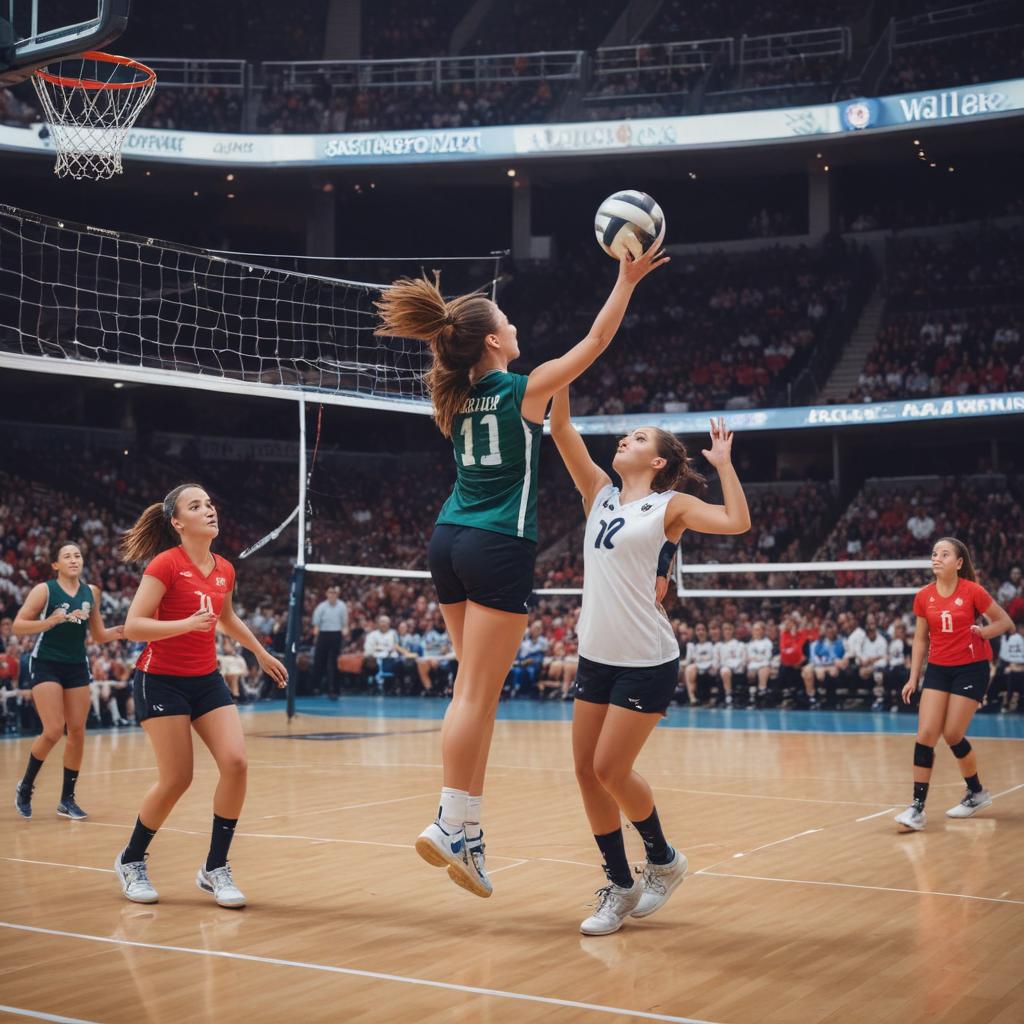
Ankle Sprains in Volleyball: Evidence-Based Prevention Strategies for 2026

June 15, 2026    مصطفى

Ankle sprains are the most common injury in volleyball, accounting for approximately 25% of all volleyball-related injuries. Research shows that well-designed prevention programs can reduce ankle sprain risk by up to 39% in female athletes.

How Common Are Ankle Sprains in Volleyball?

Volleyball involves frequent jumping, landing, cutting, and quick directional changes that place significant stress on the ankle joint. A 2025 systematic review and large study published in the British Journal of Sports Medicine examined 82 studies with over 154,000 participants and found that ankle sprains are among the most prevalent lower extremity injuries in court sports.

What the Research Says About Prevention

The Female Athlete Injury Prevention (FAIR) Consensus, published in July 2025, provides the strongest evidence to date on preventing ankle injuries. Key findings include:

Neuromuscular Training (NMT) Reduces Ankle Sprains by 39%. Pooled results from six studies covering 4,799 female athletes showed that NMT programs significantly reduce ankle sprain rates. The recommended program includes balance, lower extremity strength, agility, and change-of-direction exercises.

A Minimum of 10 Minutes, Twice Per Week. The FAIR Consensus found that NMT warm-up programs with a minimum dose of 10 minutes performed two times per week produced meaningful injury reduction. Programs should progress from bilateral to single-leg exercises.

Balance Training Reduces Ankle Sprains by 41%. A 2025 evidence-to-practice review published in Practical Practice in Athletic Training found that targeted balance training programs reduced ankle injuries by 41% per 1,000 hours of exposure. Male athletes saw a 42% reduction while female athletes saw a 15% reduction from balance-focused programs alone.

Wobble-Board Training Cuts Reinjury Risk in Half. The National Athletic Trainers’ Association (NATA) position statement reports that only 25% of athletes who completed wobble-board training experienced reinjury, compared to 54% in the control group. Athletes with a history of ankle sprains who used bracing or taping had approximately 70% fewer ankle injuries than those without prophylactic support.

Practical Prevention Program for Volleyball Athletes

Based on the current evidence, an effective ankle sprain prevention program should include:

1. Dynamic Warm-Up (10 minutes, 2x per week)

Begin each practice with a dynamic warm-up incorporating balance exercises, jogging, skipping, and sport-specific movements. The FAIR Consensus confirms this approach as the minimum effective dose.

2. Balance and Proprioception Training

Single-leg stance exercises, wobble-board training, and unstable surface work should be performed for at least 3 months to build neuromuscular control. NATA guidelines recommend multi-intervention programs lasting a minimum of 3 months.

3. Strength Training for the Lower Leg and Hip

Address strength in the ankle evertors, invertors, dorsiflexors, and plantar flexors, as well as hip extensors and abductors. The NATA position statement identifies these as important components of ankle injury prevention.

4. Landing Mechanics

Teach proper jump-landing technique with emphasis on soft landings, hip and knee flexion, and avoiding excessive ankle rolling. Neuromuscular training has been shown to improve landing biomechanics and reduce injury risk.

5. Consider Prophylactic Support

Athletes with a history of ankle sprains should consider ankle bracing or taping during high-risk activities. Research shows a 70% reduction in reinjury with appropriate external support.

Key Takeaways

  • Ankle sprains account for approximately 25% of volleyball injuries
  • Neuromuscular training programs reduce ankle sprain risk by up to 39%
  • A minimum of 10 minutes of NMT, twice per week, is effective
  • Balance training alone reduces ankle sprains by 41%
  • Wobble-board training cuts reinjury risk from 54% to 25%
  • Players with prior ankle injuries benefit most from prevention programs

References

  1. Bullock GS, et al. Prevention strategies for lower extremity injury: a systematic review and meta-analyses for the Female, Woman and Girl Athlete Injury Prevention (FAIR) Consensus. British Journal of Sports Medicine. 2025. bjsports-2025-109910.
  2. Tomchuk D, Meyer J, Schneider K, Fox B. Incorporating Balance Training into Ankle Sprain Injury Prevention Programs: An Evidence-to-Practice Review. Practical Practice in Athletic Training. 2025;8(2):3.
  3. National Athletic Trainers’ Association. Position Statement: Conservative Management and Prevention of Ankle Sprains in Athletes. 2025.
  4. Caldemeyer LE, et al. Neuromuscular training for the prevention of ankle sprains in female athletes: a systematic review. The Physician and Sportsmedicine. 2020;48(4).
  5. Effects of neuromuscular training on stability in volleyball athletes: a systematic review and large study. Frontiers in Sports and Active Living. 2025.

JJVA Partners with League One Volleyball (LOVB) — A Game Changer for Youth Club Athletes Category: Club Volleyball News Tags: JJVA, LOVB, youth volleyball, club volleyball, national pipeline, grassroots

May 28, 2026    مصطفى

National Expansion: JJVA Partners with LOVB

In a move that signals the growing professionalization of youth volleyball, the Jordan Junior Volleyball Academy (JJVA) has officially announced a major partnership with League One Volleyball (LOVB). This collaboration connects local club athletes directly to a national grassroots and professional pipeline—opening doors that were previously limited to elite national team programs.

Local Club → National Pipeline → Professional

What This Partnership Means

League One Volleyball (LOVB) has emerged as one of the most significant forces in American volleyball. With a mission to build a vertically integrated volleyball ecosystem spanning youth clubs, college recruitment, and professional play, LOVB represents a new model for athlete development in the United States.

The JJVA-LOVB partnership means that athletes training at JJVA now have a direct pathway into LOVB’s national scouting network. This includes:

  • Priority access to LOVB national events and showcases
  • Direct visibility for JJVA athletes in LOVB’s college recruitment database
  • Coaching exchange programs between JJVA and LOVB-affiliated clubs nationwide
  • Potential pathways to LOVB’s professional league for graduating seniors

Why This Matters for Youth Athletes

Historically, the gap between youth club volleyball and professional opportunities has been wide. Most young athletes never get scouted beyond regional tournaments, and the transition from high school to college to professional play has been fragmented at best.

LOVB’s model changes this. By creating a unified pipeline from youth club through college into professional volleyball, athletes can now be identified, developed, and tracked across their entire career arc—not just during a few high-stakes tournament weekends.

For JJVA families, this partnership means their athlete’s development is no longer limited to local competition. A middle blocker in a JJVA practice gym now has her performance visible to national-level scouts and coaches.

Athlete Development Pipeline Youth Club (JJVA) LOVB Network College Scouting Pro / LOVB Pro

What Coaches and Parents Should Know

For club directors and coaches, this partnership provides access to LOVB’s coaching education resources and curriculum alignment. JJVA coaches will participate in LOVB’s training methodology workshops, ensuring that athletes are developing skills that translate to the national level.

Parents should understand that this does not mean their athlete needs to leave JJVA. Rather, JJVA remains the home club, and the LOVB partnership adds a layer of national exposure and opportunity on top of the existing local training.

The partnership also includes:

  • Joint college recruiting seminars for JJVA families
  • LOVB scout attendance at JJVA home tournaments
  • Discounted entry to LOVB national showcase events
  • Shared video analysis platforms for athlete development tracking

Looking Ahead

As LOVB continues to expand its footprint across the United States, partnerships with established clubs like JJVA will become increasingly important. For the 2026-2027 club season, JJVA athletes can expect to see LOVB-branded programming elements integrated into their training, along with new opportunities for national-level competition.

This partnership represents one of the most significant developments in youth club volleyball’s connection to the professional game. For athletes dreaming of playing beyond high school, the pathway just got a lot clearer.

📢 Share This Article

Facebook
X (Twitter)
LinkedIn

Low Back Pain in Volleyball: Causes by Position and Core Strengthening for Prevention

May 22, 2026    مصطفى

The Hidden Epidemic in Volleyball

Low back pain is one of the most common complaints among volleyball players, yet it often receives less attention than ankle or knee injuries. Research shows that 93% of professional volleyball players report knee, low back, or shoulder complaints during the season – with low back pain being a major contributor. Among beach volleyball players specifically, low back pain affects 33% of athletes as an overuse condition. A 2022 study on high school volleyball players confirmed that low back pain is significantly prevalent and that targeted exercise programs can effectively prevent it.

Understanding Low Back Pain in Athletes

Low back pain in volleyball players can result from several conditions:

  • Muscle strain: Overstretching or tearing of the back muscles
  • Ligament sprain: Stretching of the spinal ligaments
  • Facet joint irritation: Compression of the small joints between vertebrae
  • Spondylolysis: A stress fracture in the vertebra, common in adolescent athletes
  • Disc problems: Bulging or herniated discs from repetitive loading

The most volleyball-specific condition is spondylolysis, a stress fracture of the pars interarticularis – a small bridge of bone in the vertebra. This occurs from repetitive hyperextension (backward arching) of the spine.

Why Volleyball Players Develop Low Back Pain

The Hyperextension Problem

The volleyball spike requires explosive extension of the lower back. When a player jumps to spike, they arch their back to generate power and control. This “bow and arrow” position places the lower back in extreme hyperextension. Doing this hundreds or thousands of times per week creates cumulative stress on the vertebrae, discs, and surrounding muscles.

The Landing Load

Just as jumping strains the back, landing compresses the spine. Each landing from a spike or block sends a shock wave through the spine. Over the course of a season, this adds up to significant cumulative loading.

Core Weakness

The core muscles (abdominals, obliques, lower back muscles, hip muscles) act as a natural weight belt for the spine. When the core is weak, the lower back must absorb forces that the core should be handling. A 2017 study found that core stabilization exercises were more effective than traditional physical therapy for reducing low back pain symptoms.

Poor Posture and Mechanics

Volleyball players often develop posture imbalances from overdeveloped dominant muscles. Tight hip flexors, weak glutes, and an anterior pelvic tilt can all contribute to low back pain by placing the lower back in a stressed position even at rest.

Which Positions Are Most at Risk?

Outside and Opposite Hitters

Hitters face the highest risk of low back pain. The attacking motion requires significant back hyperextension, and hitters perform the most spikes on the team. The combination of explosive arching during the approach and spike, plus repeated landing, creates the perfect conditions for low back problems.

Setters

Setters are particularly prone to low back pain. The setting motion often involves leaning backward while contacting the ball overhead, placing the lower back in a hyperextended position. Additionally, setters frequently move backward to chase down passes, which loads the lower back asymmetrically. Jump setters add the extra element of jumping and landing.

Middle Blockers

While middle blockers may not hyperextend as dramatically as hitters, they jump more frequently than any other position. The repetitive jumping and landing cycle places cumulative compressive stress on the spine.

Beach Volleyball Players

Beach volleyball players have especially high rates of low back pain (33% in studies). The softer sand surface requires more energy to jump from, and the smaller team size means more total jumps per player. Additionally, the unstable surface of sand forces the core and back muscles to work harder for balance.

Evidence-Based Prevention Strategies

Core Strengthening

A strong core is the single most effective prevention measure for low back pain. The core includes:

  • Rectus abdominis (front abs)
  • Obliques (side abs)
  • Transversus abdominis (deep core)
  • Erector spinae (back muscles)
  • Multifidus (deep back muscles)
  • Gluteal muscles

Research shows that core strengthening exercises rank among the top remedies for alleviating and preventing back pain.

Hip Flexor Stretching

Tight hip flexors from constant jumping contribute to anterior pelvic tilt, which stresses the lower back. Regular stretching of the hip flexors helps maintain proper pelvic alignment.

Glute Activation

Weak glutes force the lower back to compensate during jumping and landing. Strong glutes absorb force and protect the spine. Glute activation exercises should precede every training session.

Proper Hitting Mechanics

Coaches should teach hitters to engage their core and use their legs for power rather than relying on back hyperextension. The “arch” in a spike should come from shoulder and thoracic spine mobility, not from bending the lower back.

The Semi-Customized Exercise Approach

A 2022 study specifically on high school volleyball players found that semi-customized exercise programs – exercises tailored to address individual risk factors – were effective in preventing low back pain. This suggests that a one-size-fits-all approach is less effective than addressing each player’s specific weaknesses.

Strengthening Exercises for Prevention

Exercise 1: Bird Dog

Start on your hands and knees. Extend your right arm forward and left leg back simultaneously, keeping your back flat. Hold for 3 seconds, then switch sides. Perform 10 reps on each side. This exercise strengthens the deep core and back stabilizers without compressing the spine.

Exercise 2: Glute Bridge

Lie on your back with knees bent and feet flat. Push through your heels to lift your hips toward the ceiling. Squeeze your glutes at the top, hold for 2 seconds, then lower. Perform 3 sets of 15 reps. This activates and strengthens the glutes, reducing stress on the lower back.

Exercise 3: Dead Bug

Lie on your back with arms extended toward the ceiling and knees bent at 90 degrees. Slowly extend your right arm overhead and left leg straight, keeping your lower back pressed into the floor. Return to start and switch sides. Perform 10 reps on each side. This trains core stability during limb movement.

Exercise 4: Side Plank

Lie on your side with your elbow under your shoulder and legs stacked. Lift your hips until your body forms a straight line. Hold for 30-60 seconds, then switch sides. Repeat 3 times on each side. This strengthens the obliques and quadratus lumborum, key stabilizers for the lower back.

Exercise 5: Hip Flexor Stretch

Kneel on one knee with the other foot forward. Keeping your torso upright, shift your weight forward until you feel a stretch in the front of the hip of the kneeling leg. Hold for 30 seconds on each side. Perform 3 times per side.

Exercise 6: Supine Twist

Lie on your back with knees bent and arms extended out to the sides. Keeping your shoulders on the floor, lower both knees to one side. Hold for 20-30 seconds, then switch sides. This improves spinal mobility and relieves tension.

Conclusion

Low back pain is a common but often overlooked problem in volleyball, affecting hitters and setters most significantly. The repetitive hyperextension of spiking and the compressive forces of landing both contribute to back problems. Prevention focuses on core strengthening, glute activation, proper mechanics, and addressing individual muscle imbalances. If you experience persistent lower back pain, especially if it radiates down your legs, seek evaluation from a health professional to rule out more serious conditions like spondylolysis or disc problems.

Related Articles

Finger and Hand Injuries in Volleyball: Position-Specific Risks and Prevention

May 22, 2026    مصطفى

The Most Common Upper Extremity Injury

Finger and hand injuries are the third most common injury site in volleyball, accounting for approximately 13.4% of all acute injuries – trailing only ankles and knees. A large-scale study of youth volleyball players found that 43% of all upper extremity injuries involved the fingers, with sprains and strains making up 42.6% of those cases. The sport-specific movement most commonly associated with finger injury is blocking, followed by defensive digging and setting.

Types of Finger Injuries in Volleyball

  • Sprains and strains (39%): The ligaments connecting finger joints are stretched or partially torn
  • Fractures (25%): One or more bones in the finger are broken
  • Dislocations: The finger bones are forced out of their normal alignment
  • Tendon avulsions: The tendon tears away from the bone, sometimes pulling a piece of bone with it
  • Contusions (16%): Bruising from direct impact with the ball

The thumb metacarpophalangeal (MCP) joint is the most frequently injured area, as it bears the brunt of impact during blocking.

Why Finger Injuries Are Common in Volleyball

Ball Speed and Impact Force

A volleyball spike can reach speeds of 60-80 miles per hour at the high school level and over 70 miles per hour at elite levels. When a ball traveling at this speed makes contact with an outstretched finger, the force can easily bend the finger beyond its normal range, causing ligament damage or fracture.

Blocking Mechanics

Blockers extend their hands above the net to deflect the ball. The hands are exposed and vulnerable, especially when the block is not perfectly formed. If the blocker’s fingers are slightly apart when the ball hits, individual fingers absorb the full force of the spike. Studies show that most finger injuries during blocking happen when the hand is incorrectly positioned.

Setting Repetition

Setters absorb thousands of ball contacts per week. Each set puts pressure on the fingertips and finger joints. Over time, this can lead to overuse injuries of the finger tendons and ligaments.

Which Positions Are Most at Risk?

Middle Blockers

Middle blockers face the highest finger injury risk. Their position at the net requires them to block the opponent’s fastest and most powerful hitters. The middle blocker is involved in nearly every play at the net, providing more opportunities for finger trauma. Research confirms that most finger injuries occur during blocking.

Outside Blockers and Opposite Hitters

These players also block regularly, putting them at significant risk. Additionally, when hitting, if their hand contacts the net or an opponent’s hand, they can sustain finger injuries.

Setters

Setters face a different type of finger injury risk – overuse rather than acute trauma. The repetitive impact of setting can cause cumulative damage to the finger joints and tendons. Setters also risk acute injuries when attempting to block or when digging a hard-driven ball.

Liberos and Defensive Specialists

Liberos use their forearms for passing and rarely suffer acute finger injuries. However, when attempting a “pancake” save (sliding a hand under the ball just before it hits the floor), the hand and fingers are vulnerable to floor contact injuries.

Evidence-Based Prevention Strategies

Proper Hand Positioning

For blockers, the key prevention strategy is proper hand position. Hands should be:

  • Shoulder-width apart
  • Palms facing the net (not the ceiling)
  • Fingers spread but firm
  • Wrists slightly flexed
  • Arms fully extended overhead

When the hands are positioned correctly, the ball contacts the palms rather than the fingers.

Taping and Bracing

Finger taping is one of the most effective prevention tools. Research supports using:

  • Buddy taping: Taping the injured finger to the neighboring finger for support. This is the “gold standard” for returning to play after a jammed finger.
  • Rigid tape: For blockers who need maximum stability to prevent finger joints from folding during impact.
  • Elastic tape: For setters who need full range of motion with light compression.

Players should check and potentially retape between sets, as sweat reduces adhesive effectiveness.

Hand Strengthening

Stronger fingers and hands are more resistant to injury. Grip strength exercises should be part of every volleyball player’s training.

Proper Technique

Coaches should emphasize proper hand position during blocking drills. Players should practice keeping their fingers firm and hands properly positioned even when fatigued.

Strengthening Exercises for Prevention

Exercise 1: Grip Strengthening

Use a tennis ball or stress ball. Squeeze and hold for 5 seconds, then release. Perform 3 sets of 15 reps on each hand. This strengthens the intrinsic hand muscles.

Exercise 2: Finger Extensor Strengthening

Place a rubber band around your fingers (at the middle joint). Open your fingers against the resistance of the band. This strengthens the extensor muscles that balance the flexors. Perform 3 sets of 15 reps.

Exercise 3: Finger Adduction/Abduction

Place your hand flat on a table. Spread your fingers apart as wide as possible, then bring them back together. Repeat 20 times. This improves finger control and coordination.

Exercise 4: Wrist Flexor and Extensor Strengthening

Rest your forearm on a table with your hand hanging over the edge. Hold a light weight:

  • Palm up: curl your wrist up (flexion)
  • Palm down: curl your wrist up (extension)

Perform 3 sets of 12 reps each direction.

Exercise 5: Rice Bucket Training

Fill a bucket with rice. Plunge your hand in and perform various movements – squeezing, spreading, rotating. The resistance of the rice provides a comprehensive hand and finger workout.

Conclusion

Finger and hand injuries are the third most common injury in volleyball, with middle blockers at highest risk. Most occur during blocking when the hand is improperly positioned. Prevention focuses on proper hand positioning, strategic taping, and hand strengthening exercises. If you jam a finger, use buddy taping to return to play safely – but have it evaluated by a health professional if you cannot fully bend or straighten it.

Related Articles

Shoulder Injuries in Volleyball: Rotator Cuff Risks by Position and Prevention

May 22, 2026    مصطفى

The Overhead Athlete’s Challenge

Shoulder injuries are the most common upper extremity problem in volleyball, accounting for 8% to 20% of all volleyball-related injuries. The shoulder joint provides the mobility needed for powerful spikes, serves, and blocks, but that same mobility comes at the cost of stability. A recent study reported the shoulder as the most injured body part in beach volleyball (15.5%) and the second most injured in indoor volleyball (10.8%). For beach players, shoulder problems can be even more prevalent due to smaller team sizes and increased workload.

Understanding the Rotator Cuff

The rotator cuff consists of four muscles and their tendons that surround the shoulder joint: the supraspinatus, infraspinatus, teres minor, and subscapularis. These muscles work together to stabilize the ball of the upper arm (humerus) within the shallow socket (glenoid) of the shoulder blade. During a volleyball spike or serve, the rotator cuff must stabilize the shoulder through an extreme range of motion while generating tremendous force.

Why Volleyball Players Develop Shoulder Injuries

Repetitive Overhead Motion

Professional volleyball players perform up to 40,000 overhead hitting motions in a single season. Each motion requires the shoulder to move from extreme external rotation (arm cocked back) to extreme internal rotation (arm swinging through) in a fraction of a second. This repetitive high-velocity motion gradually breaks down the rotator cuff tendons and the labrum (cartilage rim of the shoulder socket).

Muscle Imbalance

Volleyball players typically develop strong internal rotation muscles (pectorals, latissimus dorsi) from hitting and serving, while neglecting external rotation strength (rotator cuff, scapular stabilizers). This imbalance pulls the shoulder joint forward and creates impingement, where the rotator cuff tendons get pinched between bones.

Poor Mechanics

A spike or serve should use the entire body in a kinetic chain – legs, core, shoulder, arm, wrist. When any link in this chain is weak or improperly timed, the shoulder must compensate. Common mechanical problems include:

  • Over-rotating the trunk before arm swing
  • Dropping the elbow during the hitting motion
  • Using only the arm without engaging the legs and core
  • Hitting with a “flat” approach angle that forces the shoulder to work harder

Which Positions Are Most at Risk?

Outside Hitters

Outside hitters typically have the highest hitting volume on the team. They attack from various positions along the net and often receive the most sets in a match. The combination of high volume and the need to hit around or over blockers places significant stress on the shoulder.

Opposite Hitters

Opposite hitters face similar shoulder demands as outside hitters. Their position on the right side of the net requires hitting from less conventional angles, which can place additional strain on the shoulder joint.

Setters

While setters may not spike with the same force as hitters, jump setters perform thousands of overhead setting motions that stress the shoulder. The repetitive overhead motion with a lighter load can still cause overuse injuries over time.

Middle Blockers

Middle blockers may not have the highest hitting volume, but their shoulder is still stressed during blocking and quick attacks. The fast-tempo sets to the middle require extremely rapid arm swing mechanics that can stress the rotator cuff.

Beach Volleyball Players

Beach volleyball players shoulder a particularly heavy load – with only two players per team, each player must attack, defend, and serve more frequently than indoor players. Research confirms beach players have higher rates of shoulder injuries than indoor players.

Evidence-Based Prevention Strategies

The OSTRC Shoulder Injury Prevention Program

Research from the Oslo Sports Trauma Research Center has shown that a structured shoulder injury prevention program can reduce the risk of shoulder problems by 28% in overhead athletes. The program includes exercises for:

  • Glenohumeral internal and external rotation
  • Scapular muscle strengthening
  • Kinetic chain improvement
  • Thoracic mobility

Strength Balance

Players must maintain balanced strength between internal and external shoulder rotation. A ratio of approximately 2:3 (internal rotation strength to external rotation strength) is considered optimal for overhead athletes.

Scapular Stability

The shoulder blade provides the foundation for arm movement. Strengthening the muscles that stabilize the shoulder blade (trapezius, rhomboids, serratus anterior) creates a stable base for the rotator cuff to work from.

Thoracic Mobility

The middle and upper back must be mobile enough to allow the shoulder to move through its full range. Limited thoracic spine mobility forces the shoulder to compensate, increasing injury risk.

Strengthening Exercises for Prevention

Exercise 1: External Rotation with Band

Attach a resistance band at waist height. Stand with your elbow bent at 90 degrees and tucked against your side. Rotate your forearm outward against the band, keeping your elbow pinned to your side. Perform 3 sets of 15 reps on each arm.

Exercise 2: Prone Y-T-W-L

Lie face down on an incline bench or the floor. Perform the following arm positions with light weights:

  • Y: Arms overhead at a 45-degree angle
  • T: Arms out to the sides at 90 degrees
  • W: Arms bent at 90 degrees, elbows tucked
  • L: Arms at sides, elbows bent to 90 degrees

Perform 5 reps of each position, holding each for 2-3 seconds.

Exercise 3: Scapular Push-Up

Start in a plank position. Without bending your elbows, squeeze your shoulder blades together, then push your upper back toward the ceiling. This strengthens the serratus anterior and scapular stabilizers. Perform 3 sets of 10 reps.

Exercise 4: Thoracic Spine Rotation

Lie on your side with your knees bent and arms extended in front. Keeping your hips stable, rotate your top arm in an arc from in front to behind you, following it with your head. Perform 10 rotations on each side.

Exercise 5: Band Pull-Apart

Hold a resistance band in front of you with arms extended at shoulder height. Pull the band apart by moving your arms to the sides, squeezing your shoulder blades together. Return slowly. Perform 3 sets of 15 reps.

Conclusion

Shoulder injuries affect up to 20% of volleyball players, with hitters and beach players at highest risk. Prevention requires balanced strength training, proper mechanics, and adequate recovery. The OSTRC Shoulder Injury Prevention Program provides a research-backed framework that has been proven to reduce shoulder problems. If you experience shoulder pain during spiking or serving, address it early – shoulder injuries rarely resolve on their own and often worsen with continued play.

Related Articles

Jumper’s Knee in Volleyball: Patellar Tendinitis Causes, Position Risks, and Prevention

May 22, 2026    مصطفى

The Overuse Injury That Sidelines Jumpers

Patellar tendinitis, commonly known as “jumper’s knee,” is the most frequent overuse injury in volleyball. Research indicates that at some point, approximately 50% of volleyball athletes develop patellar tendinitis. The condition is so prevalent that it has been called the “hallmark injury” of the sport. A landmark study found that 93% of professional volleyball players reported knee, low back, or shoulder complaints during the season, with knee pain – specifically patellar tendinopathy – leading the list.

What Is Patellar Tendinitis?

The patellar tendon connects your kneecap (patella) to your shin bone (tibia). It works with the quadriceps muscle to extend your knee – the motion you use when jumping. Patellar tendinitis occurs when this tendon becomes overloaded from repetitive strain, causing microscopic tears, inflammation, and pain. Over time, untreated tendinitis can progress to tendinopathy, a degenerative condition where the tendon structure breaks down.

Why Volleyball Players Get Jumper’s Knee

The Repetitive Jumping Problem

Volleyball is unique among sports for the sheer volume of jumps performed. An elite volleyball player may perform 40,000 to 50,000 overhead hitting motions in a single season. Each jump loads the patellar tendon with forces 5-7 times body weight. Over a season, that is hundreds of tons of force going through a tendon roughly the width of your thumb.

Surface Hardness

Indoor volleyball courts are typically hardwood surfaces that provide minimal shock absorption. When you jump and land on a hard surface, your patellar tendon absorbs significantly more force than it would on grass or sand. This is one reason beach volleyball players have lower rates of patellar tendinitis.

Training Volume and Periodization

Many young volleyball players compete year-round – high school season followed by club season, often with camps and clinics in between. This constant training without adequate rest periods prevents the patellar tendon from recovering, leading to cumulative damage.

Which Positions Are Most at Risk?

Outside Hitters

Outside hitters perform the highest volume of attacking jumps in most offensive systems. They approach, jump, and land repeatedly throughout a match and practice. The combination of high jump volume and the aggressive, explosive nature of the outside hit makes this position the most susceptible to jumper’s knee.

Middle Blockers

Middle blockers jump constantly for both offense and defense. In a single match, a middle blocker may perform 60-100 jumps between attacks and blocks. The quick, repetitive “up-down” nature of middle blocking puts enormous stress on the patellar tendon.

Opposite Hitters

Although they may not have the same jump volume as outside hitters in some systems, opposite hitters still perform frequent attacking jumps and often play all six rotations, adding defensive movement to the jumping load.

Setters

Setters are not immune. When setters jump set, they load the patellar tendon with each set. Additionally, setters who block at the net add even more jumping volume. Back-to-back tournament play can be particularly hard on a setter’s knees.

Liberos and Defensive Specialists

Liberos rarely jump, so their risk of patellar tendinitis is low. However, the deep defensive positions they assume (low squat) can place some stress on the knee.

Evidence-Based Prevention Strategies

Load Management

The single most important prevention strategy is managing your jumping volume. This means taking adequate rest between training sessions, avoiding year-round volleyball without breaks, and varying training intensity. Research recommends at least one full rest day per week and 4-6 weeks of complete rest from volleyball each year.

Progressive Tendon Loading

A 2021 study published in the British Journal of Sports Medicine found that progressive tendon-loading exercises (PTLE) were significantly more effective than traditional eccentric exercises for treating patellar tendinopathy. The PTLE group showed a 2-point lower pain score on a 10-point scale compared to eccentric-only training.

Quadriceps and Hip Strengthening

Strong quadriceps and hip muscles reduce the load on the patellar tendon. When your hip and thigh muscles are strong, they absorb more of the landing force, taking pressure off the tendon. Focus on squats, lunges, and hip thrust exercises.

Landing Mechanics

How you land matters as much as how you jump. Proper landing technique includes:

  • Landing with knees bent at least 90 degrees
  • Keeping the knees aligned over the toes (not collapsing inward)
  • Distributing weight evenly across the foot
  • Absorbing impact through the whole leg, not just the knees

Appropriate Footwear

Volleyball shoes should provide good cushioning and support. Shoes lose their shock-absorbing properties over time – replace them every 3-6 months depending on training volume.

Strengthening Exercises for Prevention

Exercise 1: Slow Step-Ups

Step up onto a box or bench with controlled motion. Go up slowly (2 seconds), and come down even slower (4 seconds). The eccentric (lowering) phase is critical for tendon health. Perform 3 sets of 10 reps on each leg.

Exercise 2: Spanish Squat

Using a resistance band anchored behind your knees, perform a bodyweight squat while keeping the band taut. This exercise specifically targets the patellar tendon and quadriceps. Start with 3 sets of 12 reps.

Exercise 3: Nordic Hamstring Curl

Kneel with your ankles anchored. Slowly lower your torso toward the floor, controlling the descent with your hamstrings. This strengthens the hamstrings to balance the quadriceps and reduce overall knee stress. Perform 3 sets of 6-8 reps.

Exercise 4: Straight Leg Raise

Lie on your back with one knee bent and the other leg straight. Lift the straight leg to the height of the opposite knee, hold for 2 seconds, and lower slowly. This strengthens the quadriceps without loading the patellar tendon. Perform 3 sets of 12 reps on each leg.

Exercise 5: Wall Sit with Isometric Hold

Slide down a wall until your knees are at a 90-degree angle. Hold this position for 30-60 seconds. Isometric exercises strengthen the tendon without the repetitive stress of dynamic movement.

Conclusion

Jumper’s knee affects up to half of all volleyball players, with outside hitters and middle blockers facing the highest risk. The key to prevention lies in managing training volume, strengthening the muscles that support the knee, and using proper jumping and landing mechanics. If you feel pain at the bottom of your kneecap, do not ignore it – rest, seek evaluation, and address the problem early before it becomes a chronic condition.

Related Articles

Ankle Sprains in Volleyball: Causes, Positions at Risk, and Prevention Strategies

May 22, 2026    مصطفى

The #1 Injury in Volleyball

Ankle sprains are the most common injury in volleyball across all levels of play, accounting for roughly 40-50% of all volleyball-related injuries. Research shows that approximately 20% of volleyball players will suffer an ankle sprain at some point in their careers, making it the leading cause of lost playing time in the sport. These injuries are not just painful in the moment – they carry long-term consequences. Studies indicate that recurrent ankle sprains are extremely common within 6-12 months of the initial injury, primarily due to inadequate rehabilitation.

What Exactly Is an Ankle Sprain?

An ankle sprain occurs when the ligaments that connect the bones of the ankle are stretched or torn beyond their normal range of motion. The most common type is a lateral ankle sprain, which affects the ligaments on the outside of the ankle – particularly the anterior talofibular ligament. When you “roll” your ankle inward, these ligaments get overstretched, causing pain, swelling, bruising, and difficulty bearing weight.

Why Ankle Sprains Are So Common in Volleyball

Volleyball creates the perfect storm for ankle injuries. The sport involves constant jumping, landing, quick lateral movements, and play at the net – all factors that put the ankle at risk.

The Net Zone Danger

Most ankle sprains (approximately 89%) occur around the net. The primary mechanism is landing on another player’s foot after a block or attack. When an offensive player jumps to spike or a blocker jumps to defend, they often land on or over the center line, stepping onto an opponent’s foot. This forces the ankle into an awkward, rolled position that the ligaments cannot handle.

Surface and Footwear Factors

Indoor volleyball courts provide good traction, but that can actually work against players. High-friction surfaces combined with quick directional changes can cause the foot to “stick” while the body continues moving, forcing the ankle into injury. Additionally, volleyball shoes are designed for lightweight movement rather than heavy ankle support.

Which Positions Are Most at Risk?

Middle Blockers

Middle blockers face the highest risk of ankle sprains. They are constantly jumping at the net, often in close quarters with opponents. During a block, the middle blocker must move laterally along the net and jump – frequently landing near or on the feet of opposing hitters. The combination of lateral movement, jumping, and close proximity to opponents makes this position especially vulnerable.

Outside Hitters

Outside hitters also face significant ankle injury risk. They approach the net from various angles, jump to attack, and must be aware of the block and defenders beneath them. The approach jump creates forward momentum that can carry them under the net, where landing on an opponent’s foot is more likely.

Opposite Hitters

Similar to outside hitters, opposite hitters perform frequent attacking jumps. Their position on the right side of the net means they often face the opponent’s best blocker, increasing the likelihood of tight plays at the net.

Setters

While setters may have slightly lower ankle injury rates than hitters, they are still at risk, particularly when they step close to the net to set or when they land after a block attempt. Setters also face unique risks from quick lateral movements.

Liberos and Defensive Specialists

Liberos have the lowest rate of ankle sprains among volleyball positions because they rarely jump at the net. However, they can still suffer ankle injuries during defensive plays, particularly when moving backward or making abrupt directional changes in response to a hard-driven ball.

Evidence-Based Prevention Strategies

Preventing ankle sprains requires a multi-pronged approach. Research has identified several strategies that significantly reduce injury risk.

Proprioceptive and Balance Training

One of the most effective prevention methods is proprioceptive training – exercises that train your body to sense and respond to ankle position changes. Studies show that balance board training can significantly reduce recurrent ankle injuries in volleyball players. Balance training should be performed 3-5 times per week for best results.

Strength and Conditioning

Strengthening the muscles around the ankle provides natural support to the ligaments. Key exercises include:

  • Calf raises (seated and standing) to strengthen the gastrocnemius and soleus muscles
  • Ankle eversion exercises using resistance bands to strengthen the peroneal muscles
  • Towel curls and marble pickups to strengthen the intrinsic foot muscles
  • Single-leg calf raises to build stability and strength simultaneously

Landing Technique Training

Proper landing mechanics are crucial for prevention. Players should be trained to:

  • Land with feet shoulder-width apart
  • Bend at the hips and knees to absorb impact
  • Land quietly and softly rather than stiff-legged
  • Avoid landing with the foot rolling inward
  • Practice landing from two-footed and one-footed jumps

Ankle Bracing and Taping

Research supports the use of ankle braces or taping for players with a history of ankle sprains. Ankle orthoses can reduce the risk of recurrent sprains without significantly affecting performance. Players returning from an ankle injury should consider bracing for at least 6-12 months.

Sport-Specific Training

Coaches should incorporate landing practice into regular training. Simple drills like landing from a block and immediately moving to the next position can help train proper mechanics under game-like conditions.

Strengthening Exercises for Prevention

Exercise 1: Single-Leg Balance

Stand on one leg for 30 seconds, then switch. Progress to closing your eyes, then to standing on an unstable surface like a pillow or balance pad. This trains the proprioceptive system.

Exercise 2: Resistance Band Inversion and Eversion

Sit with your leg extended. Loop a resistance band around your foot and anchor it. Pull your foot inward (inversion) and outward (eversion) against the resistance. Perform 3 sets of 15 reps on each foot.

Exercise 3: Calf Raises

Stand on the edge of a step and slowly lower your heels below the step level, then push up onto your toes. Perform 3 sets of 15 reps. This strengthens both the calf muscles and the Achilles tendon.

Exercise 4: Lateral Hops

Hop laterally from one foot to the other, landing softly with bent knees. Perform 3 sets of 10 hops. This mimics volleyball movement patterns and trains ankle stability under load.

Exercise 5: Bosu Ball Squats

Perform bodyweight squats on a Bosu ball or balance pad. This challenges your ankle stability while also working your legs and core. Start with 3 sets of 10 reps.

Conclusion

Ankle sprains are the most common injury in volleyball, but they are also one of the most preventable. Middle blockers and hitters face the highest risk due to repeated jumping at the net. By incorporating balance training, strengthening exercises, proper landing mechanics, and appropriate bracing into your training routine, you can significantly reduce your risk of ankle injury and stay on the court longer. Remember that the highest risk factor for an ankle sprain is having had one before – so if you have a history of ankle injuries, take prevention even more seriously.

Related Articles

Unlock Your The 2026 Club Volleyball Nationals Are Taking Plac |

May 15, 2026    admin
Unlock Your The 2026 Club Volleyball Nationals Are Taking Plac |

Building Confidence
·May 15, 2026
·4 min read
·the 2026 club

The 2026 Club Volleyball Nations: A Chance to Shine with VBallStars

Executive Summary

The 2026 club volleyball nationals are taking place across the country, with USA Volleyball and AAU hosting their premier championships throughout the summer. As a volleyball athlete, you’re likely to be part of one of these events, and we’re excited to help you prepare for the challenge. In this article, we’ll delve into the key events, provide insights into the competition, and offer tips on how to use VBallStars to stay on top of your mental performance game.

Background

The USA Volleyball (USAV) Boys Junior National Championship in Phoenix, AZ, and the AAU Junior National Volleyball Championships in Orlando, FL, are just two of the many key events taking place this summer. According to USA Volleyball, over 10,000 athletes from around the country will participate in these events, showcasing their skills and determination (Source: [2]). These championships are a great opportunity for teams to come together, learn from each other, and push themselves to new heights.

As a volleyball athlete, you know that mental performance is just as important as physical skill. In fact, research has shown that athletes who have a strong mental game are more likely to perform well under pressure (Weinberg & Gould, Foundations of Sport Psychology, 2015). That’s where VBallStars comes in – our comprehensive mental performance training platform is designed to help you develop the skills and mindset you need to succeed on the court.

Key Concepts

Mental Preparation for Competition

As you prepare for the 2026 club volleyball nationals, it’s essential to focus on mental preparation. This includes developing strategies for managing anxiety, building confidence, and staying focused under pressure. Here are a few tips to get you started:

  1. Breathing exercises: Take a few minutes each day to practice deep breathing exercises, such as inhaling for a count of four and exhaling for a count of four. This can help calm your nerves and improve your focus.
  2. Visualization: Close your eyes and imagine yourself performing well on the court. Visualize yourself making great plays, communicating effectively with your teammates, and staying calm under pressure.
  3. Self-talk: Pay attention to your inner dialogue and work on building a positive self-talk habit. Instead of focusing on negative thoughts, try to focus on positive affirmations, such as “I’ve got this” or “I’m ready for this.”

Staying Focused on the Court

As you take to the court, it’s essential to stay focused on the game. Here are a few tips to help you do just that:

  1. Stay present: Try to stay present in the moment and focus on the current play. Avoid getting distracted by thoughts about the past or future.
  2. Use your peripheral vision: Instead of focusing on the ball directly in front of you, try to use your peripheral vision to stay aware of the court and your teammates.
  3. Communicate effectively: Make sure to communicate clearly and effectively with your teammates, using a consistent language and system.

Analysis

The 2026 club volleyball nationals are a great opportunity for teams to come together and compete at a high level. As you prepare for these events, it’s essential to focus on mental preparation and staying focused on the court. By using VBallStars and implementing the tips outlined above, you’ll be well on your way to developing the skills and mindset you need to succeed.

In addition to these tips, consider the following expert insights:

  • “The most successful athletes are those who have a strong mental game. They’re able to stay focused, manage their anxiety, and perform well under pressure.” – Dr. Robert Weinberg, Sport Psychology Expert (Source: [1])
  • “VBallStars is an excellent resource for any volleyball athlete looking to improve their mental performance. The platform offers a comprehensive set of tools and strategies that can help athletes develop the skills and mindset they need to succeed.” – Mustafa Lalli, Founder of VBallStars

Conclusion

The 2026 club volleyball nationals are just around the corner, and we’re excited to help you prepare for the challenge. By focusing on mental preparation, staying focused on the court, and using VBallStars to develop your skills and mindset, you’ll be well on your way to success. Remember, mental performance is just as important as physical skill, and with the right training and mindset, you can achieve greatness on the court.

🏐

Ready to Elevate Your Game?

Join VBallStars for evidence-based mental performance training used by elite athletes.

Free 14-day trial • Cancel anytime • $29.99/mo

Related Articles

Research on Girls Junior National Championship (14–17s): June |

May 15, 2026    admin
Research on Girls Junior National Championship (14–17s): June  |

Research Article
·May 15, 2026
·3 min read
·girls junior national

Girls Junior National Championship (14–17s): June 25–July 3, 2026 | Indianapolis, IN

Introduction

The Girls Junior National Championship (GJNC), held annually by USA Volleyball, is a premier junior volleyball event that brings together top teams from across the country to compete in a national championship format. For the 2026 edition, the GJNC will be held in Indianapolis, Indiana, from June 25 to July 3, 2026. This event is a significant milestone for young volleyball players, offering a platform to test their skills against the best teams in the country. In this article, we will delve into the key facts surrounding the 2026 GJNC, analyze its significance, and provide insights into the event’s format and requirements.

Key Facts

According to USA Volleyball, the 2026 GJNC will feature age divisions for 14-17-year-old players. The event will be held at the Indiana Convention Center and Lucas Oil Stadium in Indianapolis, Indiana, from June 25 to July 3, 2026. This marks the first time that the GJNC will be held in Indianapolis, and it promises to be an exciting event for volleyball enthusiasts. The GJNC is a premier junior volleyball event that attracts top teams from across the country, and it is considered a crucial stepping stone for young players looking to compete at the highest level.

Age Divisions and Format

The 2026 GJNC will feature age divisions for 14-17-year-old players, with teams competing in a national championship format. The event will consist of several rounds, including pool play, bracket play, and a championship match. The format will be similar to previous years, with teams competing in a round-robin format during pool play, followed by bracket play to determine the top teams in each age division.

Teams and Qualification

Teams competing in the 2026 GJNC will have qualified through a series of regional and national qualifiers. The qualification process typically involves a combination of bids earned through regional and national events, as well as a limited number of at-large bids awarded by USA Volleyball. Teams that qualify for the GJNC will be among the top teams in the country, and they will have the opportunity to compete against the best teams in the country.

Main Analysis

Significance of the GJNC

The GJNC is a significant event for young volleyball players, offering a platform to test their skills against the best teams in the country. The event provides an opportunity for players to gain valuable experience, receive feedback from coaches and officials, and showcase their abilities to college scouts and coaches. The GJNC is also a crucial stepping stone for players looking to compete at the highest level, as it provides a chance to gain exposure and build their resume for future college and national team opportunities.

Common Mistakes Beginners Make

One common mistake beginners make when competing in the GJNC is failing to prepare adequately for the event. This can include not practicing enough, not studying the competition, or not being prepared for the physical demands of the event. To avoid this mistake, players and teams should make sure to practice regularly, study the competition, and prepare physically and mentally for the event.

Conclusion

The 2026 Girls Junior National Championship (GJNC) promises to be an exciting event for volleyball enthusiasts, featuring top teams from across the country competing in a national championship format. The event will be held in Indianapolis, Indiana, from June 25 to July 3, 2026, and it will provide a platform for young players to test their skills against the best teams in the country. By understanding the key facts surrounding the GJNC, including the age divisions, format, and qualification process, players and teams can prepare adequately for the event and make the most of this opportunity to compete at the highest level.

Related Articles

The Real Cost Of Playing Club Volleyball In 2026 |

May 11, 2026    admin
Unlock Your The Real Cost Of Playing Club Volleyball In 2026 |...

Building Confidence
·May 11, 2026
·4 min read
·the real cost

The Real Cost of Playing Club Volleyball in 2026

Executive Summary

Playing club volleyball can be a costly endeavor, with fees ranging from $3,000 to $5,000 per season. As a parent, it’s essential to understand the expenses involved and make informed decisions about your child’s participation. In this article, we’ll break down the costs associated with club volleyball and provide guidance on how to budget smartly.

Background

Club volleyball is a popular extracurricular activity for many young athletes, offering a chance to develop their skills, build teamwork, and gain valuable experience. However, the costs associated with club volleyball can be substantial, making it essential for parents to plan ahead and budget accordingly.

Key Concepts

Setter

Official role description: The setter is responsible for setting the ball to the attacker, usually in a specific location on the court. They must read the defense and make split-second decisions to exploit openings.

Key physical attributes: Quick hands, agility, and good vision.

Technical skills required: Ability to read the defense, set the ball accurately, and communicate with teammates.

Common rotations or court position: Setter is typically positioned in the front row of the court, but may rotate to the back row to receive a serve or pass.

Common mistake beginners make: Overthinking and hesitating when setting the ball, leading to errors and missed opportunities.

Libero

Official role description: The libero is a defensive specialist who is allowed to substitute in and out of the game during a rally. They are responsible for receiving serves, digging attacks, and blocking opponents.

Key physical attributes: Quick reflexes, agility, and excellent jumping ability.

Technical skills required: Ability to receive serves, dig attacks, and block opponents with precision and speed.

Common rotations or court position: Libero is typically positioned in the back row of the court, but may rotate to the front row to block or attack.

Common mistake beginners make: Failing to communicate with teammates and misreading the opponent’s attack.

Outside Hitters (OH)

Official role description: The outside hitter is a versatile player who can attack and defend from the outside position. They must be able to read the defense and make quick decisions to exploit openings.

Key physical attributes: Quickness, agility, and excellent jumping ability.

Technical skills required: Ability to attack and defend from the outside position, as well as communicate with teammates.

Common rotations or court position: Outside hitter is typically positioned on the outside of the court, but may rotate to the middle or back row to attack or block.

Common mistake beginners make: Failing to read the defense and making poor attacking decisions.

Middle Blockers (MB)

Official role description: The middle blocker is a defensive specialist who is responsible for blocking opponents at the net. They must be able to read the offense and make quick decisions to block attacks.

Key physical attributes: Height, strength, and excellent jumping ability.

Technical skills required: Ability to block opponents at the net, as well as read the offense and make quick decisions.

Common rotations or court position: Middle blocker is typically positioned at the net, but may rotate to the back row to attack or pass.

Common mistake beginners make: Failing to read the offense and making poor blocking decisions.

Analysis

The costs associated with club volleyball can be substantial, with fees ranging from $3,000 to $5,000 per season. According to a study by Better At Volleyball, the average club season costs between $3,000 and $5,000, depending on various factors such as the number of tournaments and practices. To put this into perspective, the Bay Area Volleyball club charges a deposit of $1,250, followed by two equal payments of $2,035, totaling $5,330 for the season.

In addition to the initial fees, parents should also consider the costs of equipment, travel, and accommodations for tournaments. According to NRG Volleyball, the AMPD & National teams require a deposit of $800, plus eight payments of $1,000, totaling $8,800. This does not include additional costs such as equipment and travel.

Conclusion

Playing club volleyball can be a costly endeavor, but it can also provide valuable benefits for young athletes. To budget smartly, parents should carefully consider the costs involved and make informed decisions about their child’s participation. VBallStars offers a mental performance training platform that can help athletes develop the skills and mindset they need to succeed at the club level. With our comprehensive training tools and expert guidance, athletes can improve their confidence, focus, and teamwork, leading to greater success on the court.

Start your free trial today at vballstars.com and give your child the edge they need to succeed in club volleyball!

🏐

Ready to Elevate Your Game?

Join VBallStars for evidence-based mental performance training used by elite athletes.

Free 14-day trial • Cancel anytime • $29.99/mo

Related Articles