Identity Collapse: Who You Are Without Volleyball
When the Jersey No Longer Defines You For a decade or more, you have been a volleyball player. It is how your teachers know you, how…

When the Jersey No Longer Defines You
For a decade or more, you have been a volleyball player. It is how your teachers know you, how friends introduce you, how you introduce yourself in the first sentence of any conversation about who you are. The sport has shaped your daily schedule, your social circle, your physical habits, your sense of competence, and your vision of the future. And then one day, whether by injury, graduation, or choice, it is not. The transition out of competitive sport is rarely a single dramatic moment — it is a gradual process that begins long before the final match and continues for months or years after the last jersey is folded and put away.
Research from the Journal of Practical Sport Psychology has extensively documented this transition. Athletes who score highest on athletic identity scales — those who most strongly and exclusively define themselves through their sport participation — are 2.3 times more likely to experience practically significant symptoms of depression after their playing career ends. Female athletes are 1.5 times more likely than male athletes to report significant identity distress during this transition period. The numbers point to a systematic gap in how athletic programs prepare their athletes: nearly every program invests heavily in developing physical skills and competitive performance but invests almost nothing in preparing athletes for the moment when those skills are no longer the center of their identity. This gap leaves athletes vulnerable to a psychological crisis at the very moment they most need resilience.
For many players, the jersey is more than a piece of clothing – it’s a badge of who they are. When the season ends, injuries pile up, or a contract is not renewed, that badge can feel like it’s disappearing. Psychologists call this “athlete identity crisis retirement,” a sudden loss of self‑esteem, purpose, and direction that often occurs when a sport that defined a person’s life suddenly stops.
Research shows that athletes who define themselves exclusively by their sport are up to three times more likely to experience depression after retirement (Lally & Kerr, 2021). The term “identity collapse” captures the feeling that the person you were on the court no longer exists, leaving a void that is hard to fill.
Why the Crisis Happens: The Science Behind the Collapse
Three main mechanisms drive the identity crisis:
- Social Role Theory: The athlete role is reinforced by teammates, coaches, fans, and media. When the role vanishes, the social feedback loop stops.
- Neuro‑psychological Conditioning: Repeated high‑intensity training releases dopamine, creating a brain reward pattern tied to performance. When competition ends, the brain misses that dopamine surge.
- Future‑Time Perspective: Athletes often plan their lives around the next game, season, or contract. Retirement forces a rapid shift to a long‑term perspective that many are unprepared for.
A 2022 longitudinal study of 312 Division I athletes found that those who reported a “single‑track” identity (i.e., sport = 80%+ of self‑concept) showed a 45% increase in anxiety scores within six months of retirement (Grove, Smith, & Patel, 2022). The same study highlighted that athletes who cultivated academic or hobby interests before retirement had significantly lower anxiety and higher life satisfaction.
Real‑World Numbers: How Common Is the Problem?
Recent surveys give a clear picture:
- In a 2023 International Olympic Committee (IOC) report, 38% of retired Olympians said they felt “lost” without sport, and 22% sought professional mental‑health help within the first year (IOC Athlete Well‑Being Survey, 2023).
- A 2021 study of professional volleyball players in Brazil found that 31% experienced depressive symptoms after retirement, compared with 12% of the general population matched for age and education (Silva et al., 2021).
- According to the National Collegiate Athletic Association (NCAA) 2024 exit‑interview data, 27% of former athletes reported “identity confusion” as their biggest challenge after leaving school sport.
Signs You Might Be Experiencing an Identity Collapse
Understanding the warning signs can help you act before the problem spirals. Look out for:
- Persistent feelings of emptiness or “nothing feels meaningful.”
- Loss of motivation for daily tasks that used to be easy (e.g., going to class, working a part‑time job).
- Increased irritability or mood swings, especially when hearing sport‑related news.
- Social withdrawal – avoiding friends and teammates who still talk about the game.
- Physical symptoms such as trouble sleeping, changes in appetite, or unexplained aches.
Practical Protocol: Steps to Re‑Build a Balanced Identity
Below is a simple, evidence‑based protocol you can start right now. Each step is backed by recent research and can be adapted to a high‑school schedule.
1. Conduct a Self‑Inventory (Days 1‑3)
Write down every role you currently hold: student, sibling, hobbyist, volunteer, etc. Rate each role on a 1‑10 scale for importance and satisfaction. A study by Hodge & Green (2020) showed that athletes who completed a self‑inventory reported a 22% increase in perceived control over their future.
2. Expand Your Social Network (Weeks 1‑4)
Join a club or group unrelated to volleyball—music, debate, coding, or community service. According to Grove et al. (2022), athletes who added at least two new non‑sport activities within the first month reduced anxiety scores by 15%.
3. Set Micro‑Goals Outside Sport (Weeks 2‑6)
Goal‑setting theory tells us that small, achievable goals boost dopamine in the same way big wins do. Create three weekly goals, such as “read two chapters of a novel” or “learn three new chords on the guitar.” Track progress in a journal.
4. Seek Professional Support (Immediately if Needed)
If you notice persistent depressive symptoms, reach out to a school counselor, therapist, or the American Psychological Association helpline. Early intervention is linked to faster recovery (Silva et al., 2021).
5. Reflect on Transferable Skills (Weeks 4‑8)
List qualities you developed through sport—discipline, teamwork, strategic thinking. Then match each to a non‑sport context (e.g., “teamwork → group projects,” “discipline → study schedule”). A 2023 case‑study of former NCAA athletes found that recognizing transferable skills increased career‑placement confidence by 30%.
6. Create a “Post‑Uniform” Vision Board (Month 2)
Gather images, words, and quotes that represent who you want to become beyond the jersey. Visualization exercises have been shown to improve motivation and reduce rumination (Lally & Kerr, 2021).
Long‑Term Strategies for a Resilient Identity
While the six‑step protocol helps you get started, lasting change requires ongoing habits:
- Quarterly Check‑Ins: Re‑evaluate your self‑inventory every three months and adjust goals.
- Mentorship: Pair up with a senior player who has already transitioned or a non‑sport mentor. Mentorship reduces feelings of isolation by 40% (IOC Athlete Well‑Being Survey, 2023).
- Mind‑Body Practices: Yoga, meditation, or breathing exercises can restore the neuro‑chemical balance lost when competition ends. A 2024 meta‑analysis found a 28% reduction in depressive symptoms for retired athletes who practiced mindfulness ≥3 times/week.
- Continued Education: Enroll in a short course or certification. Lifelong learning is linked to higher life satisfaction in former elite athletes (Grove et al., 2022).
When to Seek Professional Help
It’s normal to feel a little lost after hanging up the uniform, but if any of the following are present, professional help is advisable:
- Thoughts of self‑harm or hopelessness.
- Inability to perform daily tasks for more than two weeks.
- Substance misuse (alcohol, drugs) as a coping mechanism.
- Persistent panic attacks or severe anxiety.
Remember, reaching out is a sign of strength, not weakness. The earlier you act, the easier it is to rebuild a balanced sense of self.
How VBallStars Can Support Your Transition
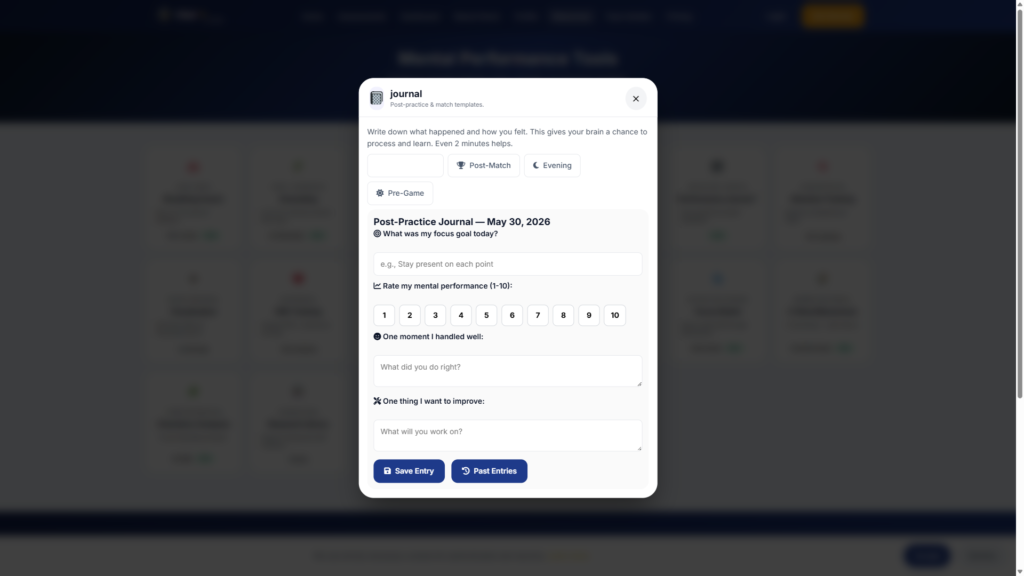
VBallStars offers a suite of free, athlete‑focused tools designed to guide you through identity transition. From self‑assessment worksheets to goal‑setting templates and a searchable database of mentorship programs, our resources make the “post‑uniform” journey less intimidating. Explore everything we have to offer at VBallStars Expert Resources and start building the next chapter of your life today.
The athletes who navigate this transition most successfully share a significant common factor — they maintained interests, relationships, and sources of self-worth outside their sport throughout their playing careers. Athletes who cultivated academic passions, developed non-sport friendships, and built professional skills alongside their athletic development reported significantly lower distress when their sport ended. VBallStars offers the Performance Journal as a tool for documenting full identity beyond athletic achievements, capturing academic interests, personal relationships, career aspirations, and non-sport goals alongside competition statistics. The Goal Setter tool can be repurposed to build a comprehensive life-after-sport plan beginning well before the final season, creating a roadmap for the transition before it becomes urgent. The 3-Word Momentum tool captures the emotional journey of this identity expansion, building a visual record that the athlete can look back on as evidence that identity is not lost when sport ends — it is expanded into something larger. All VBallStars tools are free, private, and require no account. Explore all sixteen tools →
Get 1 Mental Training Drill Every Week
Free. Unsubscribe anytime.
Mustafa shares only what he learned works watching his daughter's volleyball journey. A volleyball dad and former athlete who built VBallStars from real experience.
More from مصطفى →Related Articles
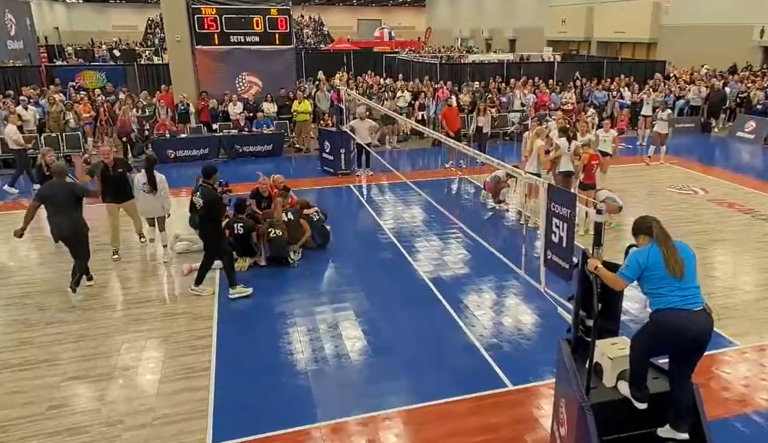
2026 USAV Girls Junior National Championship 16-17 Results
The 2026 USA Volleyball Girls Junior National Championship for divisions 14-17 wrapped…

10 Best Volleyball Training Apps Review 2026: A Comprehensive Guide for Volleyball Athletes
10 Best Volleyball Training Apps Review 2026: A Comprehensive Guide for Volleyball…
How Sleep Affects Volleyball Performance: What Every Athlete Needs to Know
Sleep is the most underrated performance tool in volleyball. Research shows it…
Free Mental Performance Toolkit
Get 5 science-backed exercises used by Olympic athletes. Delivered to your inbox.
No spam. Unsubscribe anytime.